While famous spots like Gordes are undeniably beautiful, massive crowds and tour buses often overwhelm their charm. Travelers flock to these well-known destinations, leaving little room to appreciate the serene beauty of the French countryside. This guide aims to direct you toward lesser-known gems that offer the exact same stunning architecture, rich history, and magical atmosphere, but with far more authenticity and absolute silence. Finding the perfect Hidden Villages in Provence can easily transform your European getaway from a stressful tourist trap into a peaceful, unforgettable retreat.
Thank you for reading this post, don't forget to subscribe!You can easily create an unforgettable itinerary by focusing on destinations that prioritize authentic local life over souvenir shops. True Provencal magic hides in the quiet alleyways, the small bakeries, and the shaded village squares where locals play pétanque. You just need to know where to look. By avoiding the major hotspots, you improve your travel experience, support small local economies, and capture breathtaking photographs without dozens of strangers blocking your view. Let us explore the magnificent secrets of the region.
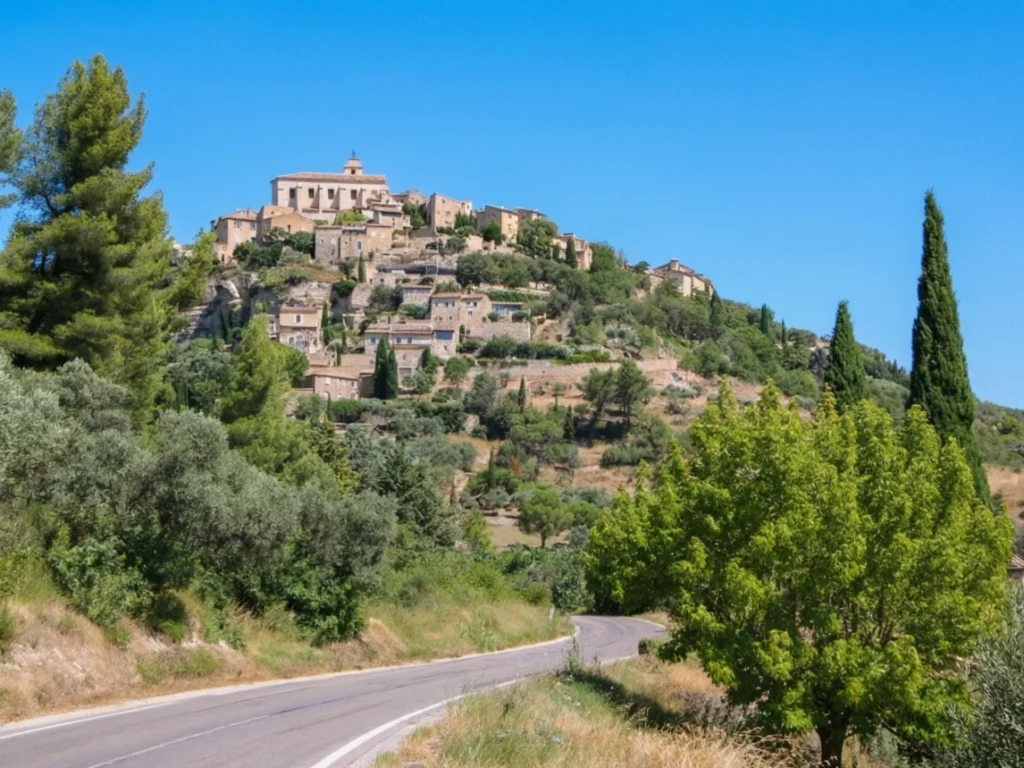
– A hillside village with stone buildings, nestled among trees and greenery –
- Table of Contents hide
1. Oppède le Vieux – A Step Back in Time
Begin your journey at Oppède le Vieux, a village that feels entirely frozen in the 12th century. Unlike other heavily restored towns, Oppède le Vieux retains a wild, mysterious edge. The forest slowly reclaims the ruins of the medieval castle at the very top of the hill. You must leave your vehicle in the designated parking area below the village and walk up through terraced gardens. This short hike sets the perfect mood for the historic beauty waiting above.
- Hike to the Castle Ruins 📌 Wear comfortable walking shoes to navigate the steep, cobbled paths that lead to the dramatic ruins of the medieval fortress.
- Visit the Notre-Dame-d’Alidon 📌 Explore this beautiful 12th-century collegiate church, which stands proudly at the top of the village and occasionally hosts classical music concerts.
- Enjoy the Panoramic Views 📌 Look out over the sprawling vineyards and olive groves of the Luberon valley from the church courtyard.
- Relax in the Lower Square 📌 Stop by the small cafe in the village square to enjoy an espresso and listen to the cicadas sing in the warm afternoon sun.
- Photograph the Stone Archways 📌 Capture the magnificent contrast between the crumbling historic stone walls and the vibrant green ivy growing across them.
Oppède le Vieux rewards travelers who appreciate raw history and quiet contemplation. Since tour buses cannot navigate the narrow access roads, the village remains incredibly peaceful throughout the year.
Ansouis – A Castle Village Preserved in Time
Sitting majestically in the southern part of the Luberon, Ansouis boasts one of the most perfectly preserved medieval castles in the south of France. While crowds squeeze into the streets of Gordes, Ansouis offers a masterclass in elegant, quiet Provencal living. The Sabran family has maintained the local castle for centuries, and they still open their manicured French gardens to curious visitors. Strolling through the village feels like walking through a living museum.
- Tour the Château d’Ansouis Wander through the beautifully furnished rooms and the spectacular terraced gardens that overlook the rolling countryside.
- Visit the Musée Extraordinaire Step into Georges Mazoyer’s quirky museum, which features a fascinating collection of underwater artifacts, fossils, and stained glass art.
- Dine at a Michelin Star Restaurant Treat yourself to an unforgettable culinary experience at La Closerie, a tiny but brilliant restaurant hidden in the village streets.
- Explore the Church of Saint-Martin Admire the ancient architecture of this historic church built directly into the fortified walls of the village.
- Wander the Artisanal Boutiques Support local craftsmen who sell handmade ceramics, lavender products, and beautiful textiles without the high tourist markups.
Ansouis perfectly balances high-end culture with humble village life. You can easily spend a full day here admiring the architecture, tasting world-class food, and chatting with friendly locals who appreciate respectful visitors.
Venasque – The Cherry Capital
Perched dramatically on a steep rocky outcrop, Venasque overlooks the Nesque river valley and provides sweeping views of Mont Ventoux. This ancient village actually gave the surrounding region (the Comtat Venaissin) its name. Venasque protects a deep, rich history behind its thick ramparts, yet it maintains a sleepy, agricultural rhythm that charms every visitor.
- Taste the Famous Cherries👈 Farmers in Venasque grow the “Diamant Rouge” (Red Diamond) cherries, considered the best in France. Visit in spring to taste them fresh from the local markets.
- Step into the Venasque Baptistery👈 Explore one of the oldest religious buildings in France. Builders constructed this incredible Merovingian sanctuary back in the 6th century.
- Hike the Surrounding Trails👈 Use Venasque as your base camp for hiking into the surrounding forests, which offer shaded paths and incredible overlooks.
- Admire the Saracen Towers👈 Walk along the remnants of the defensive walls and gaze up at the towering stone fortifications that once protected the locals from invaders.
- Enjoy a Quiet Lunch👈 Find a table at a local bistro on the edge of the cliff and enjoy a simple meal of fresh bread, local cheese, and crisp rosé wine.

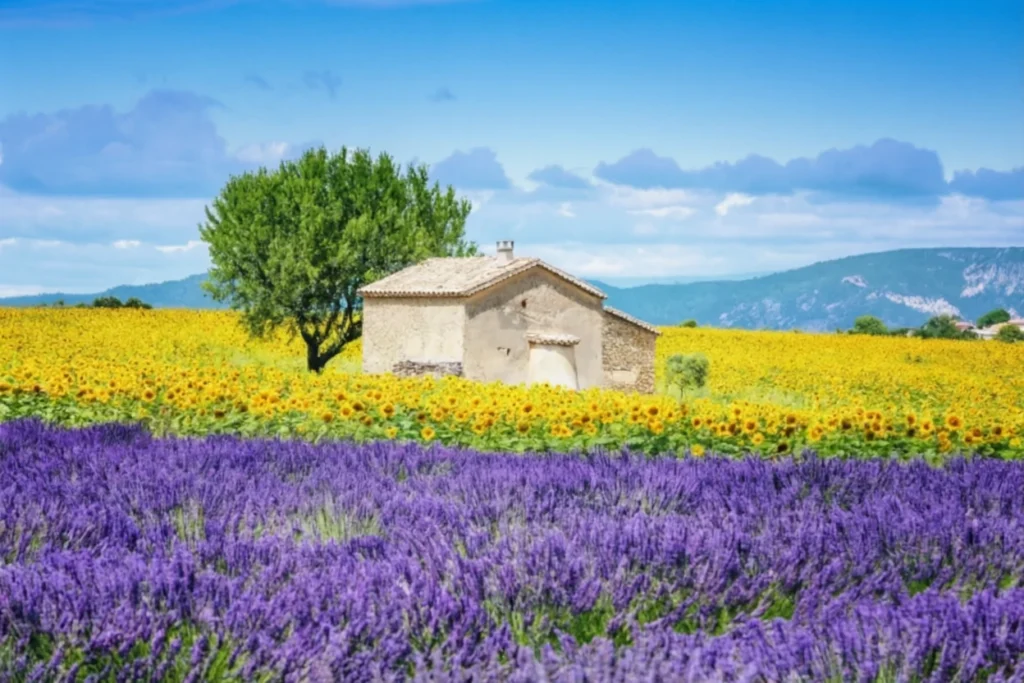
– Beautiful landscape of lavender filed in Provence –
Goult – The Locals’ Best Kept Secret
Many popular villages in the region function primarily as tourist destinations, shutting down almost entirely during the winter months. Goult completely breaks this mold. Goult is a vibrant, living village where actual residents live, work, and socialize year-round. This lively atmosphere makes it a refreshing alternative to the museum-like feel of heavily trafficked towns.
When you explore Goult, you will discover a fantastic local butcher, an authentic bakery, and a bustling central square shaded by ancient plane trees. The famous Café de la Poste serves as the beating heart of the community. Here, you can sit with a coffee and watch farmers, artists, and shopkeepers interact in their daily routines.
Take a walk up to the highest point of the village to find the Moulin de Jérusalem, an old stone windmill that offers fantastic views of the surrounding valley. Next to the windmill, the Conservatoire des Terrasses en Culture showcases traditional dry-stone wall farming methods. You can wander freely through these ancient agricultural terraces, enjoying the scents of wild thyme and rosemary, completely undisturbed by crowds.
Simiane-la-Rotonde – Architectural Wonder
Sitting slightly north of the Luberon in the Alpes-de-Haute-Provence department, Simiane-la-Rotonde dominates a vast plateau famous for its lavender fields. Most tourists rush to the Abbey of Sénanque or the fields of Valensole to see lavender, ignoring this absolute architectural masterpiece.
The village takes its name from the Rotunda, an incredible 12th-century decagonal keep that sits at the highest point of the town. This strange and beautiful stone cylinder features intricately carved Romanesque capitals and serves as an acoustically perfect venue for summer music festivals. You can walk through the covered market halls (Les Halles) built in the 16th century, which provide a cool, shaded spot to rest during warm summer afternoons.
Simiane-la-Rotonde also serves as an important center for essential oils. The nearby Sainte-Victoire laboratory processes local lavender and lavandin, and visitors can learn about the extraction process and purchase pure, high-quality oils directly from the source. The nearby Abbey of Valsaintes, with its breathtaking garden of over 500 rose varieties, provides another compelling reason to spend time in this quiet area.
Saignon – The Balcony of the Luberon
Travelers approaching Saignon immediately notice the massive rock formation looming over the village. The Rocher de Bellevue (Rock of Bellevue) served as an impenetrable natural fortress during the Middle Ages. Today, this massive stone cliff offers visitors one of the most spectacular viewpoints in the entire region.
The climb to the top of the rock requires a bit of effort, but the reward easily justifies the hike. On a clear day, you can view the entire Calavon valley, the Monts de Vaucluse, Mont Ventoux, and even catch a glimpse of the Papal Palace in Avignon far in the distance. After descending from the rock, you can explore the incredibly peaceful village square.
Saignon features a beautiful 12th-century Romanesque church, Notre-Dame de Pitié, and a central square adorned with a moss-covered fountain. The village feels romantic, slow-paced, and utterly detached from modern anxieties. You will find small bed-and-breakfasts, quiet art galleries, and narrow streets filled with potted geraniums. Saignon embodies the exact picturesque quality that makes travelers fall in love with the French countryside.
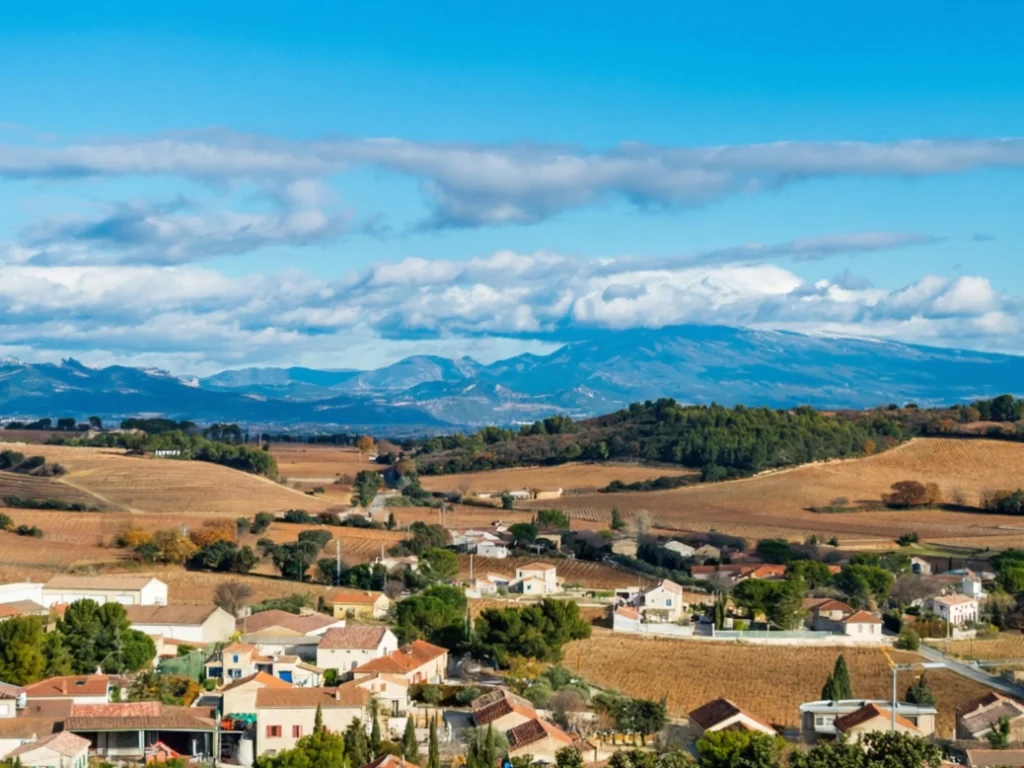
– Beautiful Provencal landscaper –
Why Choose Hidden Villages in Provence?
Selecting lesser-known destinations dramatically improves the quality of your vacation. By stepping off the heavily beaten path, you open yourself up to spontaneous moments and genuine interactions. Consider the significant advantages of exploring these quieter spots.
- Authentic Interactions Without the rush of thousands of daily tourists, local shopkeepers and residents have the time and desire to engage in meaningful conversations with visitors.
- Stress-Free Photography You can take your time framing the perfect shot of a stone doorway, a sleeping cat, or a blooming lavender bush without feeling rushed or having strangers walk into your frame.
- Better Value for Money Restaurants, boutique hotels, and artisanal shops in these hidden spots often charge significantly less than businesses located in world-famous tourist traps.
- Easier Navigation You will not need to fight for expensive, overflowing parking spots or navigate tightly packed sidewalks. You can simply park your car and stroll at your own pace.
- Preserving the Environment By spreading tourism away from overcrowded hotspots, you help reduce the environmental impact and physical wear-and-tear on historic infrastructure.
- Unique Discoveries Finding a hidden courtyard, an unmarked scenic viewpoint, or a tiny family-run bakery provides a sense of personal discovery that you cannot get from following standard guidebooks.
- Quiet Atmospheres The absence of loud tour guides, rumbling buses, and massive crowds allows you to hear the wind in the olive trees and the splashing of old village fountains.
- Higher Quality Food Restaurants in less touristy areas must rely on repeat business from locals. This dynamic guarantees higher quality, traditional food rather than generic meals designed for quick tourist turnover.
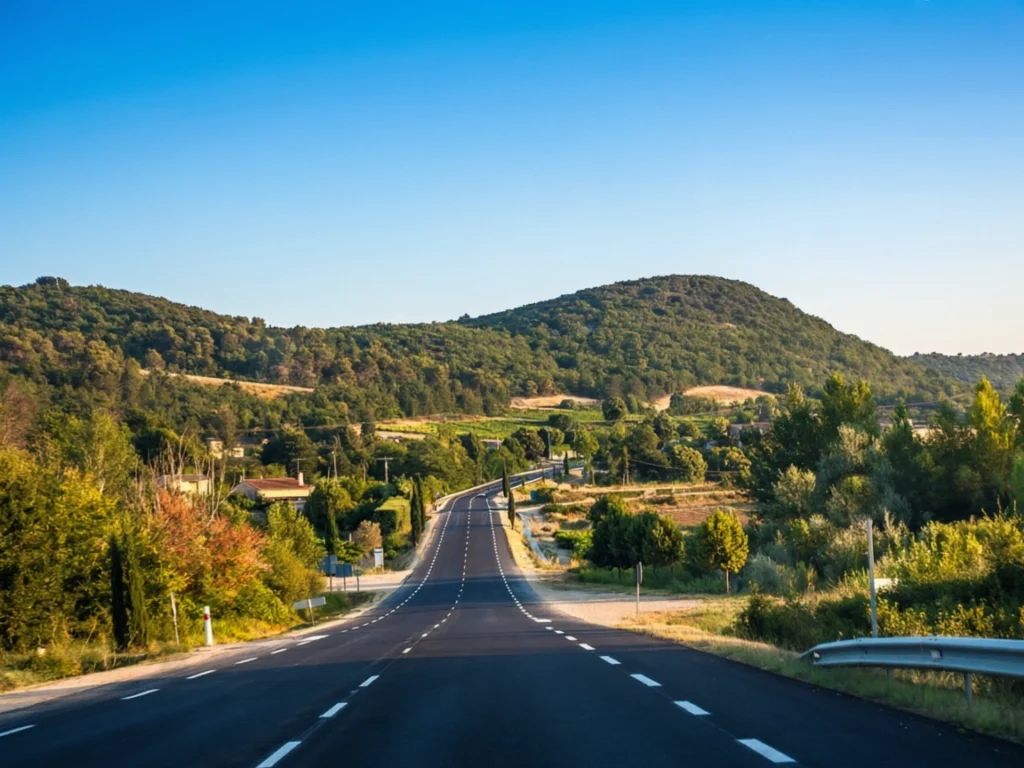
– Country road winding through the French Provence near Bordeaux –
Smart Travel Planning for Provence
Executing a flawless trip requires a bit of strategic planning. To fully experience these magnificent tucked-away locations, you need the right logistics. Public transportation in rural France can prove incredibly challenging, as buses run infrequently and rarely reach the smaller hilltop towns.
Smart travelers plan ahead to secure the best travel arrangements. Visitors looking to reach the region comfortably should book flights to Provence well in advance, usually flying into Marseille Provence Airport or Nice Côte d’Azur Airport. From there, renting a small, reliable car becomes absolutely essential. Small cars easily navigate the narrow, winding country roads and fit perfectly into tight village parking spaces.
Finding the right base camp significantly impacts your daily adventures. Instead of booking generic chain properties, travelers can discover authentic charm by reserving hotels and accommodations in Provence that feature local architecture and traditional breakfasts. Staying in a quiet bed-and-breakfast near Goult or Ansouis allows you to wake up to the sounds of nature and start your explorations before the midday heat arrives.
While independent exploration brings joy, expert guidance often unlocks deeper secrets. History buffs, wine lovers, and families frequently enhance their trips by deciding to book tours and activities in Provence. A local guide can take you to private vineyards in Séguret, lead you on hiking trails near Venasque, and explain the complex medieval history of the region in brilliant detail.
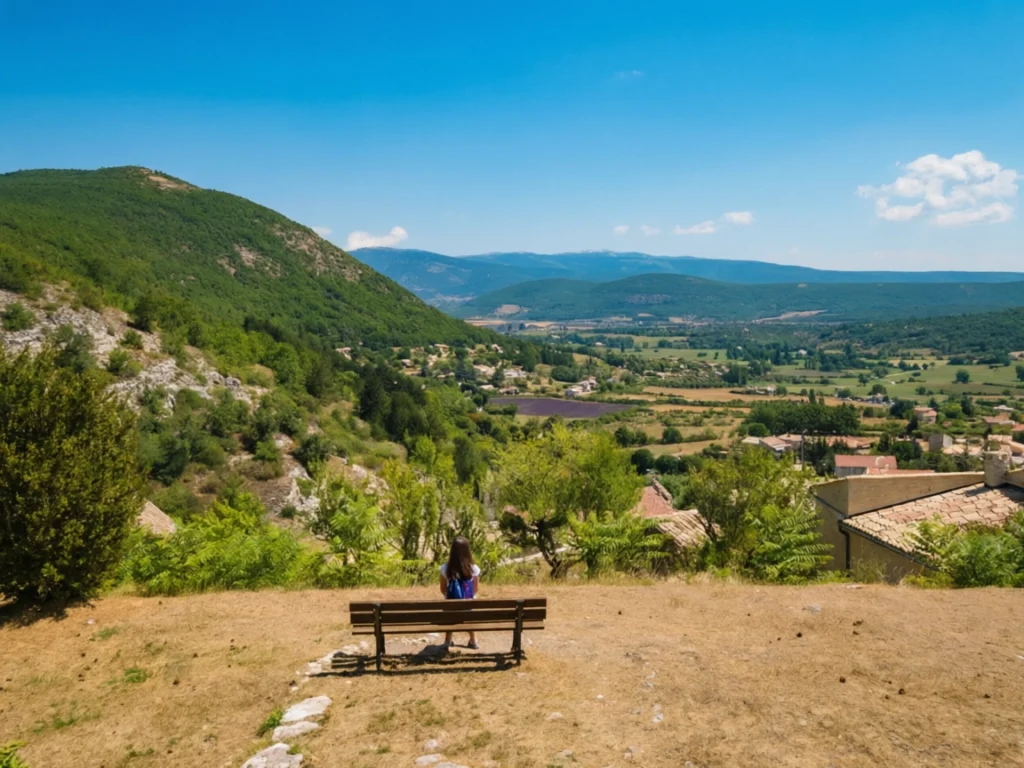
– Landscape of Provence. View from the summit of the village of Banon on the mountains of Lure and the valley with fields of lavender –
Local Cuisine You Must Try
Exploring these villages will quickly build up your appetite. Fortunately, rural France offers some of the best culinary experiences in the world. When dining in these quiet towns, look out for regional specialties that highlight fresh, sun-grown ingredients.
- Tapenade – A rich, savory paste made from finely crushed black or green olives, capers, and olive oil, perfectly served on crusty baguette slices.
- Banon Cheese – A remarkable local goat cheese wrapped in chestnut leaves and tied with raffia, offering a soft, creamy texture and a deeply earthy flavor.
- Ratatouille – A classic vegetable stew featuring fresh tomatoes, zucchini, eggplant, and bell peppers, slow-cooked with aromatic herbs.
- Calissons – A traditional sweet treat from the region made from a smooth paste of candied melon and ground almonds, topped with a thin layer of royal icing.
- Fougasse – A delicious, crusty flatbread often baked with olives, sun-dried tomatoes, or anchovies folded directly into the dough.
- Local Rosé – The region produces crisp, dry, and incredibly refreshing rosé wines that pair perfectly with warm summer afternoons.
Ask the waitstaff in any village bistro for the “Plat du Jour” (Dish of the Day). Chefs usually base this daily special on whatever fresh ingredients they purchased from the morning market, ensuring a spectacular and authentic meal.
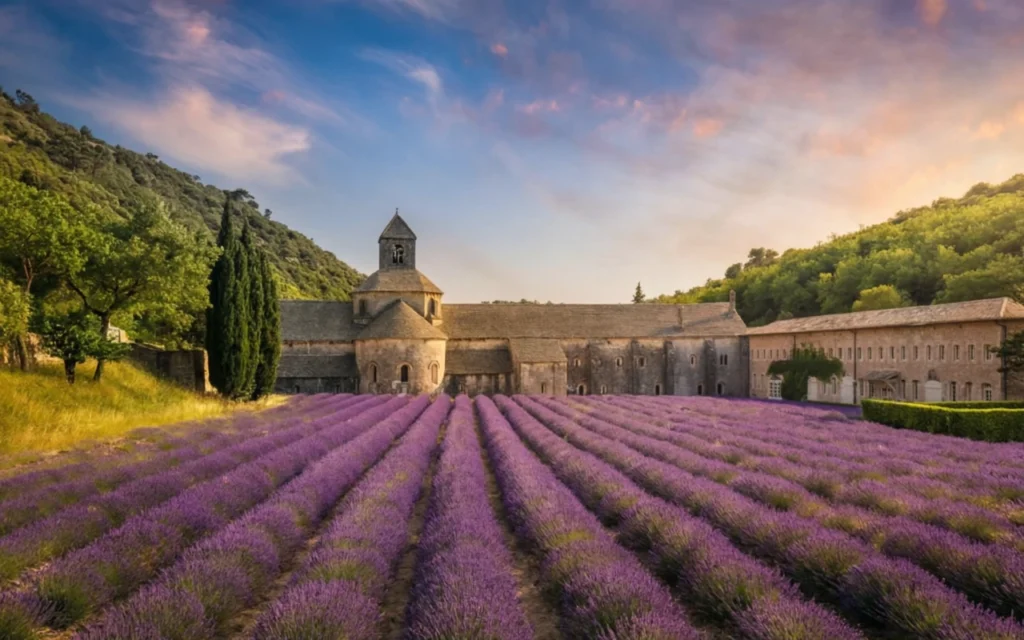
– The Abbey of Senanque and the rows of lavender flowers in bloom, panoramic view at sunset –
Comparison of the Best Hidden Villages
To help you structure your itinerary, use this quick comparison guide. It breaks down the unique selling points of each destination, helping you prioritize based on your specific travel interests.
Village Name | Primary Highlight | Vibe & Atmosphere | Best Time to Visit |
Oppède le Vieux | Forest-covered castle ruins | Mysterious, wild, and quiet | Late Autumn for foliage |
Ansouis | Impeccable medieval château | Elegant, cultured, and clean | Spring for blooming gardens |
Séguret | Côtes du Rhône wine tasting | Rustic, scenic, and delicious | September for the grape harvest |
Venasque | 6th-century Baptistery & cherries | Historical and agricultural | May/June for cherry season |
Goult | Authentic year-round local life | Lively, welcoming, and grounded | Any time of the year |
Simiane-la-Rotonde | 12th-century Rotunda & lavender | Architectural and fragrant | Late June for lavender blooms |
Saignon | Massive rock viewpoint | Romantic, slow, and breathtaking | Early morning for clear views |
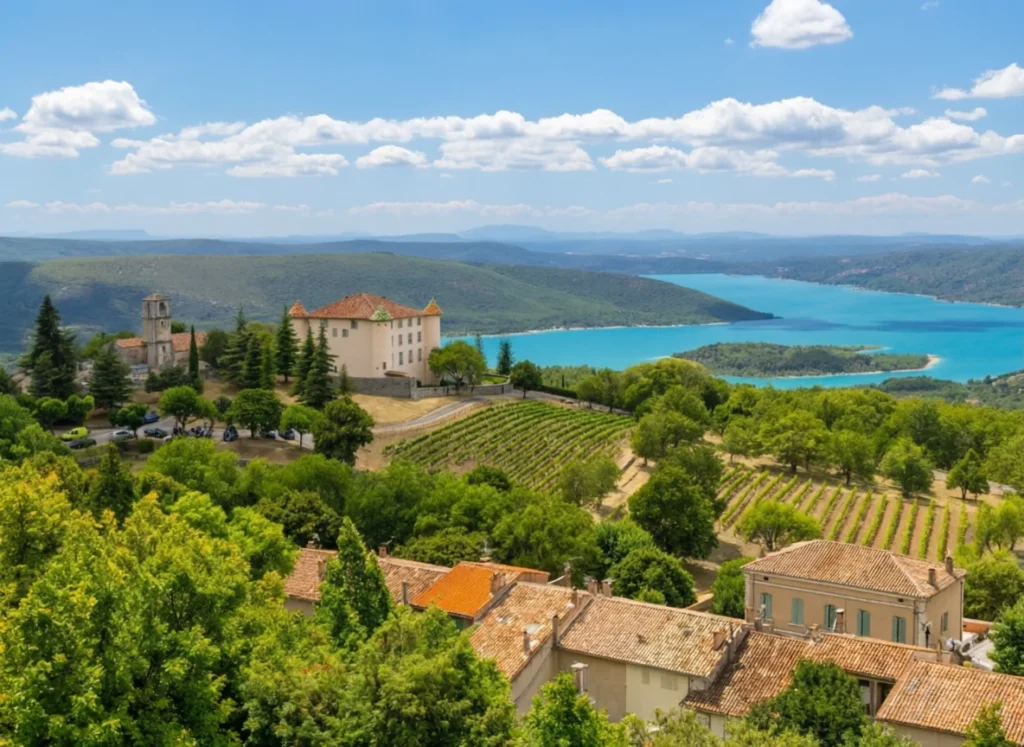
– Typical Provencal town Aiguines with Lac de Sainte-Croix –
What to Pack for Your Adventure
Packing correctly ensures you remain comfortable while exploring these rugged hilltop towns. Leave the high heels and formal wear at home. Instead, focus on practical, comfortable clothing that breathes well in the Mediterranean sun.
First and foremost, bring sturdy walking shoes with excellent grip. The ancient cobblestone streets, known as calades, look beautiful but prove notoriously slippery, especially after a brief rain shower. Pack lightweight linen or cotton clothing to stay cool during the warm afternoons. A wide-brimmed hat, premium sunglasses, and reliable sunscreen will protect you from the intense southern sun.
Do not forget a lightweight sweater or jacket. Even during the peak of summer, the Mistral wind can occasionally blow through the valleys, causing temperatures to drop significantly in the evenings. Finally, carry a reusable water bottle and a small daypack. Many of these remote locations lack convenience stores, so having water and a place to store your market purchases makes the day much more enjoyable.
Always carry some cash (Euros) with you. While larger towns accept credit cards everywhere, small village bakeries, local artisans, and rural farmers market vendors often require cash for small purchases.
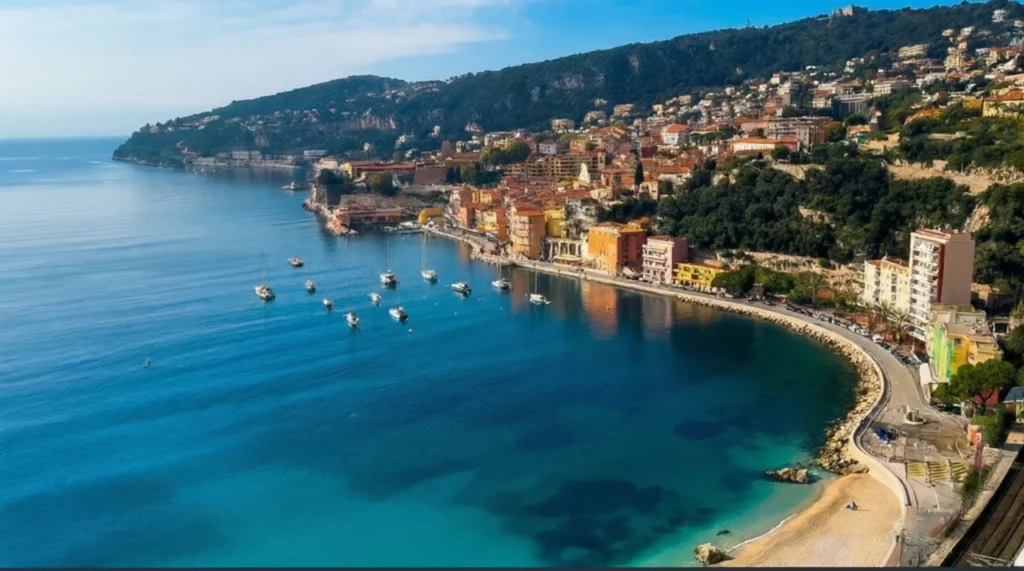
– urquoise sea, colorful houses, marina and waterfront Villefranche-sur-Mer, Provence –
Conclusion – In the end, discovering the true magic of the region requires stepping away from the famous landmarks and embracing the quiet charm of the countryside. While popular spots offer obvious beauty, they often lack the soul and tranquility that travelers deeply crave. By visiting these magnificent hidden gems, you gift yourself an authentic, peaceful, and unforgettable experience.
Take the time to wander without a strict schedule. Sit by an old stone fountain, taste the local wine, and talk to the people who call these incredible places home. Planning a trip around the Hidden Villages in Provence guarantees stunning photographs, delicious food, and a genuine connection to one of the most beautiful regions on earth. Pack your bags, rent a small car, and prepare to fall in love with the quiet side of southern France.