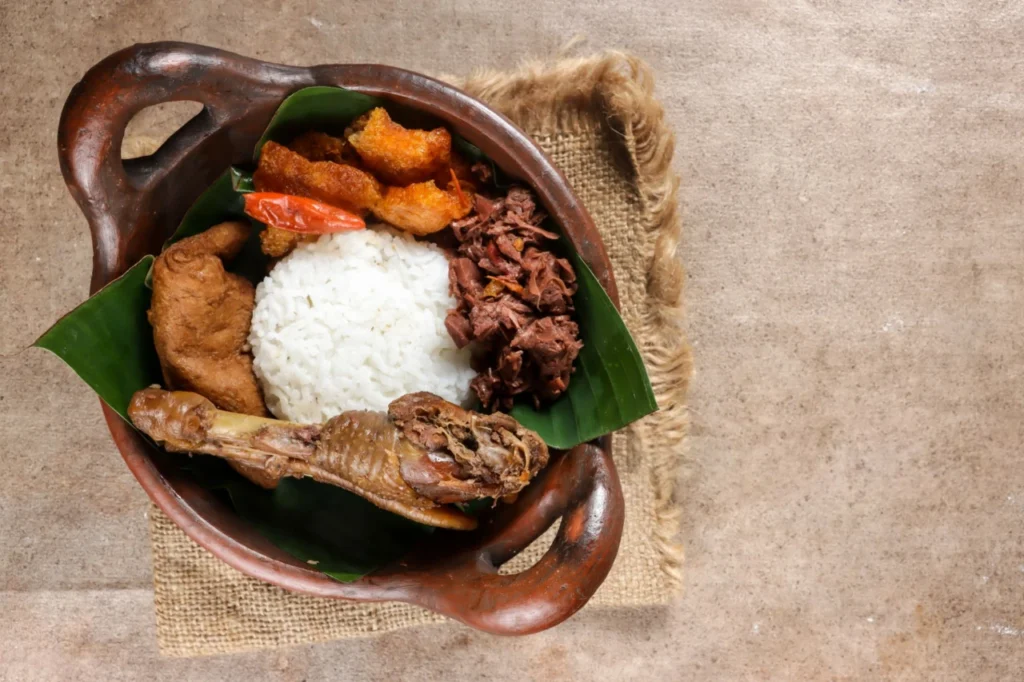
Indonesian cuisine offers a massive variety of rich, complex, and comforting flavors. Among its most beloved traditional dishes is Gudeg, a famous sweet and savory stew made from unripe jackfruit. While most food lovers immediately associate this dish with the royal city of Yogyakarta, many exciting Gudeg variations exist across Central Java. By exploring these regional twists, you can truly understand the culinary diversity of Indonesia. Whether you prefer the dark, sweet, and dry version from Yogya, or the lighter, savory style from Solo, this classic dish has something special to offer every palate. Let us dive deep into the unique world of this slow-cooked jackfruit masterpiece.
Thank you for reading this post, don't forget to subscribe!To truly appreciate these dishes, you must understand the dedication required to make them. Cooks spend hours, sometimes even a whole day, simmering the young jackfruit in rich coconut milk, palm sugar, and a complex blend of aromatic spices. This slow-cooking method allows the fruit to absorb every ounce of flavor, transforming its texture into something incredibly tender and meat-like. Understanding these cooking techniques helps you appreciate why different regions developed their own unique twists on this classic meal.
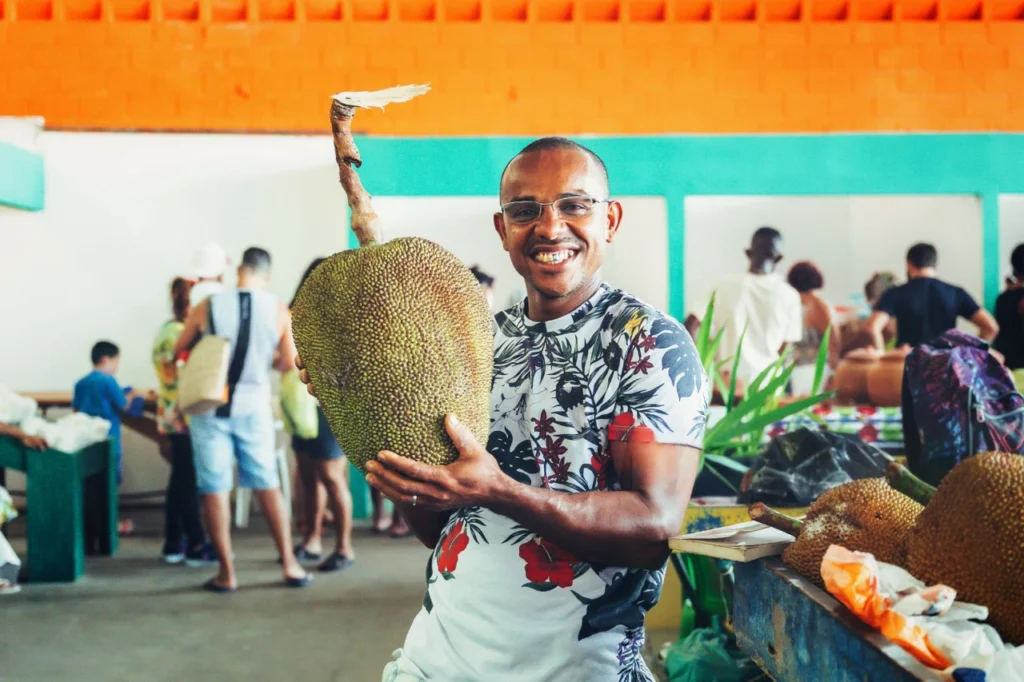
Portrait of smiling young market vendor holding huge jackfruit in his hands
What Makes Gudeg So Special?
Before diving into the specific regional differences, you need to know the foundational elements of this dish. When you identify the core ingredients, you will easily spot how the different Gudeg variations change and bend the rules. The traditional cooking process is a labor of love that requires patience, skill, and a deep respect for local ingredients. Here is what makes the base of this iconic meal so unforgettable.
- Young Jackfruit (Gori) 📌 Unlike ripe, sweet jackfruit eaten as a fruit, the unripe version acts like a vegetable. Its fibrous texture perfectly absorbs rich broths and spices, acting almost like pulled pork.
- Rich Coconut Milk 📌 Fresh coconut milk provides the creamy, savory base that balances the heavy sweetness of the palm sugar. It thickens over hours of boiling, leaving a rich oil that preserves the dish naturally.
- Dark Palm Sugar (Gula Aren) 📌 This is the soul of the traditional dish. High-quality palm sugar delivers a deep caramel flavor and contributes to the iconic brown color of the Yogya style.
- Teak Leaves (Daun Jati) 📌 Traditional cooks line their clay pots with teak leaves. As the stew boils, these leaves release a natural reddish-brown dye that gives the jackfruit its distinct, beautiful color.
- Aromatic Spice Paste 📌 A blend of shallots, garlic, coriander seeds, candlenuts, galangal, and Indonesian bay leaves (salam) creates a fragrant foundation that eliminates any blandness.
- The Slow Cooking Method 📌 You cannot rush this recipe. Cooks simmer the mixture in a traditional clay pot (kendil) over a wood fire for many hours, blending the smoky aroma perfectly into the jackfruit.
By understanding these core components, you can easily see how small tweaks in the recipe create entirely new flavor profiles. From the bustling streets of Yogyakarta to the quiet corners of Solo, the culinary evolution of this dish tells a story of local culture and taste preferences.
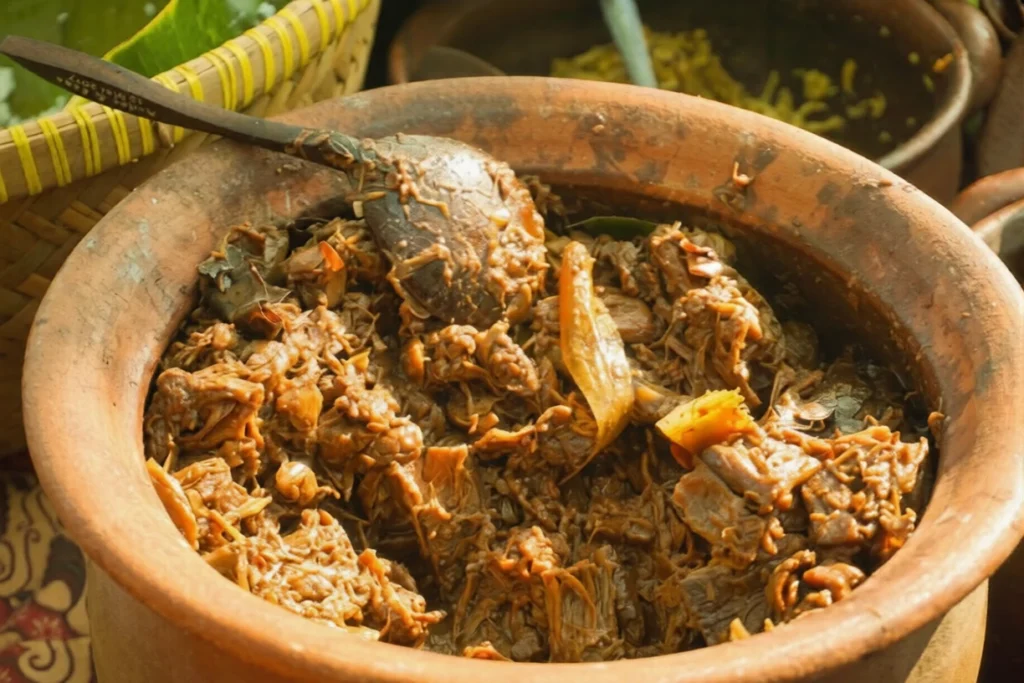
Gudeg jackfruit food traditional served in clay pot from central java
Gudeg Yogya – The Sweet and Brown Classic
When people talk about this dish, they usually mean Gudeg Yogya. This version stands as the undisputed king of Central Javanese cuisine. Yogyakarta locals have a strong preference for sweet foods, and this stew perfectly reflects that cultural palate. Let us explore the specific characteristics that define the Yogyakarta style.
- Intense Sweetness Cooks use a massive amount of premium dark palm sugar. The sweetness hits your tongue immediately, almost mimicking a dessert, but the spices quickly follow to balance it out.
- Deep Reddish-Brown Color Thanks to the generous use of teak leaves during the boiling process, the jackfruit takes on a very dark, rich color that looks incredibly appetizing.
- Dry Texture (Gudeg Kering) Traditional Yogya style is cooked until the coconut milk completely evaporates. This dry texture allows locals to store it for days without refrigeration.
- Perfect for Traveling Because it is dry and naturally preserved by sugar and coconut oil, travelers often buy it packaged in traditional woven bamboo baskets (besek) or clay pots as souvenirs.
- Spicy Contrast To cut through the intense sugar, locals always serve it with Sambal Goreng Krecek, a blazing hot stew made from crispy beef skin and plenty of bird’s eye chilies.
This sweet and dry version built the dish’s famous reputation. However, the culinary journey does not stop here. If you find the Yogyakarta style too sweet for your liking, the neighboring city of Solo offers an incredible alternative that focuses on entirely different flavor notes.
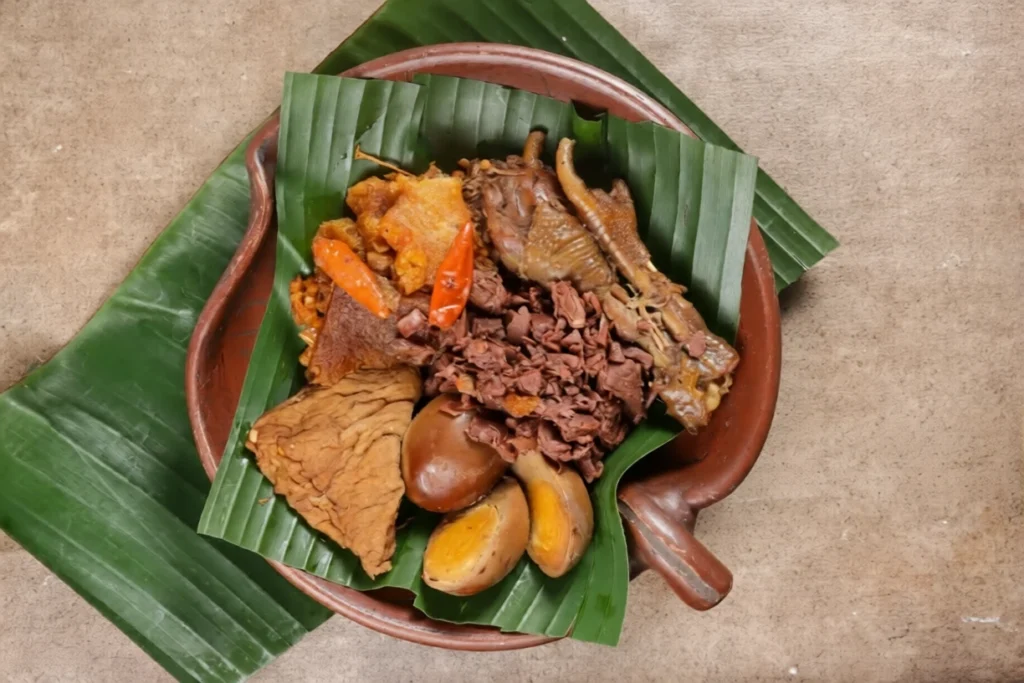
Gudeg Yogya
Gudeg Solo – The Lighter and Savory Twist
Just an hour’s drive from Yogyakarta lies Solo (Surakarta), another royal city with its own distinct culinary identity. Solo offers one of the most popular Gudeg variations, designed for those who prefer savory over sweet. The Solo style completely flips the script on what you might expect from a jackfruit stew. It looks different, tastes different, and provides a much softer eating experience.
Cooks in Solo skip the teak leaves, resulting in a dish that looks pale and creamy rather than dark brown. They also drastically reduce the amount of palm sugar and increase the coconut milk, adding more savory spices. This creates a comforting, salty, and rich flavor profile that many food lovers actually prefer.
Furthermore, Solo locals love the wet version of the dish (Gudeg Basah). Instead of boiling the liquid away, they leave a generous amount of savory coconut broth (areh) pooling around the jackfruit. This wet texture makes the meal incredibly comforting, especially when ladled over a warm plate of steamed white rice.
Feature | Gudeg Yogya | Gudeg Solo |
Primary Flavor | Dominantly sweet with caramel notes | Savory, salty, and rich |
Color | Dark reddish-brown (from teak leaves) | Pale white or light cream |
Texture / Moisture | Dry (Kering), chewy, zero broth | Wet (Basah), soft, served with rich broth |
Key Condiment | Thick, dry coconut cream (Areh kental) | Runny, savory coconut milk (Areh encer) |
Best Eaten With | Very spicy Krecek (beef skin stew) | Mild chicken opor and cassava leaves |
Note for travelers – If you visit Central Java, you must try both versions to understand the rivalry. While Yogya gets most of the international fame, many Indonesian food critics secretly champion the Solo version for its balanced, savory elegance.
✈️ Ready for a Culinary Adventure in Central Java?
For culinary travelers eager to taste authentic Gudeg variations directly at the source, booking a flight to Yogyakarta International Airport (YIA) or Adisumarmo Airport (SOC) in Solo is the perfect first step. Visitors can easily find flight schedules that match their travel plans and budget.
👉 Compare and book affordable flight deals to Yogyakarta and Solo here.
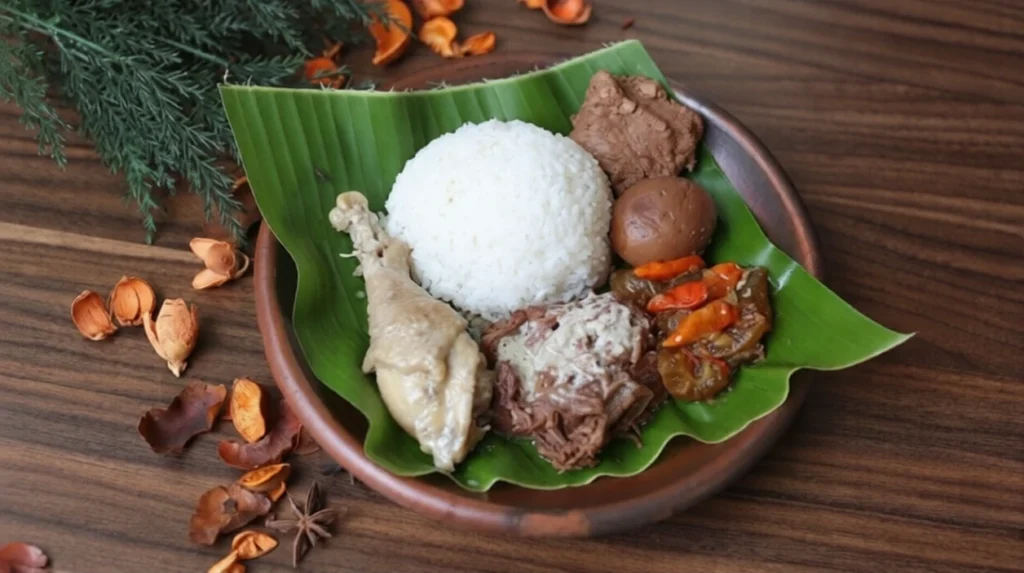
Gudeg Solo
Exciting Regional Twists You Must Try
While the Yogya and Solo styles dominate the conversation, the beauty of Gudeg variations lies in the lesser-known regional twists. Local communities across Central and East Java have adapted the recipe based on whatever ingredients grow abundantly in their area. These unique versions offer surprising textures and flavors that will delight any culinary adventurer.
- Gudeg Manggar (Bantul) Instead of using young jackfruit, cooks in Bantul use young coconut flowers (manggar). This creates a crunchy, unique texture that feels entirely different from the classic dish. Historically, this was an exclusive meal reserved only for royalty.
- Gudeg Nangka Putih (Purwokerto) In the Banyumas region, locals prepare a completely white version of the stew. They avoid palm sugar completely, relying on white sugar and extra garlic, making it highly savory and pungent.
- Gudeg Jantung Pisang (Banana Blossom Twist) Some rural villages substitute jackfruit with banana blossoms. The blossom provides a similar stringy texture but carries a slightly earthy, bitter undertone that pairs beautifully with the rich coconut milk.
- Gudeg Mercon (Explosive Spicy) For heat lovers, this modern street food variation mixes the jackfruit directly with an insane amount of crushed bird’s eye chilies. It completely bypasses the traditional sweet flavor for a pure, fiery punch.
- Gudeg Ceker (Chicken Feet Twist) Popular in Solo as a late-night street food meal, vendors serve the savory jackfruit stew alongside melt-in-your-mouth, slow-cooked chicken feet. The gelatin from the chicken feet enriches the broth beautifully.
- East Java Style (Gudeg Surabaya) Surabaya locals modify the Central Javanese recipe to match their coastal palates. They make it less sweet, slightly spicier, and often serve it with a side of savory beef rawon soup or fresh cucumber slices.
By exploring these diverse variations, you quickly realize that traditional Indonesian recipes are never rigid. They act as living, breathing guides that adapt to the creativity of the cooks and the preferences of their local communities.
🗺️ Explore Hidden Street Food Gems
Food enthusiasts wanting to explore hidden street food stalls and legendary kitchens can greatly benefit from guided culinary tours. These organized activities allow tourists to safely sample multiple Gudeg variations without the hassle of navigating busy local markets alone. Expert local guides provide fascinating cultural insights along the way.
👉 Discover top-rated food tours and culinary activities in Central Java.
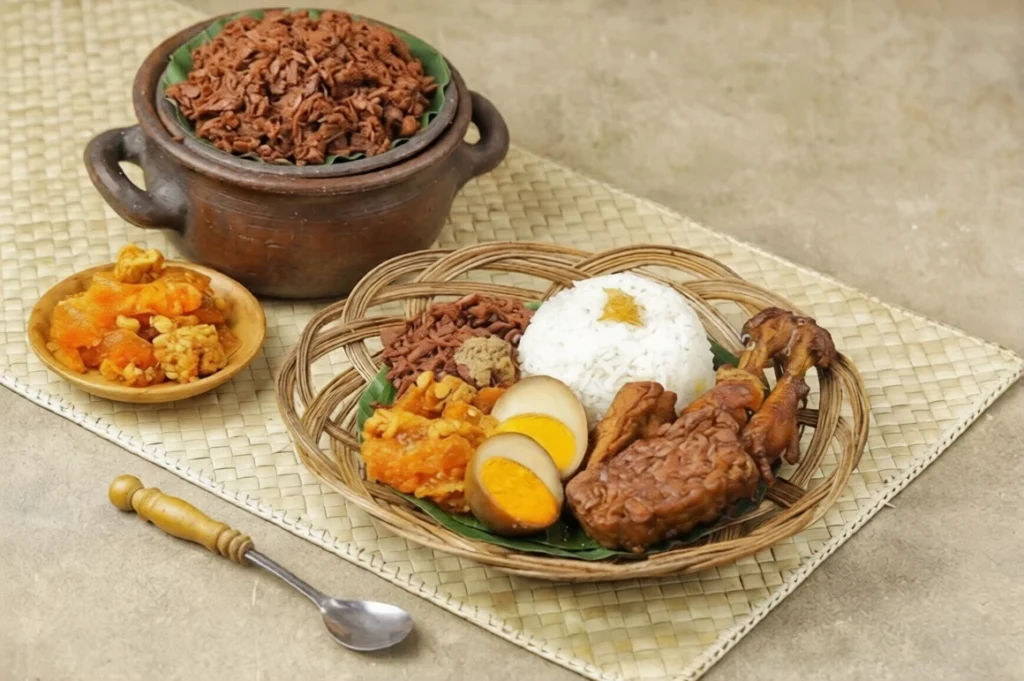
Modern Chef Interpretations and Fusions
The evolution of this dish does not stop with traditional village cooks. Today, innovative chefs across Indonesia and around the world are taking classic Gudeg variations and pushing them into exciting new culinary territories. These modern interpretations respect the traditional flavors while introducing contemporary plating, dietary adjustments, and global fusion concepts. Let us look at how the modern kitchen handles this ancient recipe.
- The Vegan Revolution Traditional recipes often use chicken broth or shrimp paste as a flavor enhancer. Modern vegan chefs replace these with mushroom broth and umami-rich seaweed, allowing plant-based diners to enjoy the authentic taste without compromising their dietary choices.
- Gudeg Sushi Rolls In upscale fusion restaurants in Jakarta, chefs roll sweet jackfruit, spicy krecek, and an omelet inside sticky rice and nori. This creates a bite-sized, elegant presentation of Central Java’s best flavors.
- Gudeg Pizza and Pasta Some daring cafes in Yogyakarta use the dry jackfruit stew as a topping for wood-fired pizzas or toss it with spaghetti. The sweet and savory jackfruit acts remarkably like pulled barbecue pork, making it an excellent topping for Western dishes.
- Canned and Vacuum-Sealed Innovation Food technologists have successfully canned the stew without losing its flavor. This massive industrial leap allows Indonesians living abroad to enjoy their hometown flavors anytime, significantly boosting the dish’s global reach.
- Pastry Fillings Bakeries now stuff the dry jackfruit mixture inside traditional buns, puff pastries, and even croissants. The contrast between the buttery, flaky pastry and the sweet, spiced filling creates a brilliant breakfast item.
- Gudeg Croquettes (Kroket) Chefs mix the sweet jackfruit with mashed potatoes, roll them in breadcrumbs, and deep-fry them. This crispy, golden snack offers a beautiful textural contrast to the traditionally soft stew.
- Fine Dining Deconstruction High-end chefs serve deconstructed plates, featuring jackfruit purees, coconut foam, and spicy beef skin crackers. They transform a humble street food into a visually stunning, Michelin-worthy experience.
- Health-Conscious Substitutions To cater to modern health trends, some cooks replace the heavy coconut milk with almond milk or cashew cream, and swap palm sugar for stevia or monk fruit. This lowers the calorie count while maintaining the essence of the stew.
To sum up, the modern culinary world embraces this jackfruit stew with open arms. Through creative fusions and dietary adaptations, chefs ensure that this traditional meal remains relevant, exciting, and accessible to newer generations and international food lovers alike. The future of Central Javanese cuisine looks incredibly bright.
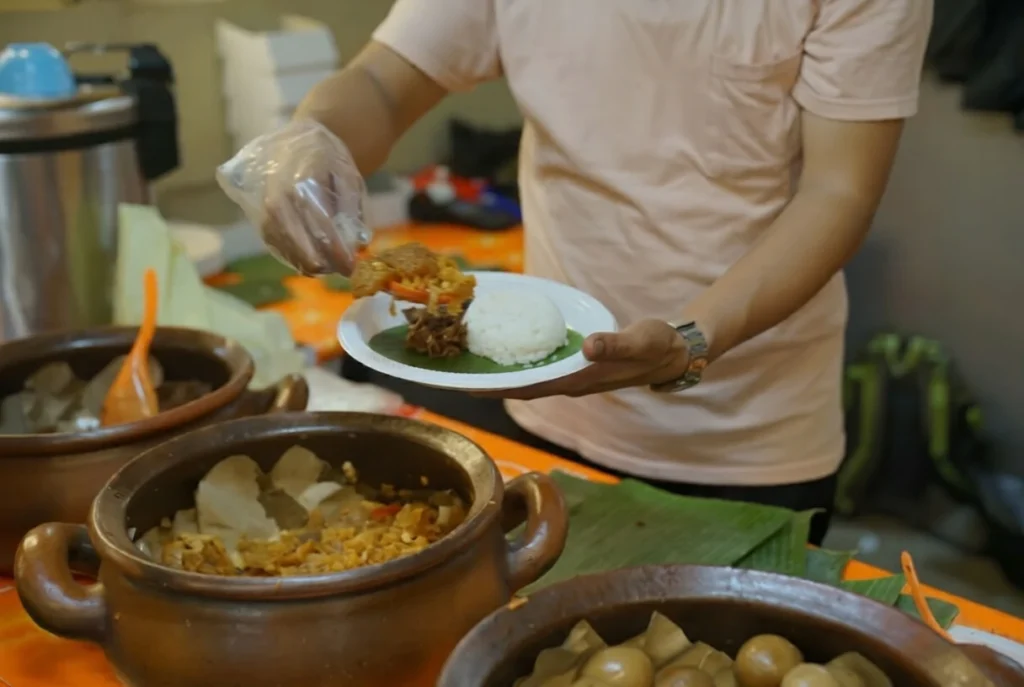
A man serves buyers typical Yogyakarta gudeg rice and side dishes, nasi gudeg
The Perfect Side Dishes – Completing the Meal
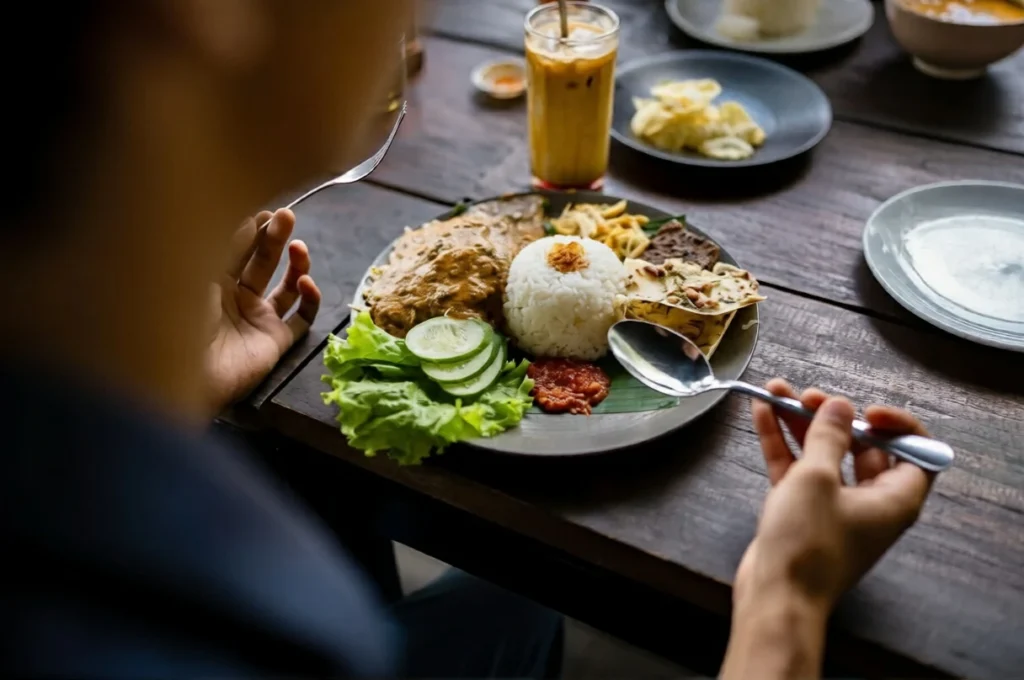
You cannot fully enjoy Gudeg variations without their accompanying side dishes. This meal is never served alone. It operates as a complete ensemble, where every element on the plate provides a necessary contrast in texture and flavor. If you want to build the perfect plate, you must include these essential companions.
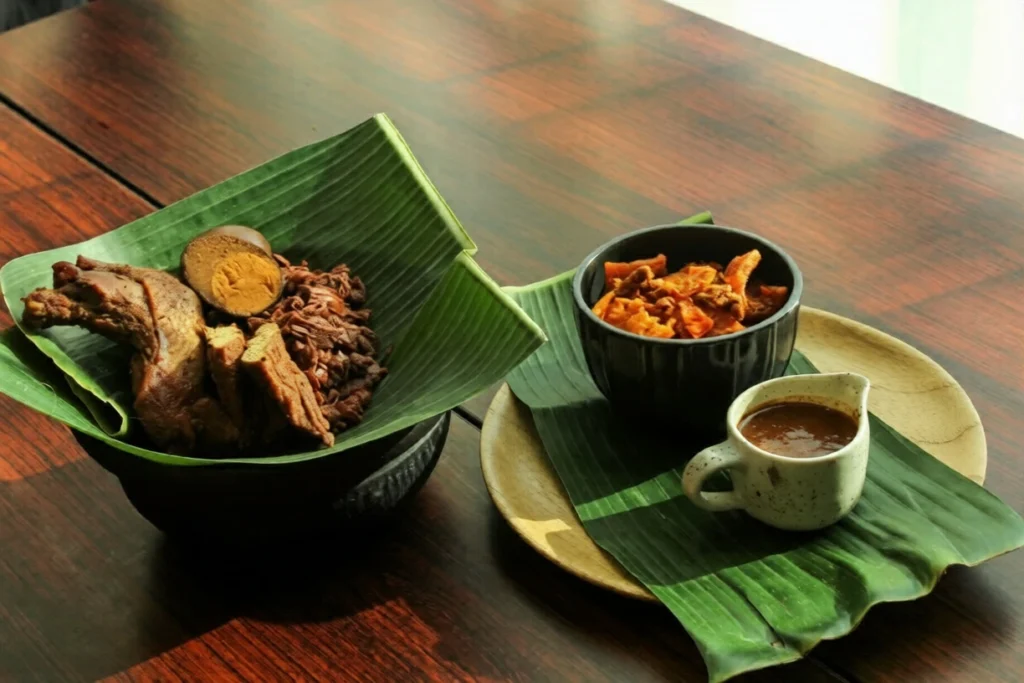
First, you need Sambal Goreng Krecek. This spicy stew made from crispy beef skin acts as the primary counterbalance to the sweetness of the jackfruit. The beef skin absorbs the spicy coconut broth, becoming spongy and bursting with heat in every bite. Without krecek, the sweet Yogya style can easily overwhelm your palate.
Next, you must add protein. Opor Ayam, a mild and savory chicken stew cooked in coconut milk and lemongrass, provides a soft, comforting element. Cooks usually serve village chicken (ayam kampung) because its firmer meat holds up well against the rich sauces. Additionally, you will often find Telur Pindang on the plate. Cooks boil these hard-boiled eggs in leftover jackfruit spices and shallot skins, giving them a beautiful marbled brown exterior and a slightly sweet, chewy texture.
Finally, no plate is complete without Tempeh and Tofu Bacem. Cooks braise these soy products in coconut water, coriander, and palm sugar, then lightly fry them. They add a dense, satisfying bite. Drizzle everything with a spoonful of Areh, a thick, savory coconut cream reduction, to tie all the flavors together perfectly. When you mix all these elements with warm rice, you create a symphony of sweet, spicy, salty, and savory flavors.
Ultimately, the side dishes elevate the jackfruit stew from a simple vegetable side into a magnificent, filling feast. The harmony between the spicy beef skin, the savory chicken, and the sweet jackfruit represents the pinnacle of Javanese culinary philosophy – finding perfect balance in contrast.
Why You Should Try These Variations
Exploring Gudeg variations offers much more than just a tasty meal. It provides a deep dive into the cultural heritage of Indonesia. When you taste the differences between the cities, you connect with the history, the geography, and the people of Central Java.
- Experience authentic culinary history.
- Discover plant-based meat alternatives naturally.
- Taste the balance of Javanese spices.
- Support local street food vendors.
- Expand your global flavor palate.
- Enjoy highly comforting, slow-cooked food.
- Learn about regional ingredient sourcing.
Remember one very important thing – finding your favorite version requires tasting as many as possible. You might discover that the famous sweet version is not your favorite, but the savory, spicy chicken feet version wins your heart. Keep an open mind, trust the local cooks, and embrace the culinary adventure.
Therefore, never hesitate to step off the beaten path when traveling. Ask the locals where they eat, seek out the hidden village stalls, and savor the incredible diversity that these slow-cooked jackfruit dishes bring to the table. You will walk away with a full stomach and a deeper appreciation for Indonesian food culture.
🏨 Stay Near the Best Culinary Hubs
When planning a food-focused getaway, travelers should look for comfortable accommodations located near famous culinary centers, such as the Wijilan area in Yogyakarta or Keprabon in Solo. Staying centrally allows visitors to wake up early and enjoy freshly cooked Gudeg variations right outside their hotel doors.
👉 Check availability and book highly-rated hotels and accommodations in Central Java.
Conclusion
In the end, it is clear that the incredible world of Gudeg variations showcases the brilliance of Indonesian cooking. From the sweet, teak-leaf-dyed classics of Yogyakarta to the pale, savory broths of Solo, and the innovative modern twists in upscale kitchens, this dish proves its remarkable versatility. The humble unripe jackfruit transforms into a culinary masterpiece through patience, rich spices, and cultural ingenuity.
By stepping out of your comfort zone and tasting the different regional styles, you experience the true soul of Central Java. Whether you love intense sweetness, fiery chili heat, or comforting savory flavors, a version of this iconic stew waits to become your new favorite meal. Embrace the journey, mix up your side dishes, and enjoy every flavorful bite of Indonesia’s greatest slow-cooked treasure.