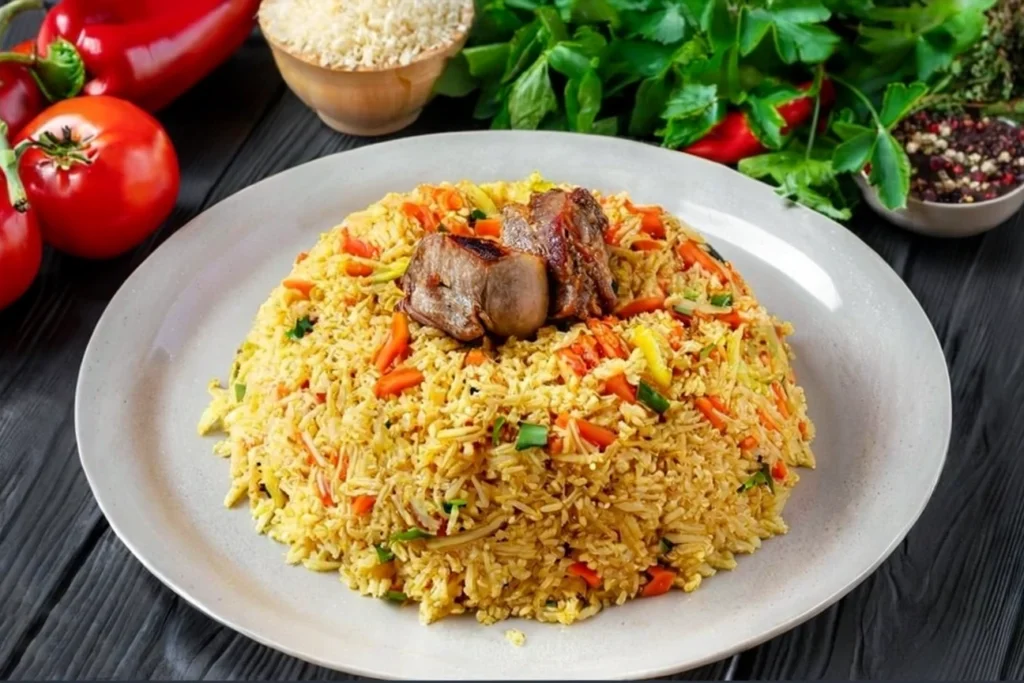
Exploring the vibrant culinary landscape of Central Asia offers countless rewards, but nothing captures the heart of the region quite like Traditional Plov in Uzbekistan. This iconic rice dish serves as a beautiful gateway to understanding local culture, warm hospitality, and ancient culinary traditions. To truly appreciate your culinary journey, you must define your travel goals and understand the deep historical roots behind this magnificent meal. This preparation helps you navigate the bustling markets and local teahouses with confidence. You will easily discover authentic flavors and build lasting memories around the dining table.
Thank you for reading this post, don't forget to subscribe!Mastering your food adventure means seeking out high-quality, authentic dishes that match the deep heritage of the region. Authentic plov brings together simple yet powerful ingredients in perfect harmony. You will taste perfectly cooked rice, tender cuts of lamb or beef, sweet yellow carrots, and fragrant spices. Furthermore, learning about regional differences significantly enhances your travel experience. This knowledge helps you appreciate the subtle changes in cooking methods across different cities.
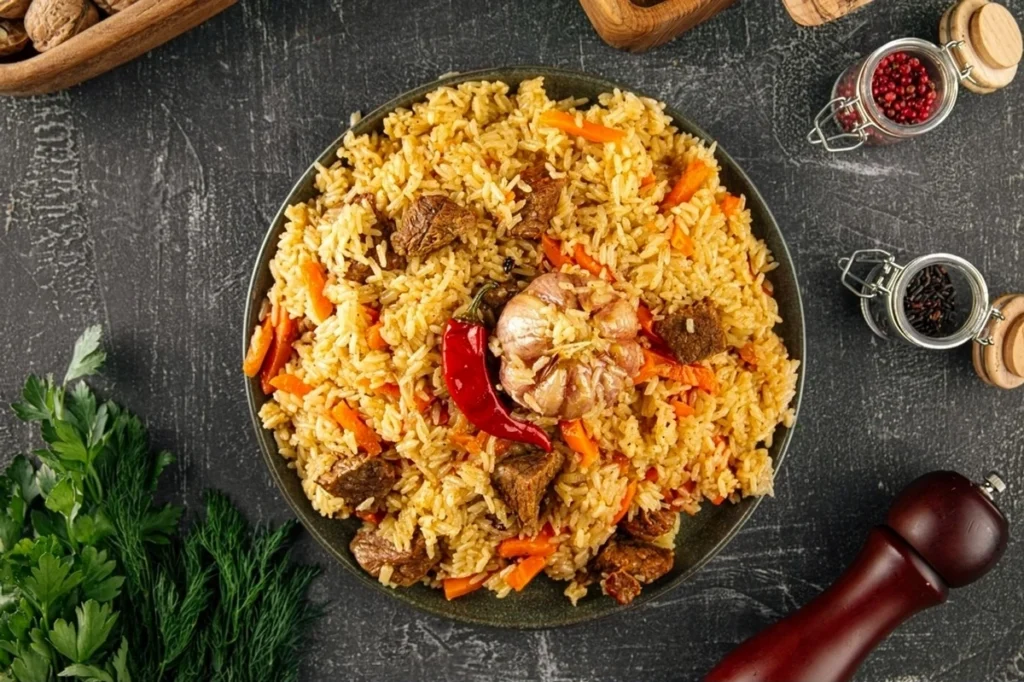
Large dish with Uzbek festive pilaf plov on grey background
Identify Your Plov Preferences and Regions
Start your journey by choosing which regional variations excite your palate the most. This choice will naturally motivate you to explore deeper and travel further across the country. When you identify the specific styles you want to taste, you can easily build a successful food itinerary that meets your travel expectations. You must tailor your culinary exploration based on the distinct flavors each ancient city offers. Additionally, you can follow the steps below to strengthen your understanding of Uzbekistan’s rich food map.
- Plan your visits to local Plov Centers (Osh Markazi) during the late morning to witness the massive cooking pots (kazans) in full action.
- Engage your senses by observing the unique cooking styles, such as whether chefs mix the ingredients in the pot or layer them carefully.
- Join community dining experiences in traditional teahouses (Choyxona) to eat alongside locals.
- Compare the different rice varieties, noting how local chefs use specific grains to absorb the rich flavors of the broth.
- Document your tasting notes after visiting each city, recording the subtle spice differences and ingredient ratios.
- Invest time in visiting local spice bazaars, such as Chorsu Bazaar, to see the raw ingredients before they reach the kitchen.
In short, you must explore all available opportunities and travel with an open mind to achieve a successful culinary adventure. Continuous tasting and learning will help you develop a deep appreciation for this majestic dish.
To better understand the incredible diversity of Traditional Plov in Uzbekistan, review this quick comparison table outlining the most famous regional variations.
Region | Local Name | Key Ingredients & Characteristics | Cooking Style |
Tashkent | Tuy Oshi (Wedding Plov) | Lamb, chickpeas, raisins, yellow carrots. | Ingredients cook together. Chefs mix it right before serving. |
Samarkand | Samarkand Oshi | Beef or lamb, whole garlic, quail eggs, carrots. | Cooked in strict layers. Chefs serve it layered, never mixed. |
Bukhara | Oshi Sofi | Lighter oil, raisins, unique spice blend. | Ingredients pre-cooked separately, then steamed together in a copper pot. |
Khorezm | Khorazm Oshi | Yellow carrots, minimal spices, large meat chunks. | Slow-cooked for hours. Extremely minimalist and meat-forward. |
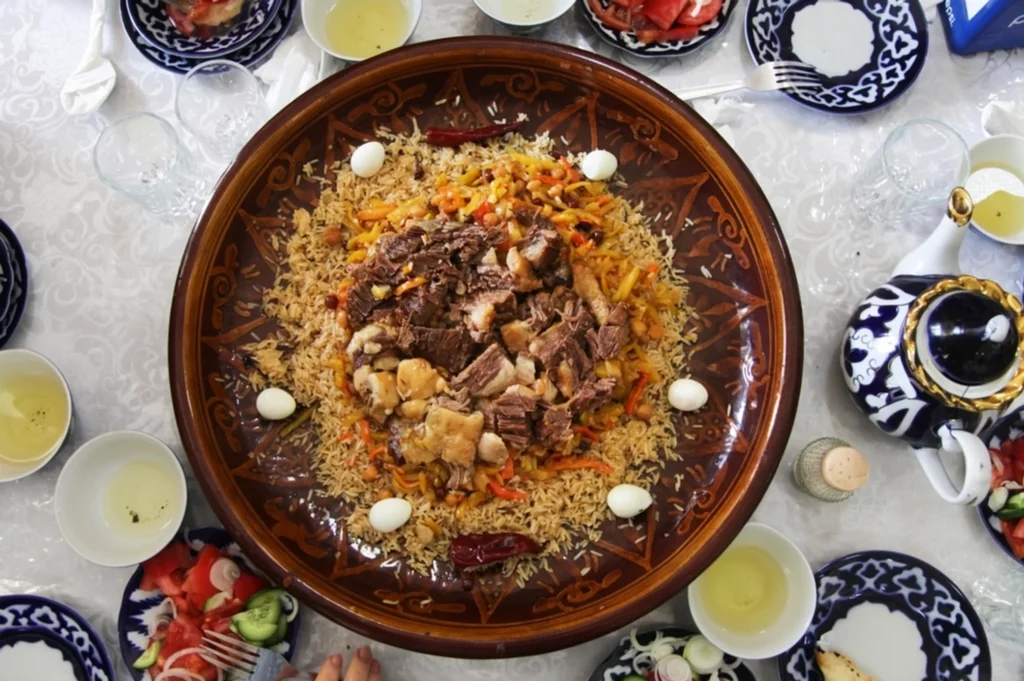
Samarkand pilaf with quail eggs on a ceramic dish in a restaurant
Plan Your Food Journey
Planning your food itinerary and daily schedule are the essential elements that determine the success of your culinary trip. Careful planning ensures you never miss the best batches of food. Here are some strategic tips that can help you achieve the perfect food experience.
- Timing is Everything 📌 Before heading out, you must know that locals eat plov primarily for lunch. Arrive at Plov Centers by 11:30 AM to guarantee a fresh, hot plate before they run out.
- Understand the Menu Pairings 📌 Heavy rice dishes require balance. Locals always pair their meal with hot green tea and Achichuk, a fresh tomato and onion salad that perfectly cuts through the richness.
- Locate the Plov Centers 📌 Researching map locations for major spots like the Central Asian Plov Center in Tashkent helps you organize your daily sightseeing routes efficiently.
- Embrace Thursday Traditions 📌 Thursday holds a special place in the local culture. Families gather specifically to eat this dish on Thursdays, making the atmosphere incredibly lively and festive.
- Learn Basic Etiquette📌 Respect local customs by washing your hands before meals. Many locals eat with their right hand, though using a spoon is perfectly acceptable for visitors.
- Hydrate with Tea 📌 Hot green or black tea helps digestion. Locals serve tea in small bowls (piyala). Pouring a small amount shows respect and ensures the tea stays hot.
- Engage with Your Hosts 📌 You should smile and show appreciation. Say “Rahmat” (thank you) after your meal. This small gesture opens doors to warm conversations and smiles.
- Pace Your Eating 📌 Food trips require stamina. Since the food contains rich oils and dense carbohydrates, take your time, eat slowly, and enjoy the conversation around the table.
By embracing these strategies and planning your daily meals, you can increase your chances of having a flawless cultural experience while protecting your stomach from overindulgence.
For international food travelers planning their journey to Uzbekistan, finding convenient flights to the capital is the crucial first step. Travelers can compare flight prices and schedules to Tashkent through trusted booking platforms to secure the most efficient routes. Furthermore, for visitors intending to base their culinary adventure in the capital, securing comfortable accommodations near culinary hubs like Chorsu Bazaar is highly recommended. Food enthusiasts can explore top-rated hotels and guesthouses in Tashkent to ensure a restful stay between their vibrant dining excursions.
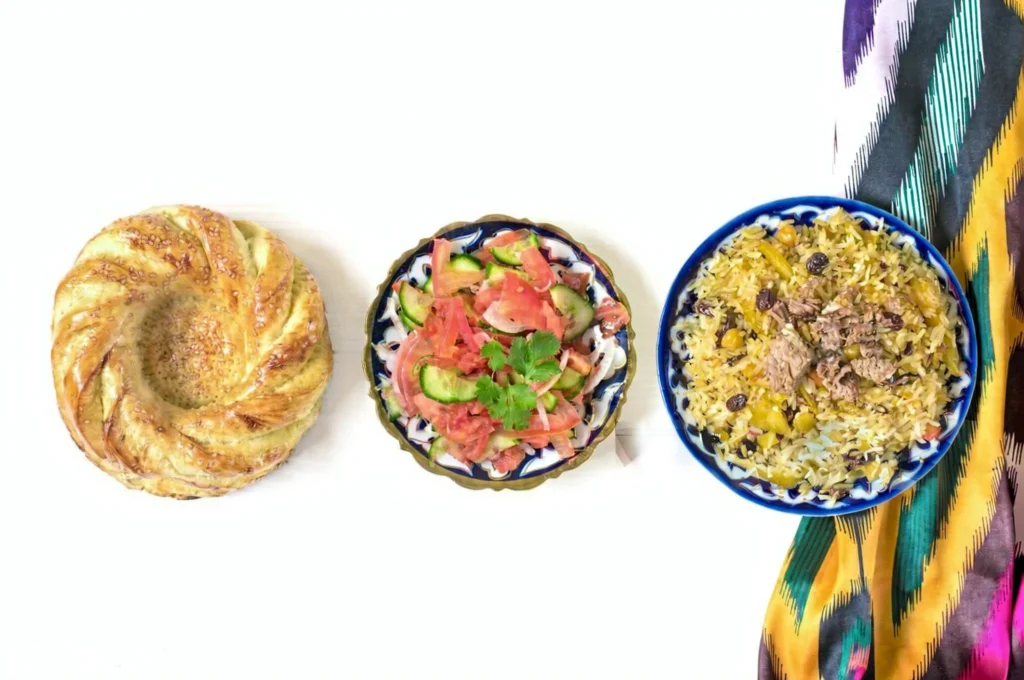
National Uzbek pilaf with meat, achichuk salad of tomato, cucumber, onion in plate with traditional pattern, cilantro, cherry tomatoes, garlic, bread tortilla
Focus on the Quality of Ingredients
Understanding the core ingredients serves as a fundamental strategy to deeply appreciate your culinary journey. A meal that boasts high-quality, fresh ingredients significantly impacts its flavor profile and historical authenticity. Here are some key elements to look for when evaluating your food.
- Devzira Rice Pay attention to the rice. Authentic recipes often use Devzira, a unique, thick, slightly red-tinted rice grown in the Fergana Valley that perfectly absorbs water and fat.
- Yellow Carrots Look for the distinctive yellow carrots. Unlike standard orange carrots, the Central Asian yellow variety provides a subtle sweetness and holds its shape during long cooking times.
- Tender Lamb and Beef Notice the quality of the meat. Chefs use fresh, locally sourced halal lamb or beef, slow-cooked until it falls apart effortlessly on your fork.
- Cottonseed Oil Ask about the cooking oil. Traditional chefs use cottonseed oil or lamb tail fat (kurdyuk) to give the dish its signature rich, golden glaze.
- Aromatic Spices Identify the whole spices. Cumin (zira) takes center stage, accompanied by black pepper, coriander seeds, and occasionally dried barberries for a touch of acidity.
- Sweet and Savory Additions Spot the garnishes. Many regions enhance the flavor profile by adding plump raisins, boiled chickpeas, whole garlic heads, or even boiled quail eggs.
- The Zirvak Base Understand the foundation. The magic begins with the “zirvak”—a rich, slow-simmered stew of meat, onions, carrots, and spices created before the chef adds the rice.
By recognizing these vital ingredients, you can evaluate the quality of the food you consume. This knowledge elevates your status from a casual tourist to an informed food traveler, ensuring a successful and enriching gastronomic journey.
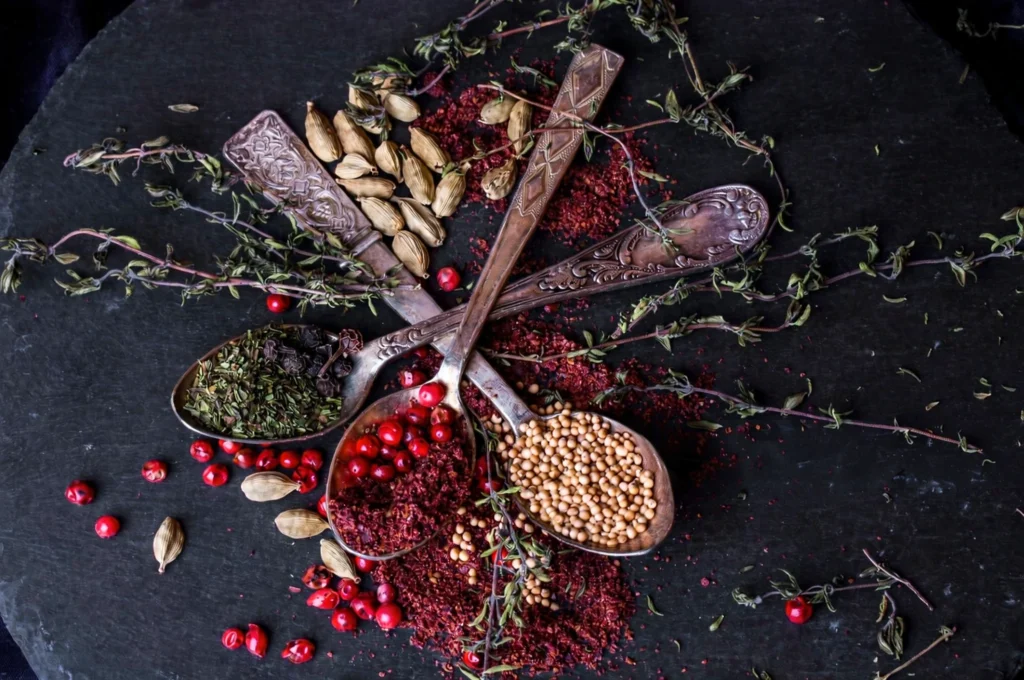
Herbs and spices selection in old metal spoons
Understand the Plov Cooking Techniques
Appreciating the cooking process acts as one of the key factors for a meaningful cultural connection during your trip. Thanks to the preservation of ancient techniques, the cooking process transforms basic ingredients into an extraordinary masterpiece. This careful preparation increases the depth of flavor and positively impacts the communal dining experience. When you watch a master chef at work, you witness centuries of tradition coming to life right before your eyes. You will see how chefs handle massive quantities of food with incredible precision and grace.
Your attention to the massive cast-iron pot, known as the kazan, remains crucial to understanding this culinary art. Cooking in a kazan does not just represent a technical choice; it forms a comprehensive cultural practice that ensures even heat distribution and allows the rice to steam perfectly. Through careful temperature control, layering of ingredients, and precise timing, the chef creates magic.
You can enhance your appreciation by visiting open-air kitchens early in the morning. By paying attention to the cooking sequence, you can witness the transformation of raw meat and vegetables into a cohesive, fragrant meal. Therefore, do not ignore this important aspect of your travel itinerary. Dedicate the necessary time to watch the masters at work to gain a lasting appreciation for this culinary art form.
In short, no food traveler can truly understand the culture without observing the cooking process. If you want to connect deeply with the local heritage and build a rich travel narrative, you must invest time in watching the magnificent kazan in action.
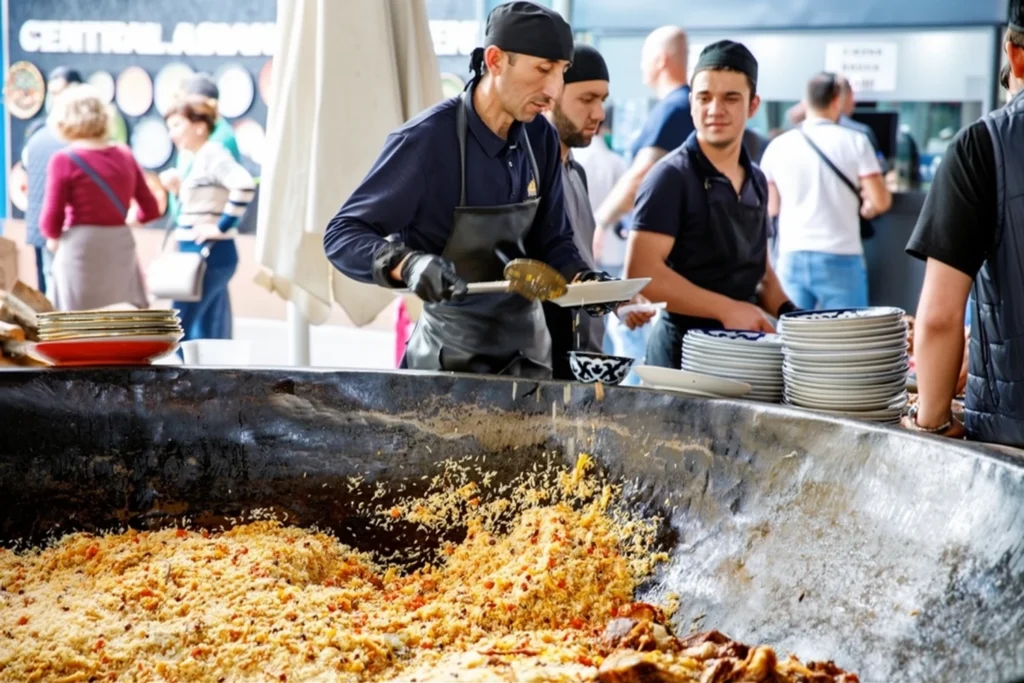
Tashkent, Uzbekistan - male cooks stirs rice in a cauldron to cook traditional Uzbek pilaf in Central Asian Pilaf Center Besh Qozon
Interact with Local Chefs (Oshpaz)
Your interaction with the local master chefs, known as Oshpaz, stands as a critical factor in your successful food journey. When you build respectful connections with these culinary artists and show genuine interest in their craft, you achieve a much deeper cultural understanding. Here are some effective strategies you can follow to interact with chefs during your travels.
- Ask Meaningful Questions👈 Show active interest by asking the chef about the specific rice they use or how long they simmer the zirvak. Polite inquiries build a positive rapport.
- Request Permission for Photos👈 Always ask before snapping photos of the chef or the kitchen. Most chefs feel incredibly proud of their work and will happily pose with their massive ladles (kapgir).
- Express Genuine Appreciation👈 Provide positive feedback after your meal. Use simple local phrases to compliment the food, which shows your respect for their hard work and dedication.
- Visit During Off-Peak Hours👈 Arrive slightly before the lunch rush. Chefs have more time to chat and explain their process before the crowds descend upon the dining hall.
- Observe Without Interfering👈 Stand back and watch the intricate layering process without getting in the way. Your respectful distance allows them to work safely around the hot oil.
- Share Your Experience👈 Mention that you traveled from far away specifically to taste their recipe. This often brings a bright smile and sometimes even a special taste directly from the pot.
By adopting these interactive strategies and engaging effectively with the locals, you can build wonderful memories and achieve an authentic experience in the heart of the Silk Road.
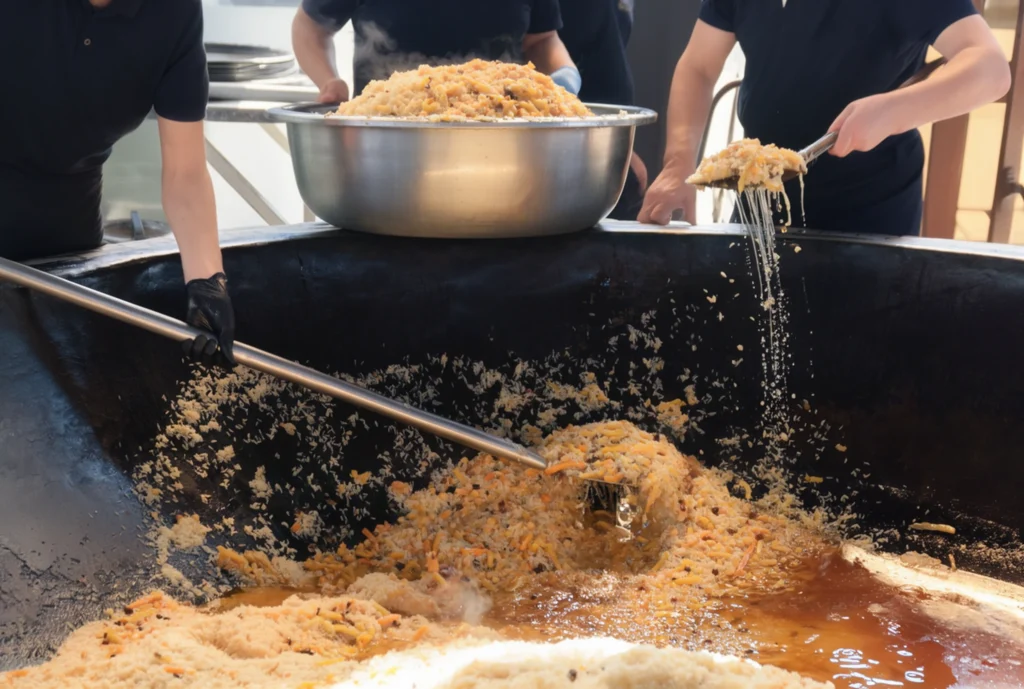
Uzbek plov is being prepared in giant kazan, Tashkent
Connect with Local Food Guides
In the realm of food travel, connecting with local guides and culinary experts proves to be a decisive strategy for finding hidden gems. Local guides act as vital partners who provide the necessary context, translation, and access to neighborhood teahouses tourists usually miss. Strengthening your network with local experts enhances your overall journey.
- Research and Selection Begin by researching local culinary tours that align with your specific interests. Finding guides who prioritize authentic neighborhood spots over tourist traps ensures a much richer experience.
- Discover Hidden Choyxonas Rely on your guide to take you to hidden teahouses (Choyxonas) tucked away in residential alleys. These unassuming spots often serve the most authentic and soulful meals.
- Overcome Language Barriers Utilize your guide’s language skills to ask detailed questions about the ingredients. This translation allows you to learn fascinating family recipes and local folklore.
- Navigate the Bazaars Walk through local markets with an expert by your side. Guides help you identify different spices, taste fresh produce, and understand how locals shop for their daily meals.
- Learn Dining Customs Allow your guide to teach you the nuances of dining etiquette. They will show you how to properly tear traditional bread (non) and pour tea for your tablemates.
- Understand Regional History Listen to the historical context provided by experts. Learning the legends of Alexander the Great or the Silk Road traders adds a wonderful layer of meaning to every bite.
- Access Home-Cooked Meals Take advantage of opportunities to dine in a local family home. Guides often arrange these intimate experiences, allowing you to see the domestic side of this famous dish.
- Foster Deep Connections Let the shared love of food build bridges. Eating together breaks down cultural barriers and fosters genuine human connection between you and your local hosts.
In summary, hiring a local food guide acts as a highly effective strategy for unlocking the true culinary secrets of the country. Through their knowledge and connections, your trip expands beyond simple sightseeing, opening doors to authentic local life and elevating your cultural understanding immensely. Use these opportunities positively and enjoy the delicious rewards of your journey.
For culinary tourists eager to dive deep into the local gastronomy, booking a guided excursion provides unparalleled access to hidden culinary gems. Visitors can browse curated food tours and market activities in Tashkent to maximize cultural immersion, navigate the bustling spice markets with an expert, and taste recipes that have been passed down through generations.
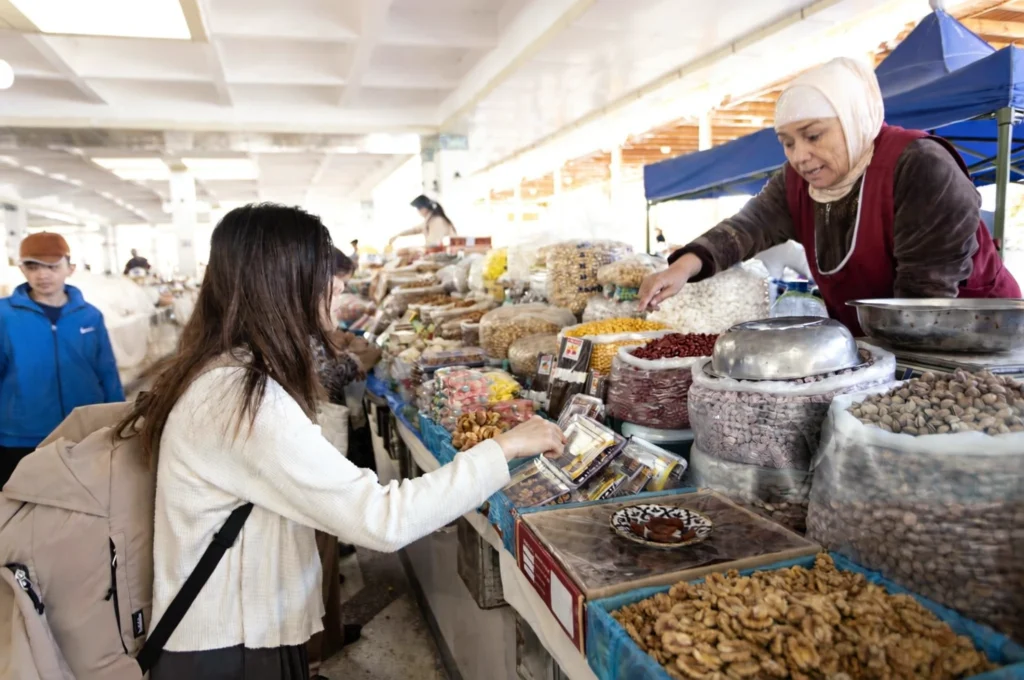
Tourist in Uzbekistan market
Keep Exploring the Culinary Scene
Your continuous exploration of the culinary scene proves vital for achieving a comprehensive understanding of local food. A successful food traveler stays curious and remains open to trying new variations across different towns. By continuously seeking out new flavors, you expand your palate, discover the rich tapestry of regional agriculture, and grasp the nuances of Silk Road spices.
Invest time in visiting specialized food markets, read local culinary literature, and participate in cooking masterclasses to strengthen your knowledge. You can also connect with fellow food travelers and share recommendations about the best hidden stalls. By maintaining your curiosity, you empower yourself to find the most delicious plates, guaranteeing a profoundly memorable trip.
Furthermore, continuous exploration helps you appreciate the complementary dishes that surround the main event. You will discover the joy of fresh somsa (savory baked pastries), warm lepeshka (tandoor bread), and delicate manti (steamed dumplings). Consequently, stepping beyond your comfort zone solidifies your status as a true culinary adventurer and deeply enriches your travel memories.
Ultimately, your commitment to continuous exploration reflects a genuine desire to grow, learn, and respect the host culture. This dedication leads to building strong, lasting connections with the local community and ensures your travel experiences remain vibrant, educational, and deeply satisfying.

Board with tasty Uzbek samsa and tomato sauce on dark background
Practice Patience and Cultural Appreciation
Practicing patience and cultural appreciation serve as the ultimate keys to a rewarding travel experience. In a busy, modern world, the traditional methods of slow cooking require a shift in mindset. True culinary art does not happen in a microwave; it requires hours of careful simmering and dedication from the chef.
- Wait for the perfect batch.
- Respect the slow cooking process.
- Appreciate the chef’s hard work.
- Embrace the lively, noisy atmosphere.
- Show gratitude for the hospitality.
- Savor every single bite.
- Accept the heavy, rich nature of the food.
Remember something very important – Authentic culinary travel requires effort and an open mind. You might encounter crowded dining halls or language barriers early in your trip. Overcoming these small hurdles and embracing the chaos is where the real magic happens. Remember also that simply being present at a local table is a victory. My advice to you is to research the culture thoroughly before you pack your bags.
Therefore, do not hesitate to embrace the unfamiliar aspects of your journey. Face any travel challenges with a smile, and always remember that patience and an open heart will unlock the most profound and delicious experiences Central Asia has to offer.
For digital-savvy travelers seeking real-time advice and engaging community discussions, connecting with fellow explorers is highly beneficial. Visitors can join dedicated Telegram channels for Uzbekistan travel to exchange tips, discover newly opened food stalls, and stay completely updated on the latest culinary events happening in Tashkent.
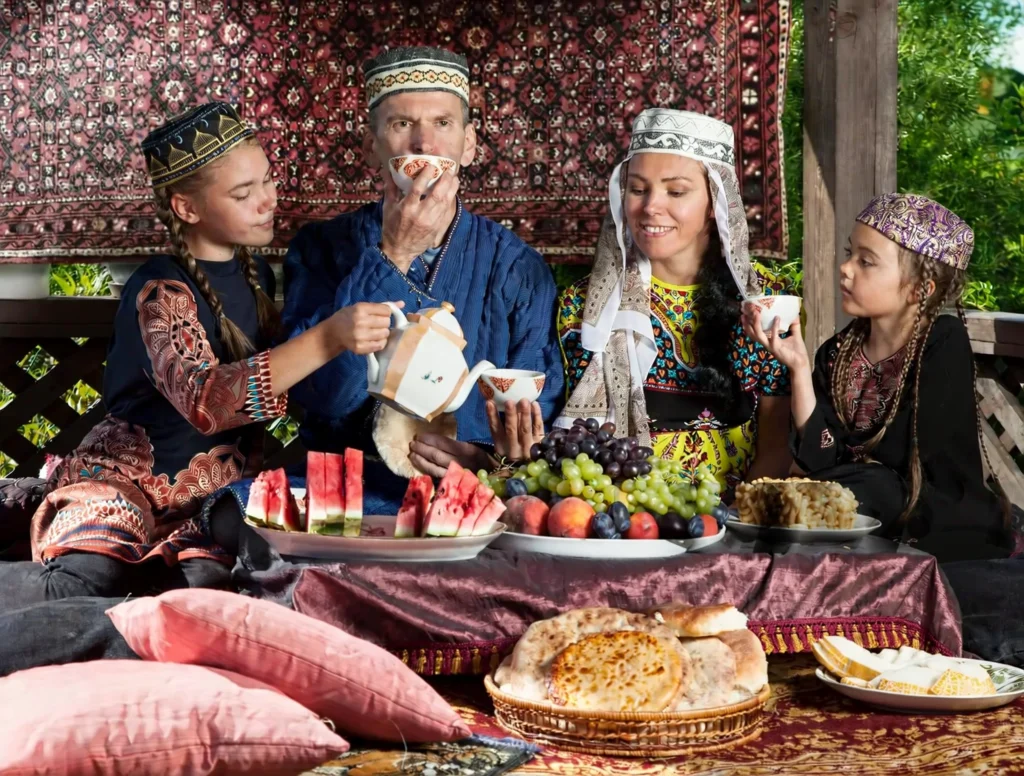
Uzbekistan family have breakfast
Conclusion
Ultimately, we can say that the strategies for a successful food journey require a careful balance of curiosity, planning, and respect. You must remain enthusiastic and committed to discovering new flavors, while constantly improving your understanding of local customs. You also need to comprehend the historical context of the dish and approach every meal with deep gratitude.
In addition to this, you should adopt smart travel habits, like eating at the right times, engaging politely with chefs, and relying on fresh green tea to aid your digestion. By applying these strategies in a balanced and thoughtful manner, you can build an unforgettable travel itinerary, enjoy the greatest meals of your life, and forge a lasting connection with the beautiful culture of Uzbekistan.