Every great city has a dish that tells its story. When you look at the history of Ajiaco, you see the entire history of Bogotá in a single bowl. This rich, golden potato and chicken stew is much more than just a comforting meal. It represents a deep cultural blending of two distinct worlds. You can taste the ancient Indigenous Muisca traditions and the Spanish colonial influences in every spoonful. To truly understand this beloved Colombian icon, we must look back at its origins, the unique ingredients that make it special, and how it evolved into the comforting masterpiece we know today.
Thank you for reading this post, don't forget to subscribe!Bogotá sits high in the Andes mountains, at an altitude of over 2,600 meters. The weather is famously cool, cloudy, and often rainy. In this chilly climate, people naturally crave warmth and comfort. Ajiaco provides exactly that. The thick, hearty broth warms the body, while the complex flavors comfort the soul. Cooks prepare this dish by simmering three different types of native potatoes until they melt together, adding chicken, corn on the cob, and a special wild herb called guascas. Let us explore how this humble mountain stew became a worldwide culinary treasure.
Travel Planning Tip – For food historians and cultural travelers eager to experience this comforting dish right at its source, planning a journey to the high Andes is the perfect starting point. Visitors can easily compare and book flights to Bogotá to begin their culinary adventure. Furthermore, guests looking to stay close to the best traditional restaurants can browse a wide selection of hotels and accommodations in Bogotá, ensuring a comfortable retreat after a day of historical dining.
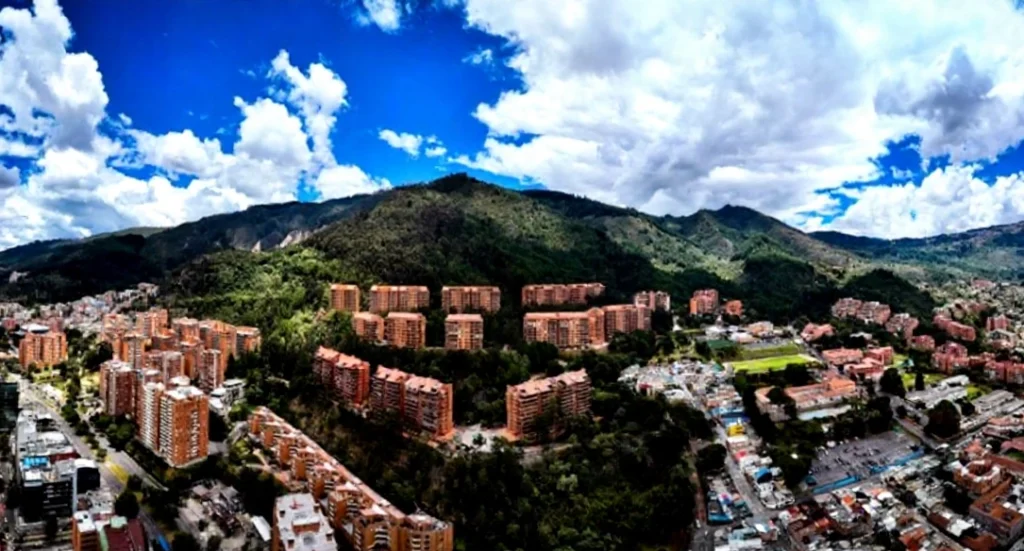
Aerial views of the Usaquen Neighborhood in Bogotá
The Origin of the Name “Ajiaco”
Before we examine the ingredients, we must solve a linguistic mystery. The name “Ajiaco” causes some confusion among food historians. The word originally comes from the Taíno language of the Caribbean. The Indigenous Taíno people used the word “ají” to describe hot chili peppers. When the Spanish arrived in the Americas, they began calling almost any Indigenous stew an “ajiaco,” especially if it contained chili peppers.
- However, the traditional recipe in Bogotá does not use hot peppers at all. It is a mild, savory dish.
- Historians believe the Spanish colonizers simply applied a familiar Caribbean term to the local Andean stews they encountered.
- Other Latin American countries, like Cuba and Chile, have completely different dishes called Ajiaco, proving the Spanish used the term loosely.
- Some local Colombian legends claim the name comes from an Indigenous Muisca ruler named “Aji” and his wife “Aco,” though historians view this as a charming myth rather than factual history.
Despite the confusing name, the history of Ajiaco in Colombia remains entirely unique to the Altiplano Cundiboyacense—the high plateau region where Bogotá is located. The true magic of the dish lies in its ancient local roots rather than its imported name.
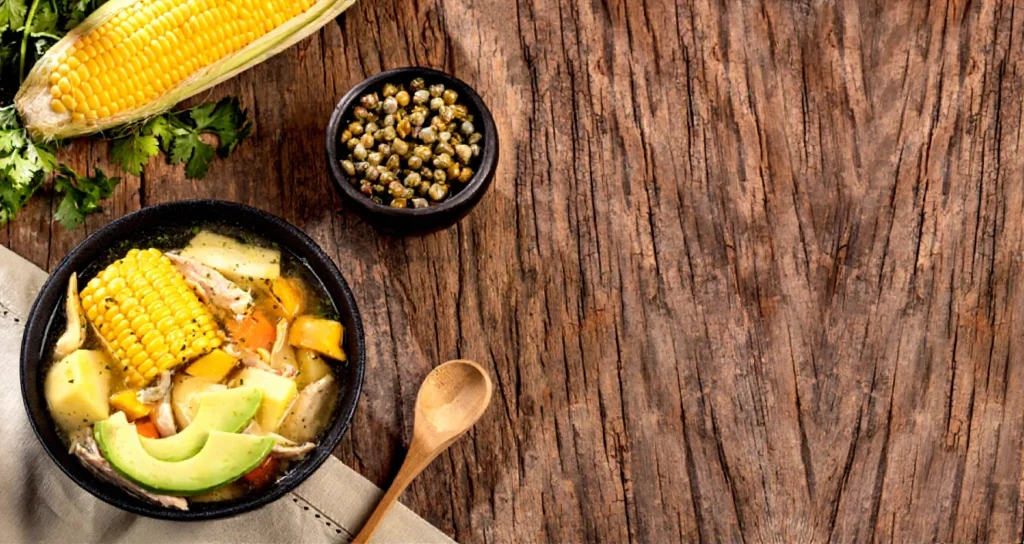
Tasty soup ajiaco with chicken and vegetables
The Indigenous Roots – Muisca Traditions
Long before the Spanish arrived, the Muisca civilization thrived in the cool Andean highlands. They built a powerful agricultural society based on crops that could survive the high altitude. Their diet relied heavily on corn (maize) and many varieties of potatoes. The pre-Columbian history of Ajiaco starts right here in the Muisca cooking pots.
- Mastering the Potato 📌 The Muisca people cultivated hundreds of potato varieties. They understood how different potatoes cooked down, using starchy ones to thicken liquids naturally.
- The Role of Corn 📌 Corn held massive spiritual and nutritional value. The early versions of this stew featured large chunks of local corn boiled until tender.
- Discovering Guascas 📌 The Muisca foraged a wild weed known as guascas. They added this herb to their cooking pots, giving their stews a distinct, earthy flavor that defines the dish today.
- Original Proteins 📌 Before chickens arrived, the Muisca likely added wild game, birds, or perhaps fish from the highland rivers to their stews, or ate it entirely plant-based.
- Clay Pot Cooking 📌 They cooked their meals in thick, dark clay pots over open fires. This slow-cooking method allowed the starches to break down and create a rich, creamy texture without any dairy.
The Muisca established the fundamental base of the recipe. They provided the method, the potatoes, the corn, and the essential herbs. They created a dish that offered immense energy for farming in the cold mountains.
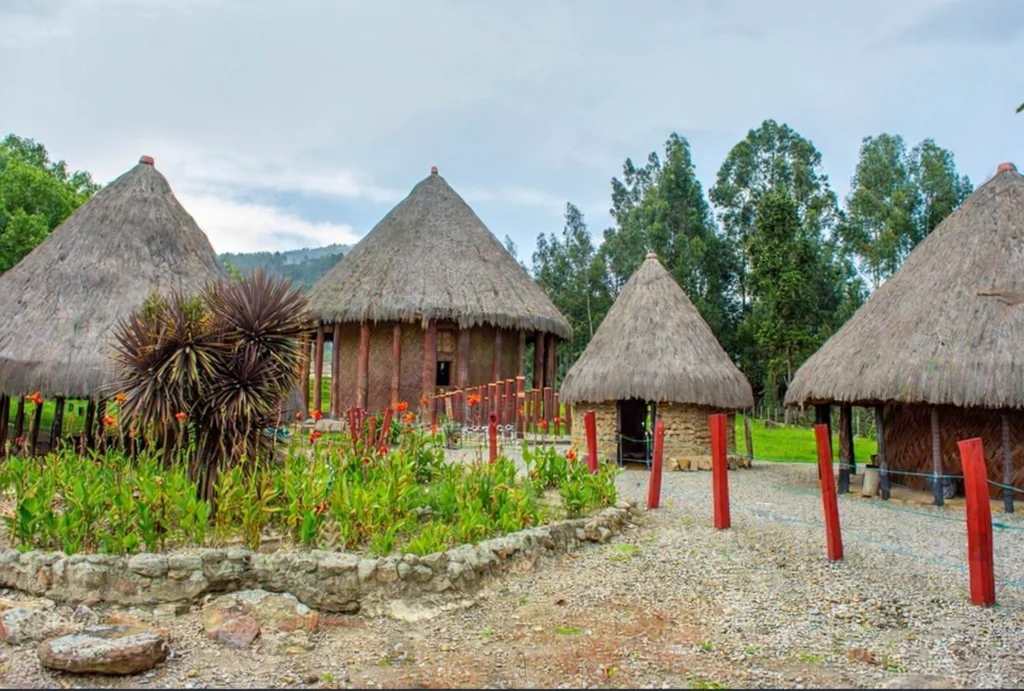
Temple of the Sun, Sogamoso, Boyacá, Colombia - Historical and Cultural Significance of Muisca Heritage
The Spanish Colonial Influence
In the 1530s, Spanish conquistadors, led by Gonzalo Jiménez de Quesada, arrived in the region. They conquered the Muisca and founded the city of Santa Fe de Bogotá in 1538. The Spanish brought new animals, new plants, and new culinary traditions from Europe. The blending of Muisca agriculture and Spanish ingredients changed the history of Ajiaco forever.
- Introduction of Chicken The Spanish introduced domesticated chickens to the Andes. The wealthy colonial settlers began replacing Indigenous game meats with chicken, making the stew richer and more accessible.
- Mediterranean Capers The Spanish missed the flavors of home. They began adding pickled capers (alcaparras) to the stew. This added a sharp, briny acidity that cut through the heavy starch of the potatoes beautifully.
- Heavy Cream (Crema de Leche) Cows did not exist in the Americas before the Spanish arrived. The colonizers introduced dairy farming. Adding a splash of thick cream to the stew became a symbol of wealth and status.
- The Final Fusion Cooks in colonial kitchens, often Indigenous or Mestizo women, combined their traditional potato bases with these new Spanish luxury ingredients. They created a perfect culinary marriage.
This cultural fusion created the modern version we eat today. It is a true Mestizo dish—half Indigenous, half European. It represents the brutal yet transformative period of colonial history told through food.
Immersive Culinary Experiences – Gastronomy lovers eager to explore these historic flavors firsthand can enhance their trip by securing local activities. Travelers can book guided cultural tours and cooking activities in Bogotá. These hands-on excursions often take participants through vibrant local markets, allowing them to identify native ingredients and learn the authentic preparation methods from local experts.
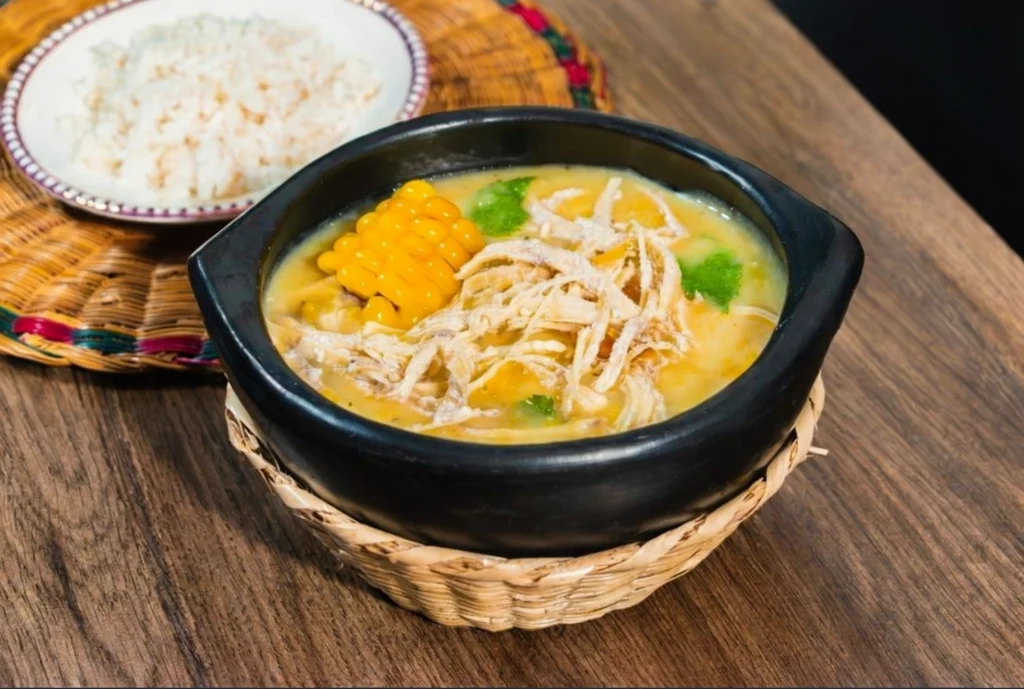
Authentic Ajiaco Santafereño A Delicious Traditional Colombian Chicken Soup Recipe
Comparing the Ages – How the Stew Changed
To truly grasp the evolution of this incredible dish, we can compare its forms across three distinct historical periods. This shows how external influences shaped the bowl over centuries.
Historical Era | Primary Ingredients | Cultural Meaning |
Pre-Columbian (Muisca) | Native potatoes, corn, wild game, guascas, water. | Sustenance for high-altitude farmers; deep connection to the earth. |
Colonial Period (1500s-1800s) | Potatoes, chicken, capers, cream, corn, guascas. | A status symbol blending European wealth with local peasant food. |
Modern Day (Bogotá) | Three specific potatoes, shredded chicken, capers, cream, avocado side. | A symbol of national pride, family unity, and Sunday traditions. |
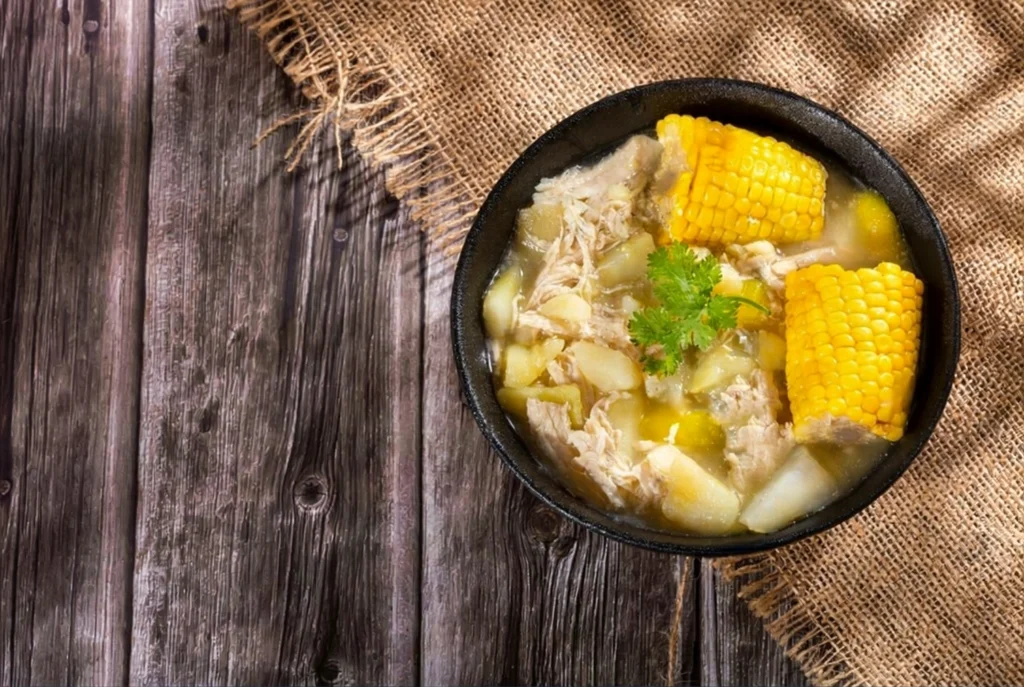
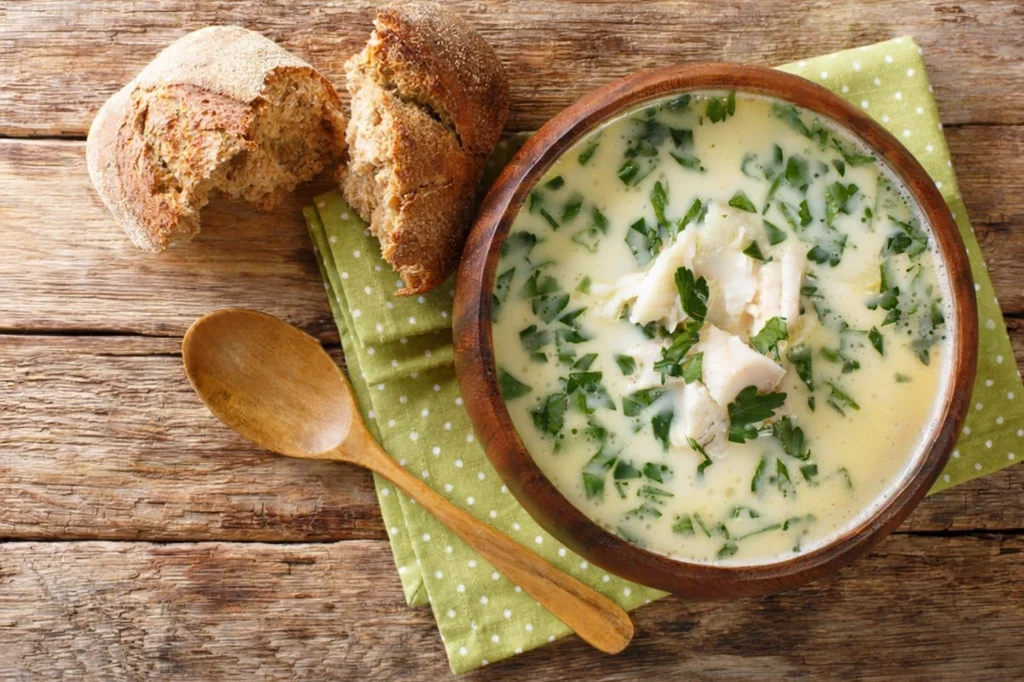
ajiaco soup with chicken and vegetables
The Three Pillars of Potato Perfection
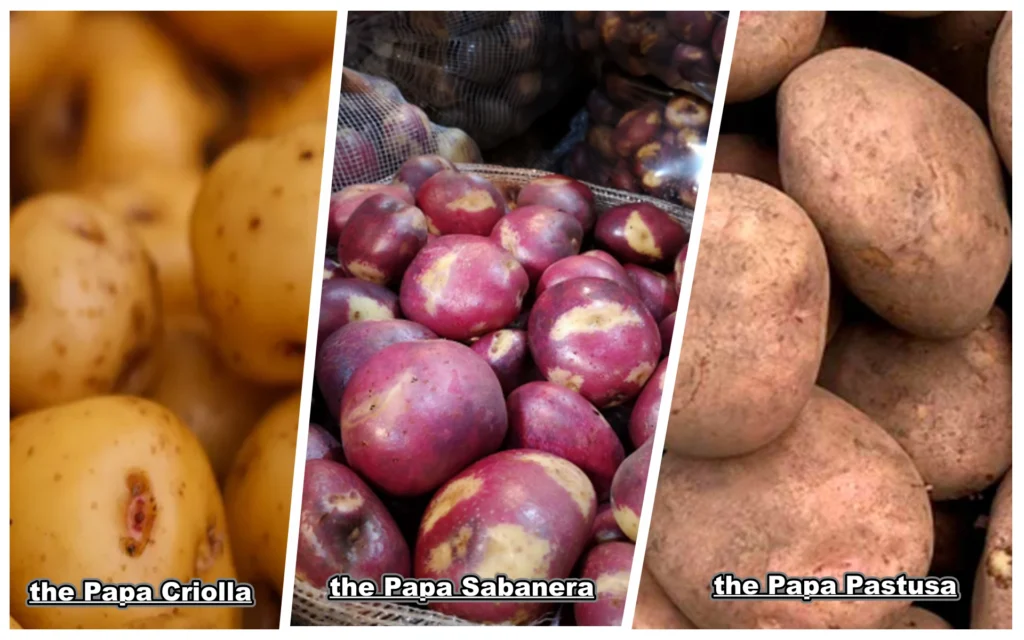
You cannot make authentic Ajiaco with just any potato. The history of Ajiaco relies entirely on the precise combination of three distinct potato varieties grown in the rich volcanic soil of the Andes. Each potato serves a specific scientific and culinary purpose in the pot. If you alter the potato mix, you fundamentally change the dish.
The first is the Papa Criolla. This is a small, bright yellow potato that you can only find easily in South America. It has an incredibly high starch content. When you boil the Papa Criolla, it completely falls apart and dissolves into the water. This natural breakdown creates the thick, creamy, yellow base of the soup. You do not need flour or cornstarch; the Papa Criolla does all the thickening work perfectly.
The second is the Papa Sabanera. This potato has a purple skin and a firm, dense white inside. It holds its shape perfectly even after hours of slow simmering. When you take a bite of the stew, the Sabanera provides a satisfying, firm texture. It gives the dish body and prevents it from turning entirely into a puree.
The third is the Papa Pastusa. This potato falls somewhere in the middle. It is a floury potato that softens nicely but retains a little bit of structure. It acts as a bridge between the dissolving Criolla and the firm Sabanera. The Pastusa absorbs the flavors of the chicken broth, the capers, and the guascas beautifully, becoming little flavor bombs in every bite.
Fun Fact – Cooks outside of Colombia often struggle to recreate the exact texture of Ajiaco because the Papa Criolla is notoriously difficult to export fresh. Many expats rely on frozen or jarred yellow potatoes to get a taste of home.
The Soul of the Dish – The Guasca Herb
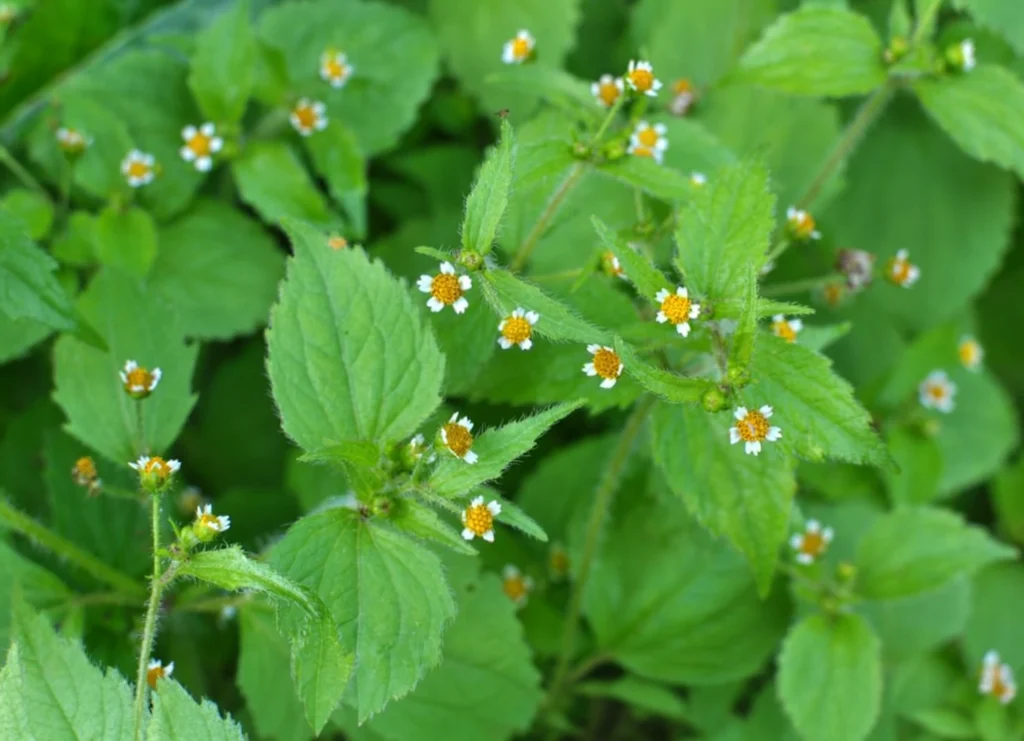
If the potatoes form the body of the stew, the guasca herb forms its soul. In the English-speaking world, botanists call this plant Galinsoga parviflora, and gardeners often view it as a pesky, invasive weed. But in Colombia, it is culinary gold. The history of Ajiaco cannot exist without this humble green plant.
Guascas give the soup a highly distinct, earthy, slightly minty, and grassy flavor. There is no real substitute for it. You add the fresh or dried leaves toward the end of the cooking process. As the leaves hit the hot broth, they release their essential oils, filling the kitchen with an aroma that instantly transports any Colombian back to their grandmother’s house.
The Muisca people knew the value of this plant thousands of years ago. By continuing to use it today, modern chefs keep an unbroken chain of culinary history alive. Every time a chef sprinkles guascas into the pot, they honor the ancient Indigenous traditions of the Andean highlands.
The Soul of the Dish – The Guasca Herb
How Ajiaco Evolved Over Time
In the 19th century, Ajiaco began shifting from a rural peasant meal to an urban cultural phenomenon. As Bogotá grew into a large, bustling capital city, the people brought their farm recipes with them. The recipe became standardized. Families started establishing their own secret ratios of potatoes and chicken.
- The Sunday Tradition During the 20th century, preparing this meal became a sacred Sunday ritual. Families would gather after morning church services to eat a massive bowl together.
- The Restaurant Boom In the mid-1900s, traditional restaurants in the historic La Candelaria district of Bogotá began serving it to politicians, artists, and tourists.
- International Recognition As tourism in Colombia increased in the 21st century, international food critics and travel shows discovered the dish. They praised its complex history and incredible flavor profile.
- Modern Variations Today, some modern chefs create vegan versions using mushrooms instead of chicken, proving that the recipe continues to evolve while respecting its roots.
- The Chamba Pottery People began serving the soup almost exclusively in black clay bowls from the town of La Chamba. This presentation became iconic worldwide.
- A Symbol of Unity During difficult times in Colombian history, sharing this warm, abundant meal served as a powerful way to keep families and communities together.
- National Competitions Bogotá now hosts annual festivals and competitions to find the best Ajiaco in the city, keeping the competitive spirit of culinary excellence alive.
In short, Ajiaco moved from the rural Indigenous farms into the wealthy colonial dining rooms, and finally settled into the heart of modern urban Bogotá. It bridged class divides because both the richest politicians and the working-class citizens consider it their absolute favorite comfort food.
The Cultural Significance in Bogotá Today
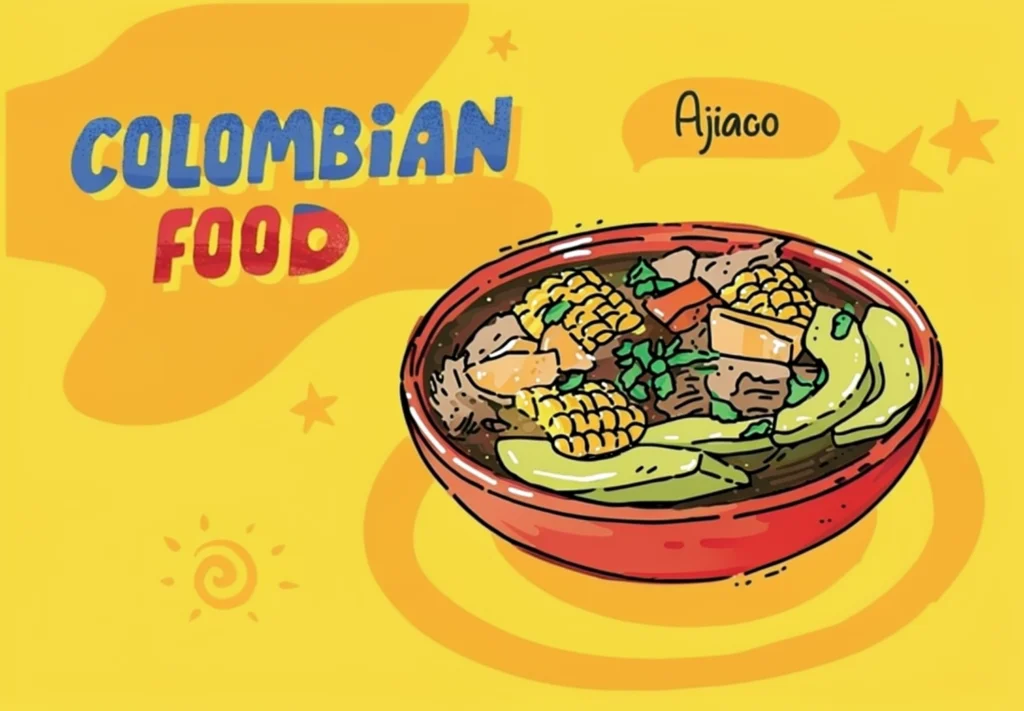
You cannot overstate the cultural significance of this dish in modern Bogotá. If you visit the city, almost everyone you meet will ask you, “Have you tried our Ajiaco yet?” It represents a profound sense of regional pride. While the coastal regions of Colombia pride themselves on seafood and coconut rice, and the Antioquia region boasts the massive Bandeja Paisa, Bogotá claims this golden stew as its absolute champion.
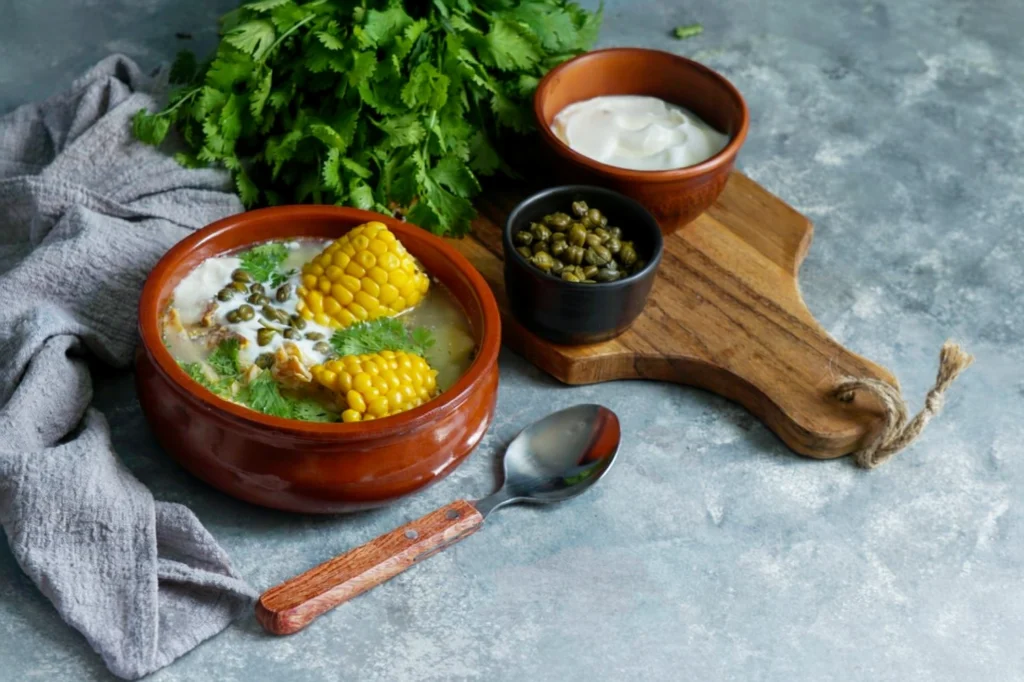
The experience of eating it involves a specific ritual. The host brings a large, bubbling black clay pot to the table. The stew itself contains the thick potato broth, shredded chicken breast, a piece of corn on the cob, and the guascas. But the meal does not end there. The host also serves several small side dishes.
Diners receive a small pitcher of thick cream and a small bowl of capers. Each person customizes their own bowl. You might want extra cream for richness, or extra capers for acidity. You also receive a thick slice of fresh avocado and a portion of white rice. Diners dip the avocado into the hot soup, creating an incredible contrast between the hot, salty broth and the cool, creamy avocado. You mix the white rice directly into the broth to soak up every last drop of flavor.
Ultimately, eating this meal is an interactive experience. It forces you to slow down, share side dishes across the table, and connect with the people around you. It turns eating into a social event.
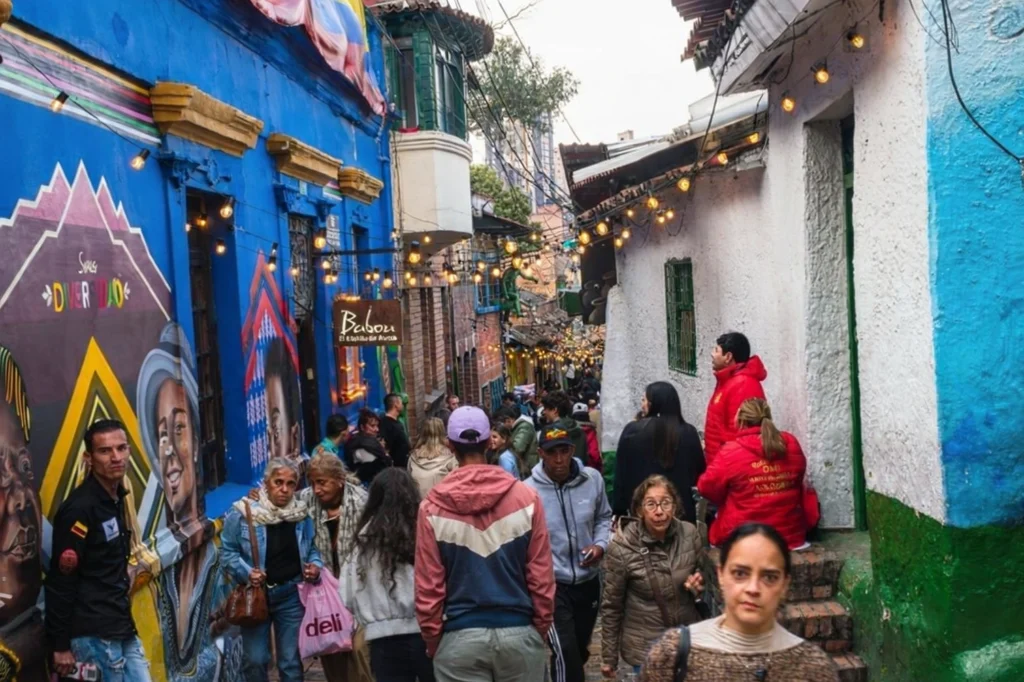
Bogotá, Colombia, funnel street Calle del embudo, Chorro de Quevedo square in Bogota Colombia a cultural hub
Preparing the Perfect Bowl
Making this dish requires patience and love. You cannot rush the history of Ajiaco, and you cannot rush the cooking process. The best cooks understand that building flavors takes time. You start by boiling a whole chicken with onions, garlic, and cilantro stems to create a rich, homemade stock. You then remove the chicken, shred the meat, and set it aside.
- Prepare the homemade stock slowly.
- Add the pastusa and sabanera potatoes first.
- Add the papa criolla later so it melts.
- Simmer the corn until sweet and tender.
- Return the shredded chicken to the pot.
- Add a generous handful of guascas at the end.
- Serve steaming hot in clay bowls.
Remember a very important detail – Success in making this recipe comes from respecting the ingredients. You might fail on your first attempt to get the exact thickness. Pushing past this and practicing the slow simmer is true culinary success. My advice to you is to learn the nature of the three potatoes before you begin cooking.
Do not hesitate to face the challenge of finding the right ingredients. Even if you have to order guascas online, the effort pays off immensely. The slow, methodical process of cooking this stew connects you directly to the generations of Colombian women who perfected this recipe over centuries.
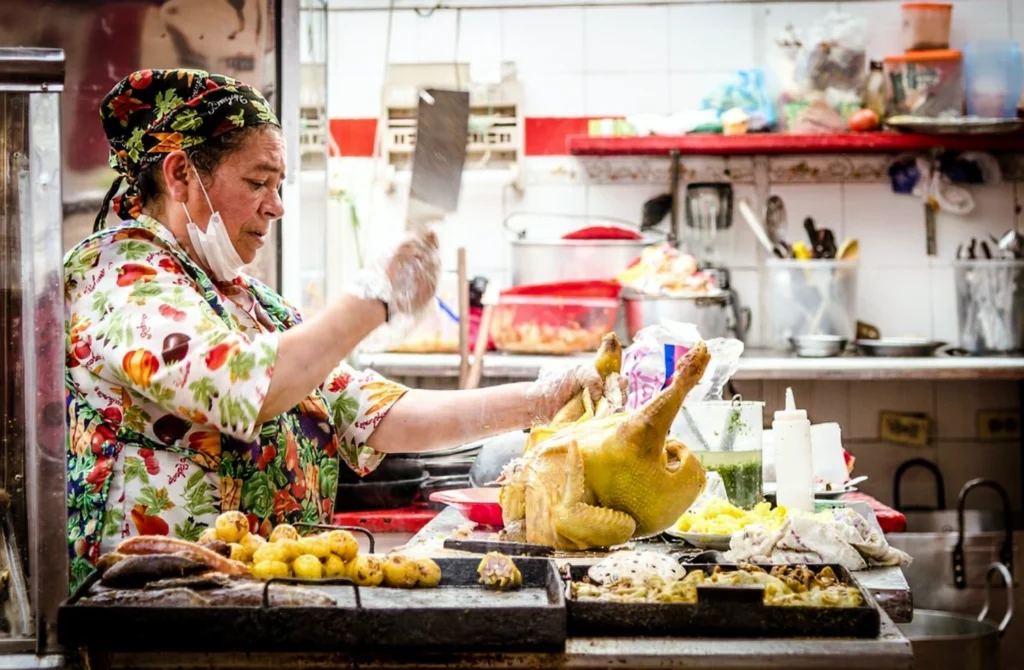
Bogota, Colombia -Colombian cook preparing chicken in the kitchen of street market
Conclusion
In the end, we can confidently say that the history of Ajiaco showcases a beautiful balance between diverse cultures. It demands that the cook respects the ancient Indigenous ingredients like guascas and native potatoes, while embracing the European additions of chicken, cream, and capers. The dish serves as a delicious history lesson in a bowl, capturing the essence of the Andean mountains.
Furthermore, the survival and popularity of this dish prove that food is the ultimate keeper of history. By continuing to gather around tables on rainy Sundays to share this golden stew, the people of Bogotá keep their cultural identity alive and thriving. Whether you are a local Colombian or a curious traveler, taking a bite of this masterpiece connects you deeply to the resilient, vibrant, and welcoming spirit of Colombia.
Ready to Taste History? For tourists feeling inspired to embark on a gastronomic journey, taking the next step is highly rewarding. Visitors can secure excellent deals by checking flight and hotel packages to Bogotá, guaranteeing a seamless travel experience. Additionally, travelers can pre-plan their daily itineraries and browse top-rated tours and tasting activities to dive completely into the rich culture of the Colombian Andes.