The spectacular Quseir Amra frescoes offer an unforgettable journey into the past, serving as a vibrant window into the early Islamic world. If you plan to travel through the sweeping eastern desert of Jordan, this modest limestone building might not look like much from the outside. However, stepping inside reveals a breathtaking treasure. To truly appreciate this UNESCO World Heritage site, you need to understand the rich symbolic meaning behind its bathhouse paintings. You will discover how early Islamic art beautifully blended Byzantine, Persian, and local traditions to create a unique visual language.
Thank you for reading this post, don't forget to subscribe!Plan the Adventure – For travelers eager to see the Quseir Amra frescoes firsthand, finding the right flight to Amman is the first step. International visitors can easily search for convenient flight routes to Jordan. Check flight availability and compare prices to Jordan here.
Builders constructed Quseir Amra in the early eighth century under the direction of the Umayyad caliphs, most likely Walid II. They designed the structure as a rural retreat, combining an audience hall with a classic Roman-style bathhouse. The brilliant artists of the time covered almost every interior surface with colorful murals. These paintings transform a simple desert lodge into a powerful canvas that communicates royal authority, the joy of life, and the vast expanse of the universe. By exploring these walls, you gain the knowledge needed to elevate your visit from a simple sightseeing tour to a deeply engaging cultural experience.
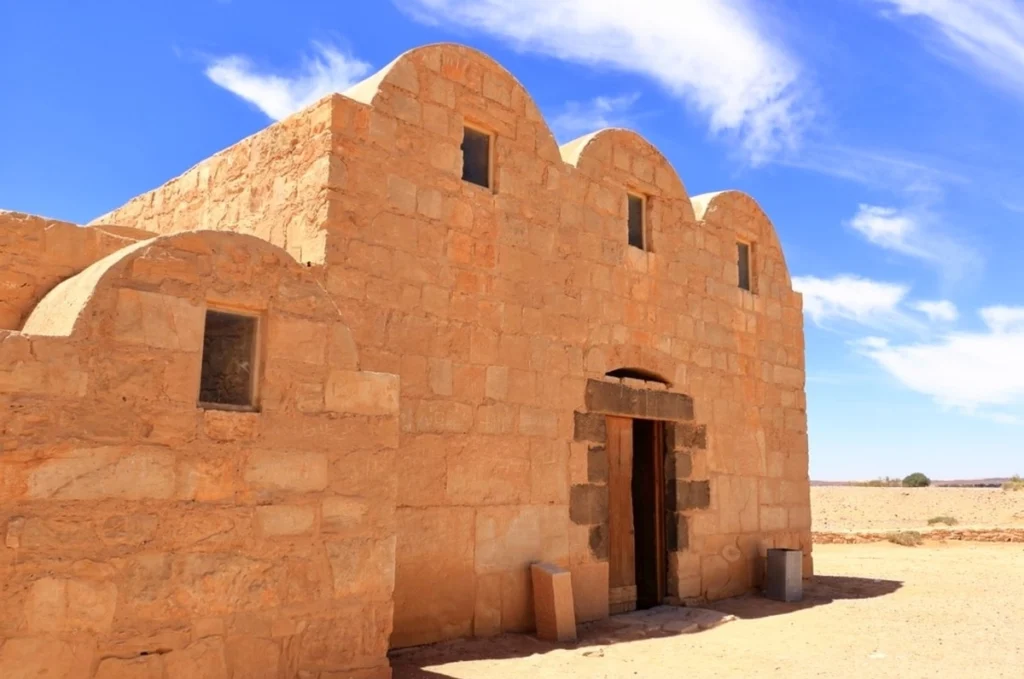
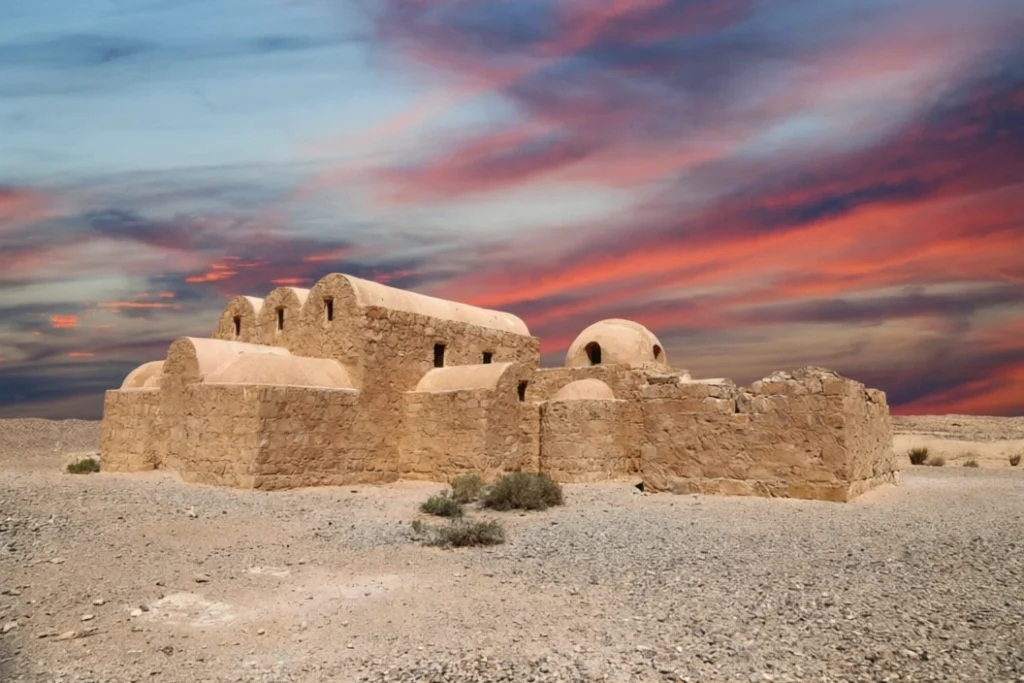
– The Exterior of the Amra desert castle (Qasr Amra) near Amman, Jordan –
Discover the Historical Roots of the Murals
To fully grasp the magic of the Quseir Amra frescoes, you must first explore the world of the Umayyad dynasty. The Umayyads established the first great Islamic empire, stretching from Spain to India. Because they ruled over diverse lands, their culture naturally absorbed many different artistic traditions. They did not simply copy older styles; instead, they combined them to create something entirely new and magnificent. If you want to understand the profound depths of these desert murals, keep the following historical influences in mind.
- Byzantine Heritage 📌 The artists borrowed heavily from Byzantine techniques, especially in how they painted drapery, human faces, and architectural elements. You can see this clearly in the elegant poses of the figures on the walls.
- Sassanian Persian Influence 📌 Persian culture contributed symbols of royal power and exotic animal motifs. The murals feature winged horses and royal hunting scenes that echo ancient Sassanian palaces.
- Local Arabian Traditions 📌 The subject matter remains deeply rooted in the Arabian context. The focus on desert hunting, poetry, and tribal gatherings reflects the core values of the Umayyad elite.
- Roman Bathing Culture 📌 The layout of the building follows the traditional Roman bathhouse (thermae) design. The Umayyads adopted this practice and adapted it for social and political networking in the desert.
- Early Islamic Identity 📌 While the visual elements come from older empires, the overarching message establishes a new Islamic ruling class. The art confidently asserts the Umayyads’ place as the new masters of the world.
- The Role of the Patron 📌 Walid II loved poetry, music, and hunting. The joyful and sometimes playful nature of the murals directly reflects his personal passions and lifestyle.
In short, you are looking at a magnificent cultural melting pot. When you stand inside the main hall, you stand at the crossroads of ancient empires. This unique combination makes the site a critical milestone in the evolution of art.
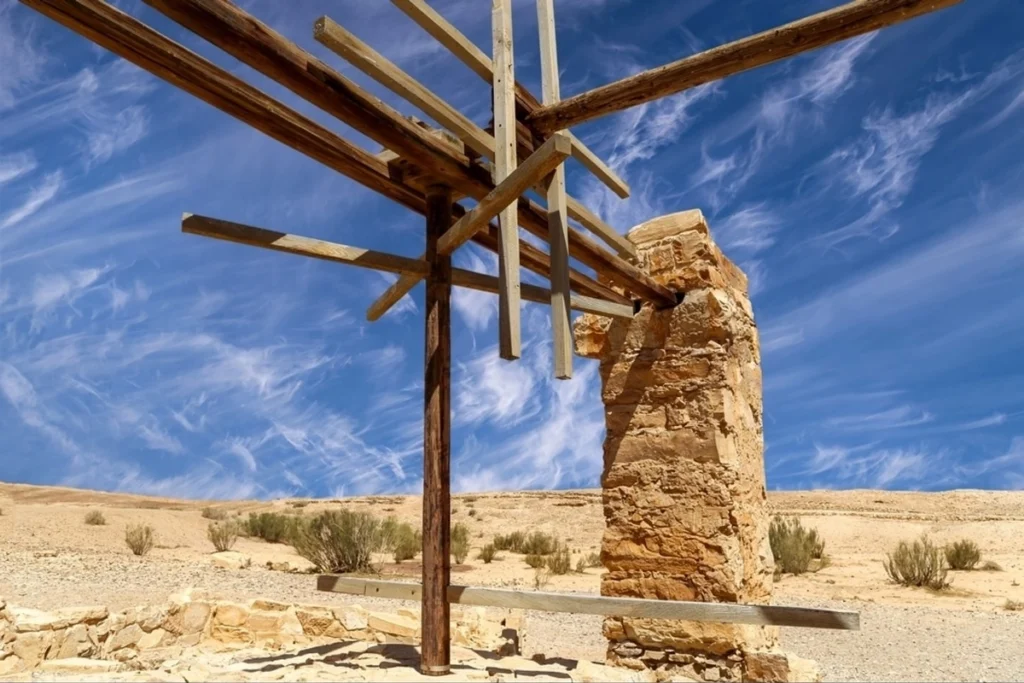
– Quseir (Qasr) Amra desert castle (against the sky with clouds) near Amman, Jordan. World heritage with famous fresco's. Built in 8th century, of early Islamic art and architecture –
Decoding the Masterpiece – The Six Kings Panel
The most famous painting within the complex is undoubtedly the “Six Kings” panel. You will find this fascinating mural on the west wall of the main audience hall. It depicts six powerful rulers standing together in two rows. For decades, historians debated the meaning behind this gathering, but carefully translated inscriptions eventually revealed the truth. This painting serves as a bold political statement by the Umayyad rulers.
- Caesar of Byzantium The artist painted the Byzantine emperor representing the great Christian power to the west.
- Chosroes of Persia This figure represents the Sassanian emperor, the major eastern power that the Islamic armies recently defeated.
- The Negus of Aksum The ruler of Ethiopia stands as a symbol of the great African kingdom.
- Roderic of Spain The inclusion of the Visigothic king proves the painting dates to after the Islamic conquest of Spain in 711 AD.
- Unknown Eastern Kings Scholars believe the remaining two figures represent the emperor of China and a Turkic or Indian ruler.
- Gestures of Submission Look closely at their hands. They extend their hands forward in a gesture that signifies respect, submission, or supplication to the Umayyad caliph.
- The Missing Caliph Although the painting originally showed the Umayyad caliph seated on a throne above them, time and damage have erased his figure. However, the message of ultimate supremacy remains clear.
Understanding the Six Kings panel changes how you view the entire structure. It proves that the patron did not build Quseir Amra just for relaxation. He designed it as a grand reception hall to impress visiting tribal leaders and foreign dignitaries. The art intimidates and inspires simultaneously, showcasing the vast reach of the new Islamic empire.
Book an Expert Experience – Cultural enthusiasts often prefer organized travel to ensure they do not miss crucial historical details. Visitors can easily book specialized guided tours and activities that visit the Quseir Amra frescoes directly from Amman. These excursions provide deep expert insights and comfortable transportation into the desert. Explore highly-rated guided tours to the eastern desert castles.
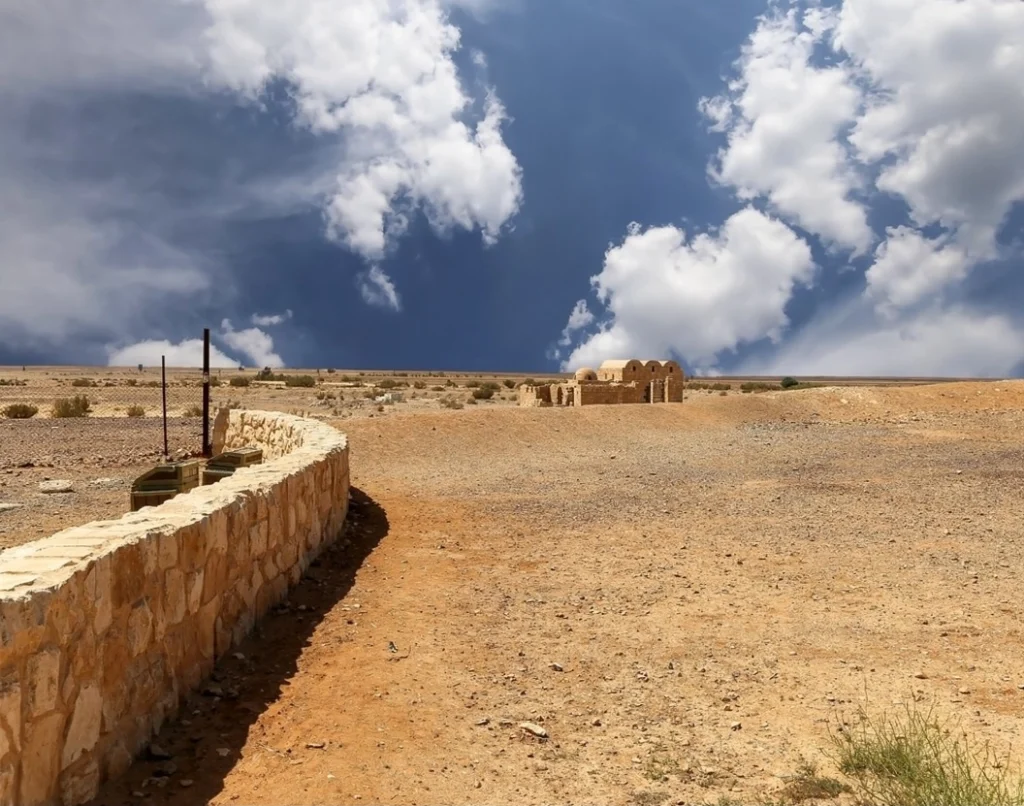
– Quseir (Qasr) Amra desert castle (against the sky with clouds) near Amman, Jordan. World heritage with famous fresco's. Built in 8th century, of early Islamic art and architecture –
The Marvelous Zodiac Dome in the Caldarium
As you walk deeper into the bathhouse, you will enter the caldarium, which is the hot room. Look straight up. The artists painted the interior of this small dome with an astonishing map of the heavens. This zodiac dome represents one of the oldest surviving depictions of the night sky painted on a hemispherical surface. It creates an incredible connection between the earthly pleasures of the bathhouse and the divine order of the universe.
The creators designed the map using classical Greek astronomical knowledge, specifically following the work of Ptolemy. You can clearly spot well-known constellations like Ursa Major (the Great Bear) and the symbols of the zodiac. Interestingly, the artist made a slight error when transferring a flat map design onto the curved surface of the dome, causing the constellations to appear in a counter-clockwise orientation. Despite this minor technical flaw, the beauty and historical value of the ceiling remain unparalleled.
Why paint the stars in a hot bath room? In ancient times, people viewed the bathhouse as a microcosm of the world. The dome represents the vault of heaven. As the hot steam rose and swirled around the room, bathers felt as though they were floating among the stars. It provided a deeply immersive and almost magical experience for the Umayyad princes and their guests.
Important Note – Take your time in the caldarium. Let your eyes adjust to the dim light. The more you stare at the dome, the more constellations and delicate details will reveal themselves through the ancient plaster.
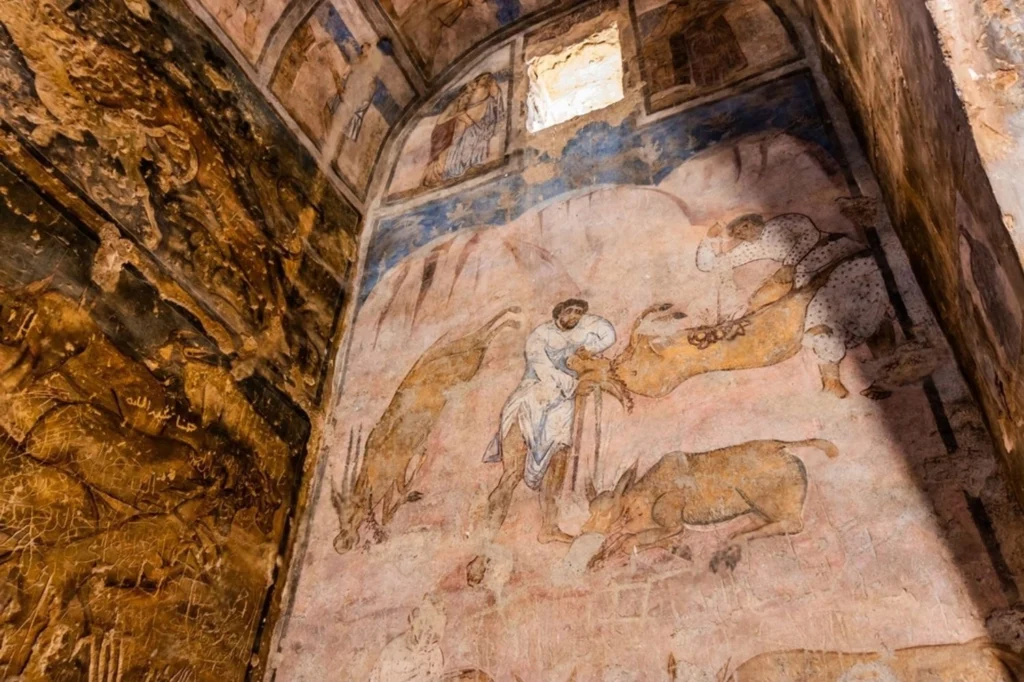
– QUSAYR AMRA, JORDAN - Frescoes in Qusayr Amra (Quseir Amra or Qasr Amra), one of the desert castles located in eastern Jordan –
Scenes of Hunting, Bathing, and Royal Life
Beyond the political and astronomical themes, the Quseir Amra frescoes celebrate the sheer joy of living. The Umayyads loved the desert, and they cherished the traditional sports of the Arabian nobility. The murals vividly bring these daily activities back to life, offering you a front-row seat to an eighth-century royal holiday.
- The Great Hunt👈 Large sections of the walls depict dynamic hunting scenes. You will see agile Saluki dogs chasing down herds of wild asses (onagers). These scenes showcase the speed and thrill of the desert chase.
- Driving the Game👈 Notice the clever hunting techniques. The murals show beaters driving wild animals into large enclosed nets. This method allowed the royals to capture or hunt many animals at once efficiently.
- Preparation and Feasting👈 The story continues after the hunt. Some panels illustrate servants butchering the game and preparing large fires. It highlights the grand feasts that followed a successful day in the desert.
- Wrestling and Sports👈 Look for the scenes showing muscular men wrestling. Physical strength and athletic games played a huge role in the entertainment of the Umayyad elite.
- Music and Dance👈 Musicians playing lutes and flutes, alongside graceful dancers, adorn the walls. These figures represent the rich poetic and musical culture that thrived in the Umayyad courts.
- Bathing Figures👈 In the rooms leading to the hot bath, the frescoes show women bathing and relaxing. These intimate scenes highlight the private, secluded nature of the desert lodge.
By carefully observing these daily life scenes, you realize that Quseir Amra served as a lively, breathing space. It echoed with laughter, music, and the sounds of the hunt. The artists captured this vibrant energy perfectly, ensuring that the legacy of Umayyad joy endures for centuries.
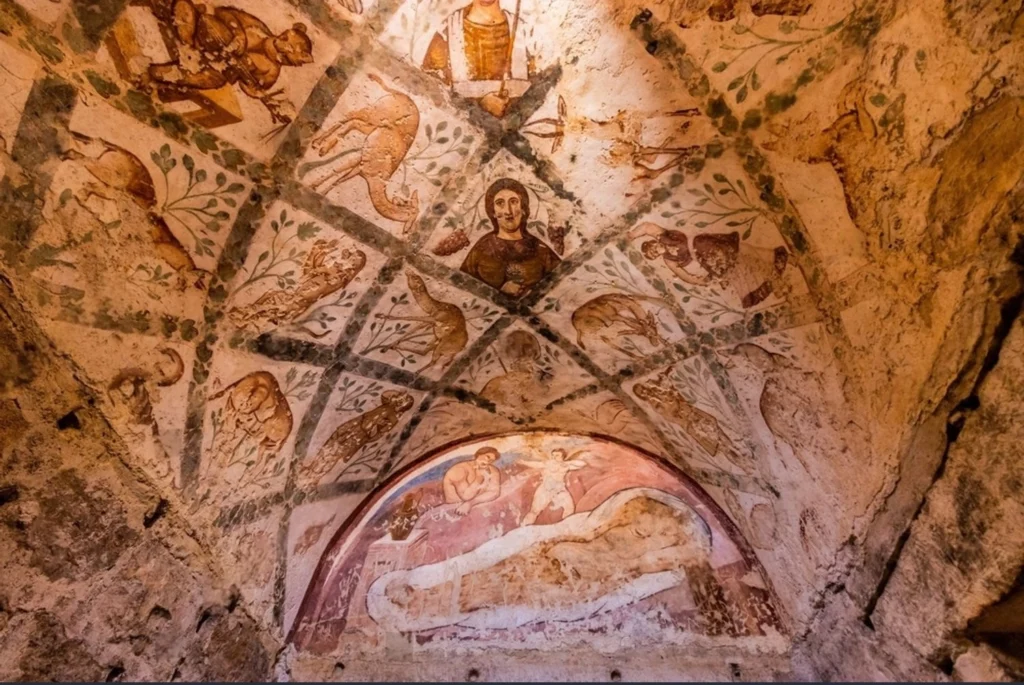
– QUSAYR AMRA, JORDAN - Frescoes in Qusayr Amra (Quseir Amra or Qasr Amra), one of the desert castles located in eastern Jordan –
Comparing Cultural Influences in the Art
To help you better understand how the artists blended different worlds, look at how Byzantine and Sassanian Persian elements exist side by side. The table below breaks down the visual clues you can spot during your visit to the site.
Artistic Element | Byzantine Influence | Sassanian Persian Influence |
Human Figures | Realistic draping of clothes, classical Roman poses, and facial shading. | Stiff, formal royal stances in specific audience scenes. |
Animals & Nature | Grape vines, acanthus leaves, and naturalistic birds. | Winged horses, stylized peacocks, and mythical creatures. |
Symbols of Power | Halos around figures and traditional laurel wreaths. | Heavy jeweled crowns, royal ribbons, and specific hunting weapons. |
Inscriptions | Greek words naming figures or concepts (like “Nikh” for Victory). | Middle Persian artistic motifs used without the language. |
This seamless integration of styles proves that early Islamic society acted as an open, confident culture. They embraced the best parts of the empires they conquered and used them to forge a brilliant new identity.
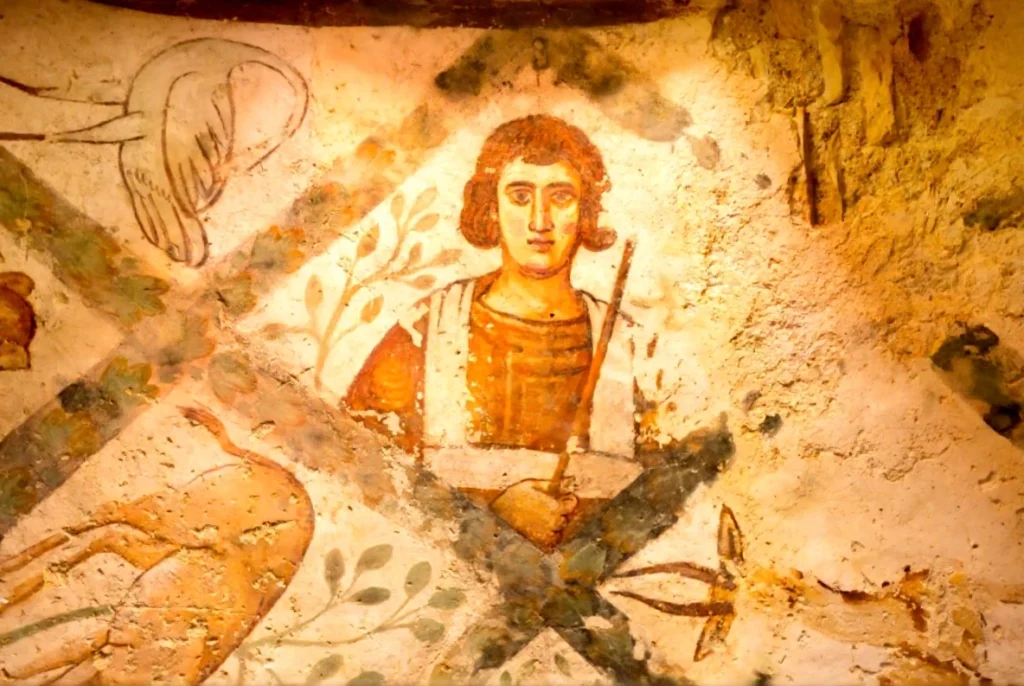
– Qusayr Amra or Quseir Amra, Jordan - Frescoes of Qasr Amra, one of the desert castles –
Breaking the Myths of Early Islamic Art
Many travelers arrive at Quseir Amra with a common misconception. People often believe that Islamic art strictly forbids the depiction of humans and animals. This concept, known as aniconism, indeed applies strongly to religious spaces like mosques and copies of the Quran. However, the Quseir Amra frescoes completely shatter the myth that this rule applied everywhere.
- Secular vs. Religious Art The Umayyads clearly separated their religious spaces from their private, secular spaces. In their desert palaces, they felt completely free to paint human figures, animals, and lively scenes.
- A Royal Privilege The prohibition of images usually targeted idol worship among the masses. The royal family considered themselves above such concerns in the privacy of their secluded bathhouses.
- A Window to the Past Because so few secular Islamic buildings survived from the eighth century, Quseir Amra provides the absolute best evidence of how early Muslims truly decorated their living spaces.
- Evolving Rules Islamic art rules evolved gradually. During the Umayyad period, the strict theological bans on imagery had not yet taken a firm, universal hold over everyday life and architecture.
- Expressions of Power The rulers used the human form specifically to project dominance. They needed recognizable portraits of defeated kings to make their political statements effective.
To summarize, visiting Quseir Amra requires an open mind. You must leave behind preconceived notions about Islamic art. This site represents a vibrant, liberal, and highly expressive era where art served life, politics, and pleasure without hesitation.
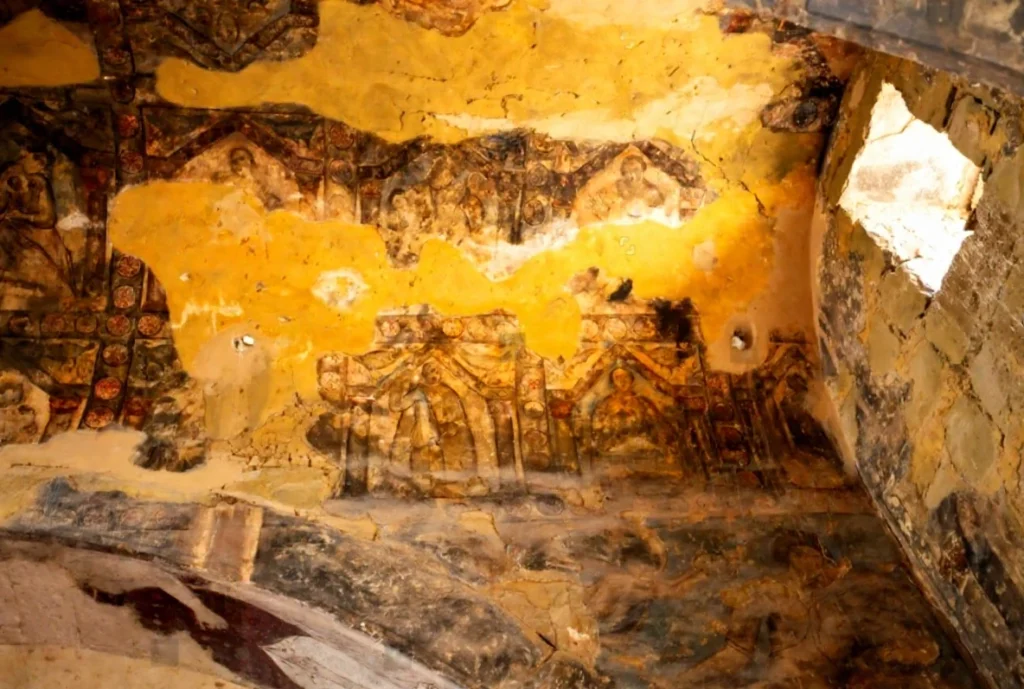
– Qusayr Amra or Quseir Amra, Jordan - Frescoes of Qasr Amra, one of the desert castles –
The Discovery and Restoration Journey
The story of how the world rediscovered these paintings is almost as thrilling as the artwork itself. For centuries, the desert reclaimed Quseir Amra. Local Bedouin tribes knew about the structure and occasionally used it for shelter, which resulted in thick layers of soot from campfires coating the walls. In 1898, the Czech explorer and scholar Alois Musil officially “discovered” the site for the Western academic world.
Musil recognized the immense value of the Quseir Amra frescoes immediately. He brought an artist with him to copy the paintings, introducing early Islamic art to amazed European historians. However, removing the centuries of dirt and soot proved to be a monumental challenge.
Over the past few decades, teams of international experts from Jordan, Italy, and France worked tirelessly to restore the site. They used delicate lasers and chemical treatments to strip away the black soot without damaging the ancient pigments underneath. Their incredible efforts revealed bright blues, warm earth tones, and intricate details that no one had seen for a thousand years. When you admire the clear faces and colorful garments today, you owe a debt of gratitude to these modern conservationists.
Remember that conservation remains an ongoing process. The humidity of the desert environment still poses a threat to the plaster. When you visit, always respect the boundaries and never touch the delicate painted surfaces.
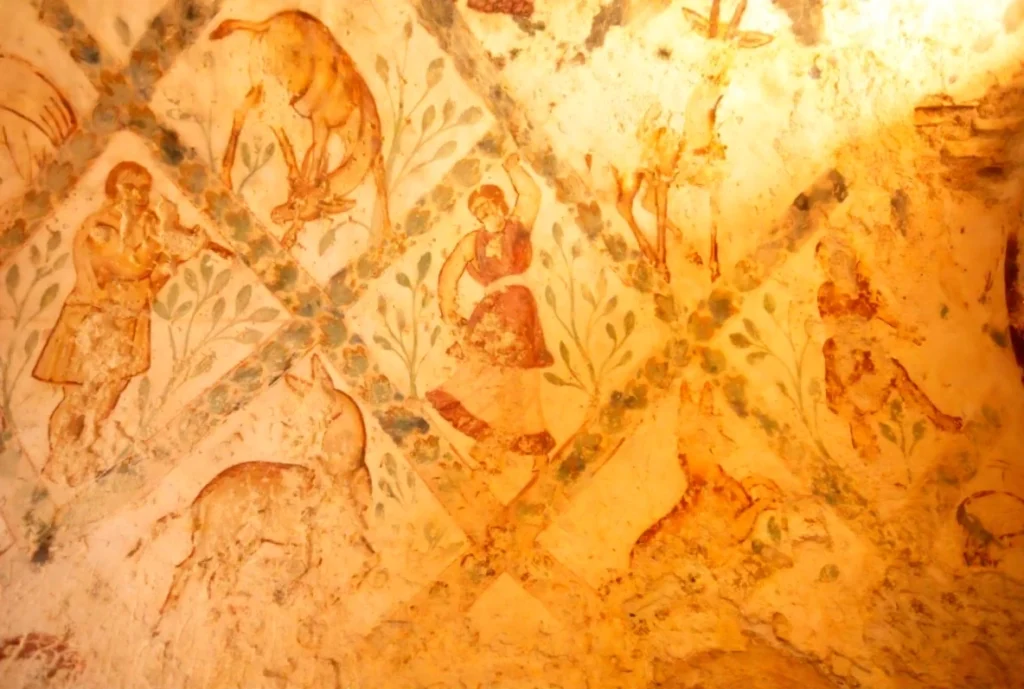
– Qusayr Amra or Quseir Amra, Jordan - Frescoes of Qasr Amra, one of the desert castles –
Plan Your Visit with Care – Tips for Travelers
Visiting the eastern desert castles requires a bit of planning. To get the absolute best experience out of the Quseir Amra frescoes, you should approach your trip with intention. Here are several practical tips to enhance your cultural journey.
- Timing is Everything. Arrive early in the morning or late in the afternoon. The natural sunlight streaming through the small windows illuminates the murals beautifully at these times.
- Hire a Local Guide. While the paintings speak volumes, a knowledgeable guide can point out faint inscriptions and hidden details you might easily overlook.
- Combine Your Trip. Visit Quseir Amra alongside other nearby desert castles like Qasr Kharana and Qasr Azraq to get a full picture of Umayyad desert architecture.
- Bring Binoculars. The dome of the caldarium and the upper sections of the audience hall sit high up. A small pair of binoculars helps you appreciate the fine brushwork.
- Visit the Visitor Center. Before walking to the actual building, spend time in the small visitor center. It offers excellent background context and displays related to the restoration work.
- Read Before You Go. The more you know about the Umayyad dynasty, the more the paintings will resonate with you.
- Stay Hydrated. The Jordanian desert gets intensely hot. Bring plenty of water and wear sun protection as you walk from the parking area to the site.
Rest and Recharge – After a long day of exploring ancient art and traversing the eastern desert, tourists will want a comfortable place to relax. Travelers can browse a wide range of hotel accommodations in nearby Amman, from luxurious city resorts to budget-friendly boutique hotels. Find the perfect hotel and book accommodations near the desert castles.
Keep this final tip in mind – Take your time. Many tour groups rush in and out in fifteen minutes. Sit quietly on the benches provided inside. Let the history wash over you. The true magic of the Quseir Amra frescoes reveals itself to those who pause and truly observe.
By following these simple strategies, you transform your visit from a quick photo stop into a meaningful exploration of human history and ancient artistry.
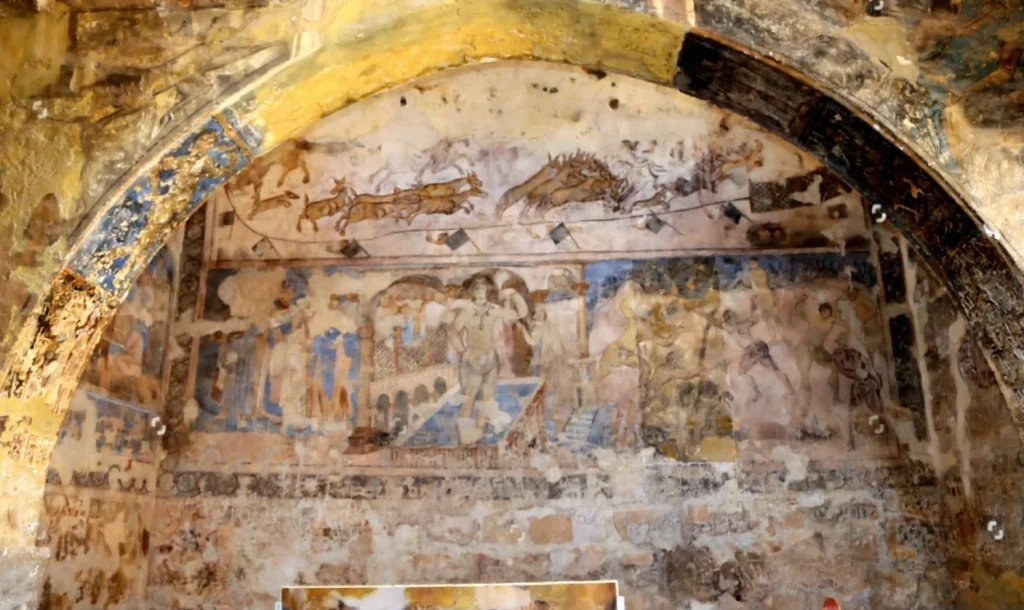
– AMMAN, JORDAN - Fresco at Quseir (Qasr) Amra desert castle near Amman, Jordan. World heritage with famous fresco's –
Conclusion
Ultimately, the Quseir Amra frescoes stand as a testament to a magnificent era of cultural exchange and artistic innovation. They bridge the gap between the ancient classical world and the emerging Islamic civilization. By depicting themes of political supremacy, celestial wonder, and the joyful celebration of life, the Umayyad artists created a timeless masterpiece.
When you travel to Jordan and stand beneath the gaze of the Six Kings or look up at the ancient starry dome, you connect directly with the people of the eighth century. You understand their ambitions, their fears, and their pleasures. The Quseir Amra frescoes do much more than decorate a bathhouse; they tell the vibrant story of humanity finding its voice in a changing world. Let this knowledge guide your steps, and your visit will surely become a profound and unforgettable highlight of your travels.