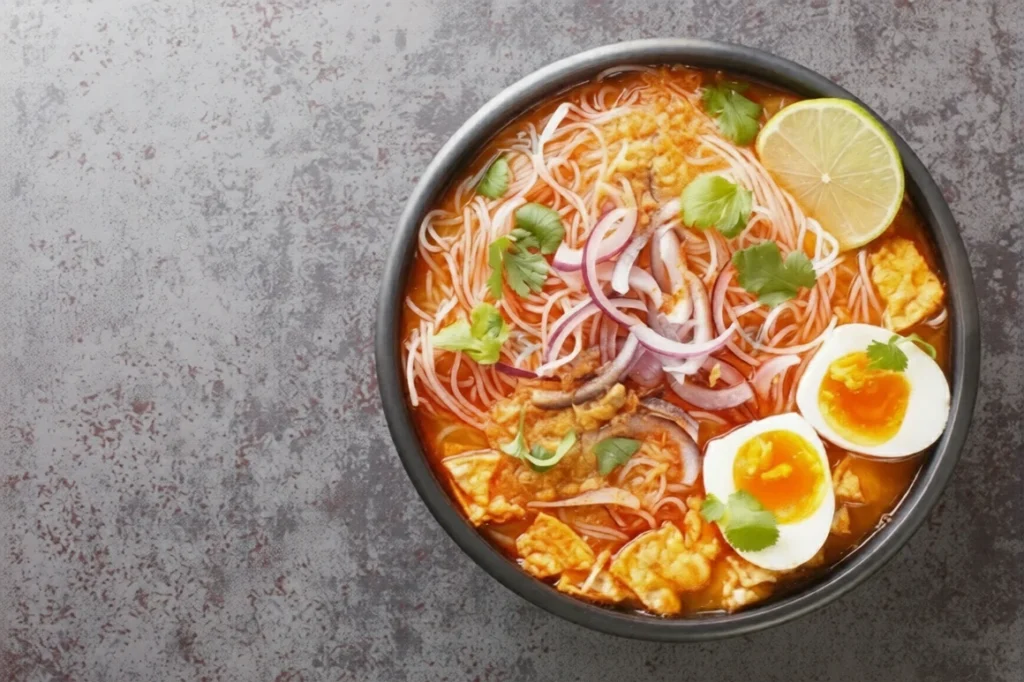
Welcome to Yangon, a vibrant city where the captivating scent of rich fish broth and crushed lemongrass fills the early morning air. If you love exploring authentic street food, you have arrived at the perfect destination. Mohinga is far more than just a simple meal; it serves as the culinary heartbeat of Myanmar. To truly experience the local culture, you must dive into the bustling street corners and charming tea houses where this iconic dish takes center stage. This guide will help you navigate the energetic streets of Yangon, discover the absolute best spots, and teach you how to order your bowl exactly like a local.
Thank you for reading this post, don't forget to subscribe!You will find this comforting noodle soup bubbling away in massive metal pots on nearly every street corner. Vendors wake up long before dawn to prepare the fragrant broth, blending wild-caught catfish, tender banana tree stems, toasted rice flour, and a medley of fresh herbs. This beloved dish brings people from all walks of life together. Business professionals, students, and taxi drivers all sit side by side on tiny plastic stools to enjoy their morning bowl. Improving your understanding of this dish will deeply enhance your travel experience.
✈️ Ready to start the journey? For culinary travelers eager to taste authentic Mohinga directly from the source, arriving in Myanmar’s biggest city is the essential first step. Food enthusiasts can compare and book the best flight deals to Yangon to kick off their ultimate street food adventure.
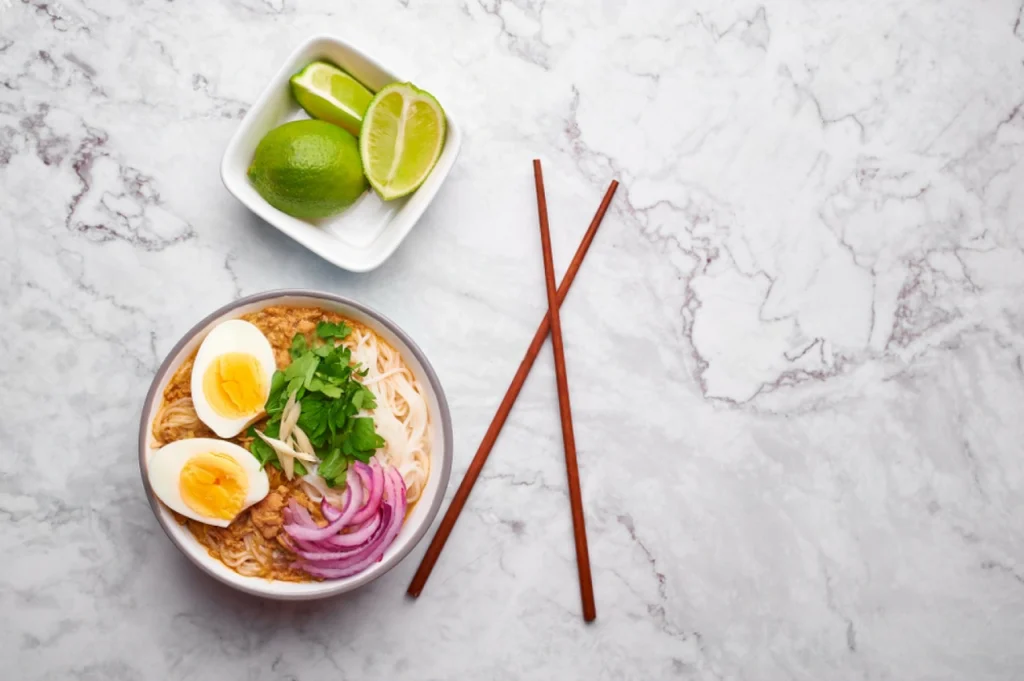
Mohinga at white marble background. Mohinga is a burmese cuisine fish soup with catfish, rice noodles, chicken eggs and lime. Copy space
Understand the Anatomy of the Perfect Bowl
Before you start hunting for the best street food stalls, you need to understand what makes this dish so extraordinary. When you know the ingredients, you will appreciate the complex flavors of Myanmar’s national dish much more. Every vendor guards their own secret family recipe, but the core foundation remains the same across the country. Let us break down the key elements that create this culinary masterpiece.
- The Fish Broth The soul of the soup comes from fresh catfish. Cooks boil the fish, debone it by hand, and simmer it with turmeric, lemongrass, garlic, and ginger to remove any overly fishy taste. The result is a robust, savory, and slightly sweet liquid.
- The Thickener Unlike clear broths, this soup has a rich, hearty texture. Vendors use toasted rice flour and crushed chickpeas to thicken the liquid, giving it a velvety consistency that clings beautifully to the noodles.
- The Rice Noodles Cooks use thin, round rice noodles (similar to vermicelli but slightly softer). They sit at the bottom of the bowl and absorb the rich flavors of the hot broth perfectly.
- Banana Tree Stem This unique ingredient surprises many travelers. Vendors slice the tender inner core of the banana tree trunk into bite-sized pieces. It absorbs the broth and adds a wonderful, slightly crunchy texture.
- Crispy Fritters Contrast is everything in Southeast Asian food. Locals top their bowls with an assortment of deep-fried fritters, such as split pea or bottle gourd, providing a deeply satisfying crunch.
- Fresh Garnishes Right before eating, you customize your bowl. You can squeeze fresh lime juice, add dried chili flakes, and sprinkle fresh coriander to balance the richness of the savory soup.
In short, you must experience the harmony of textures and flavors firsthand. The balance of hot, sour, salty, and crunchy creates a flavor profile that you will crave long after you leave Yangon.
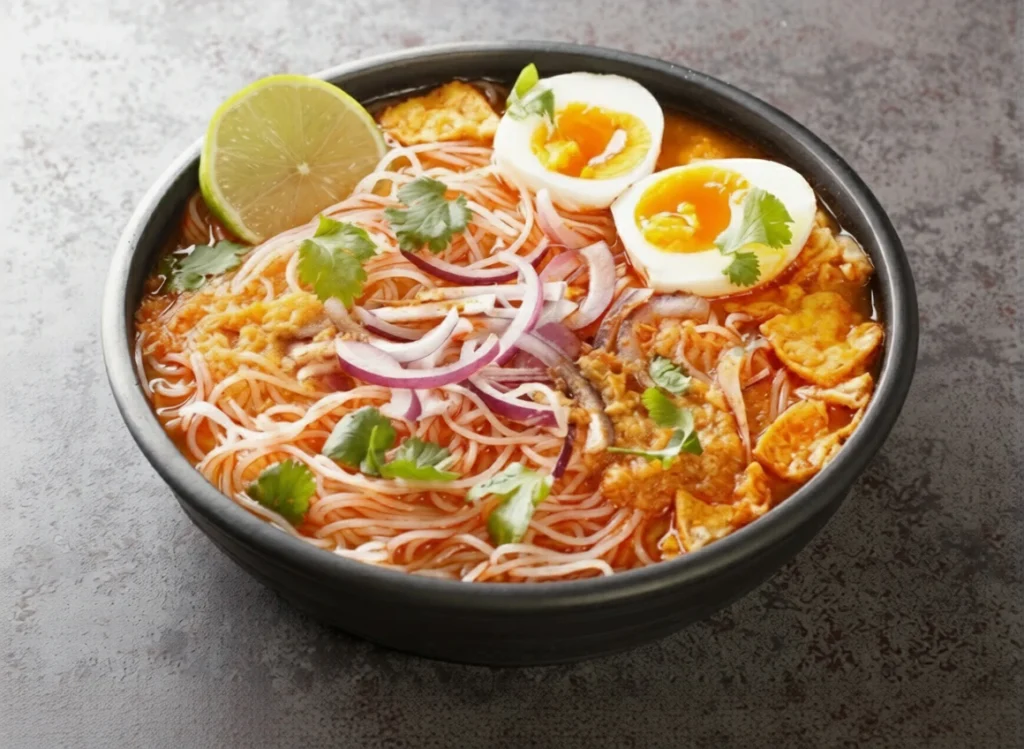
Burmese Mohinga Rice Noodle Fish Soup closeup in the bowl on the table. Horizontal
Famous Tea Houses for a Classic Experience
If sitting on a tiny plastic stool beside busy traffic feels too intimidating for your first day, Yangon offers plenty of excellent tea houses. These establishments provide a more relaxed environment, English menus, and strict hygiene standards while still serving incredibly authentic flavors. Here are some top tea houses you should prioritize.
- Rangoon Tea House This award-winning restaurant elevates traditional street food into a fine dining experience. Their premium version uses wild-caught fish from the Irrawaddy Delta and offers an exceptionally refined, elegant broth. It is perfect for careful eaters.
- Lucky Seven Tea Shop A beloved local institution with multiple branches across the city. They serve a classic, unpretentious bowl alongside incredible Myanmar sweet tea. The lively atmosphere here captures the true essence of Yangon morning culture.
- Shwe Khaing Known for its rich and slightly spicier broth, this spot attracts crowds of loyal locals. Their banana stems are notoriously tender, and the staff works with impressive speed to serve hundreds of hungry customers every morning.
- Golden Tea A fantastic mid-range option that balances street authenticity with indoor comfort. They offer a highly customizable menu where you can easily pick and choose your favorite toppings without needing to speak fluent Burmese.
- Feel Myanmar Food While famous for their massive curry selection, their breakfast noodle station is outstanding. They serve a consistently fresh, piping-hot bowl that represents the standard Yangon flavor profile perfectly.
By starting your culinary journey at these reputable tea houses, you can familiarize your palate with the dish’s distinct flavors in a comfortable setting. This step builds your confidence before you venture out into the bustling street food carts.
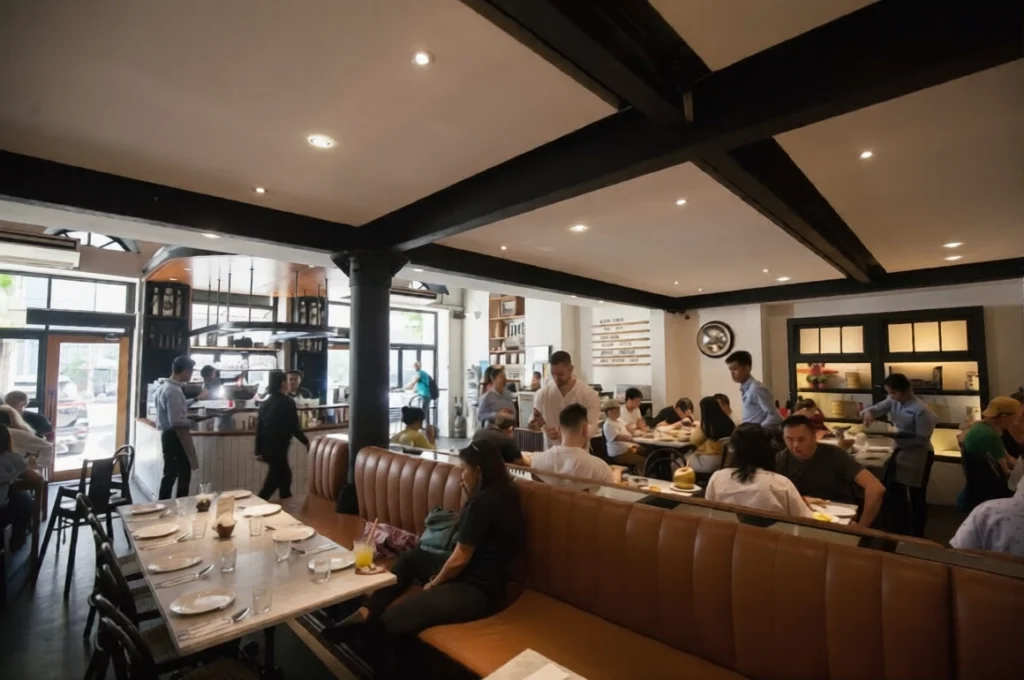
Unidentified peoples dining at Rangoon Tea house Cafe & Restaurant, is one of famous best finest restaurant
Compare Top Street Vendors You Must Visit
Once you feel ready to dive into the real street food culture, you will want to hit the pavements. Finding the best street-side vendors requires a bit of insider knowledge. Some carts disappear by 9:00 AM, so you need to wake up early. Below is a helpful comparison table highlighting some of the most legendary street spots in Yangon.
Vendor Name / Area | Best Time to Go | Vibe & Atmosphere | Price Range |
Myaungmya Daw Cho (Various locations) | 6:00 AM – 10:00 AM | Extremely busy, fast-paced, famous for their thick and peppery broth. | $1.00 – $1.50 |
Pansodan Street Corner Stalls | 5:30 AM – 8:30 AM | Historic colonial backdrop, bustling with office workers, highly traditional. | $0.50 – $1.00 |
Daw Phwa May (Bahan Township) | 7:00 AM – 11:00 AM | Neighborhood favorite, relaxed seating, renowned for crispy split pea fritters. | $0.80 – $1.20 |
Hledan Market Carts | 6:00 AM – 9:00 AM | Chaotic, vibrant, student-heavy area. Great for budget travelers. | $0.40 – $0.80 |
Bogalay Mo Hing Kar | 7:00 AM – 2:00 PM | Unique regional variation (Delta style), slightly sweeter and thicker broth. | $1.00 – $2.00 |
Visiting these street vendors offers an unmatched sensory experience. You hear the rhythmic chopping of herbs, smell the sweet wood smoke from the cooking fires, and see the golden broth simmering away. Keep in mind that prices remain incredibly low, making this one of the most budget-friendly gourmet experiences in Southeast Asia.
🏨 Stay near the food hubs – Visitors who want quick, walking-distance access to early morning Mohinga carts should consider staying in Downtown Yangon or the lively Bahan Township. Travelers can explore top-rated hotels and comfortable accommodations in Yangon to secure the perfect home base for their food-focused trip.
Pro Tip – Always look for the vendor with the longest line of locals. In Myanmar’s street food scene, a long queue guarantees high turnover, ensuring your food is fresh, hot, and safe to eat. Do not let the small plastic chairs deter you; they hold the key to the most authentic meals.
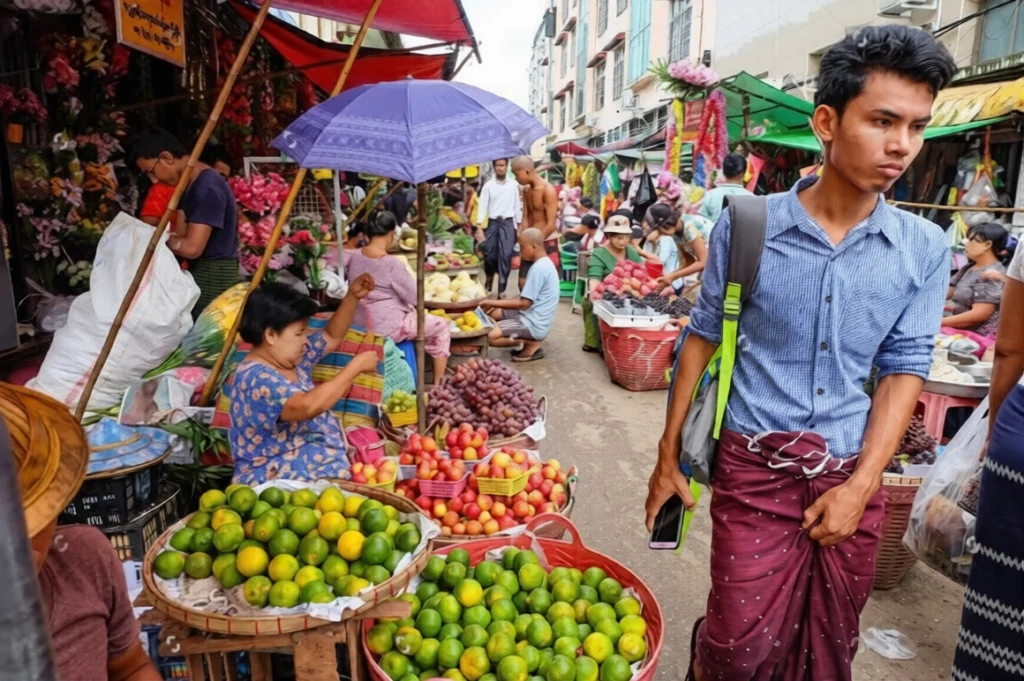
Yangon, Myanmar - Burmese traditional street food, snacks and sweets at a fresh market and street vendors
How to Order and Customize Like a Local
Interacting with street vendors might seem challenging due to the language barrier, but ordering your food is surprisingly straightforward once you know a few key terms. The vendor will usually hand you a standard bowl, and then the fun part begins – customization. You hold complete control over your bowl’s final texture and flavor profile.
- Akyaw (Crispy Fritters) Ask for extra “akyaw” if you love a good crunch. Vendors typically offer split pea fritters (pe kyaw) or deep-fried gourd (bu thi kyaw). They chop them up with scissors right into your bowl.
- Be U (Boiled Duck Egg) A hard-boiled duck egg adds rich creaminess to the soup. The vendor slices it in half, allowing the golden yolk to melt slightly into the hot broth.
- Nga Hpe (Fish Cake) These chewy, savory slices of fried fish cake add an excellent protein boost. They absorb the soup wonderfully and offer a bouncy texture.
- Nan Pya (Flat Noodles) While standard round rice noodles come by default, some stalls offer flat noodles. Ask for “nan pya” if you prefer a thicker, chewier noodle base.
- A-Chin (Sourness) Use the fresh lime wedges provided on the table. A generous squeeze of lime juice cuts through the rich fish stock and brightens the entire dish perfectly.
- A-Sat (Spiciness) Myanmar people love their chili. You will find roasted dried chili flakes on every table. Add a small pinch at first, as local chili packs a surprisingly intense heat.
- A-Cho (Sweetness) Some locals enjoy balancing the sour and spicy notes with a tiny dash of sugar, though the broth naturally holds a mild sweetness from the onions and fish.
- A-Hnit (Extra Thick Soup) If you prefer a gravy-like consistency rather than a soupy one, ask the vendor for the thicker part of the broth resting at the bottom of the cooking pot.
When you sit down, a server will usually bring you a complimentary pot of weak, clear green tea (yay nway gyan). Drinking this warm tea cleanses your palate between bites and aids digestion. It is perfectly safe to drink and serves as an integral part of the Myanmar dining tradition. Embrace the ritual and sip the hot tea alongside your meal.
🚶♂️ Join a guided culinary adventure – For visitors who prefer a structured introduction to Myanmar’s cuisine, joining a guided experience removes the language barrier completely. Food lovers can book highly-rated Yangon street food tours and activities to safely explore vibrant local markets and discover hidden Mohinga gems with an expert local guide.
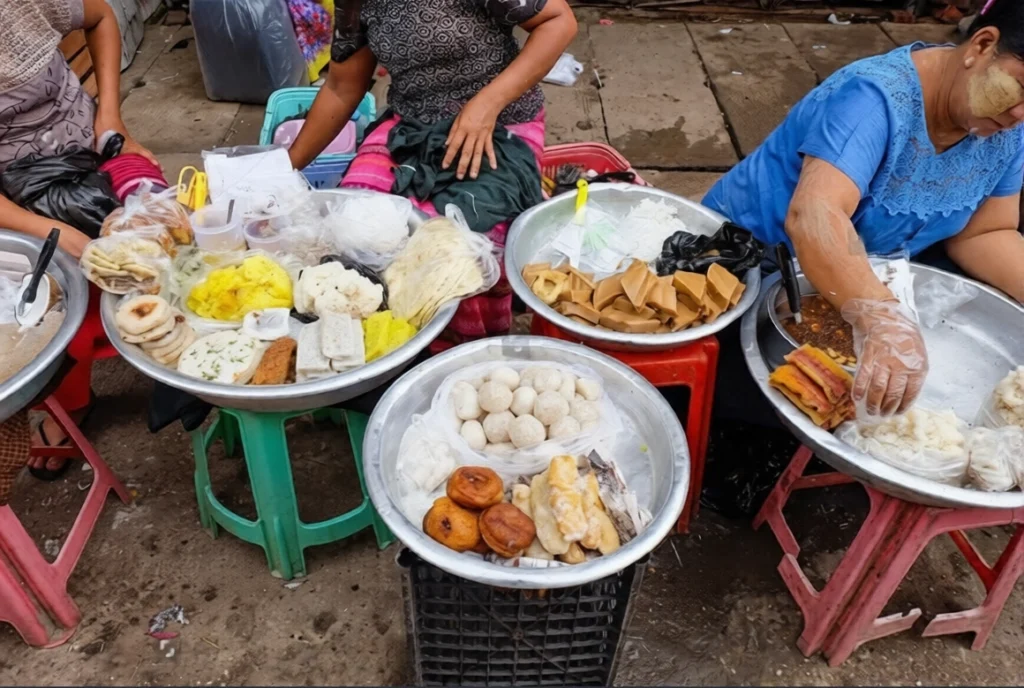
Yangon, Myanmar - Burmese traditional street food, snacks and sweets at a fresh market and street vendors
Food Safety and Street Dining Etiquette
Many travelers worry about food safety when exploring street vendors in developing nations. While caution remains important, you should not let fear stop you from enjoying the best Mohinga in Yangon. The soup boils continuously at high temperatures, which naturally kills most harmful bacteria. However, following a few simple guidelines will keep your stomach happy and your trip enjoyable.
First, always eat during the peak morning hours. Most locals eat this soup between 6:00 AM and 9:00 AM. When you eat during this window, the broth is freshly made and boiling hot. Avoid eating from street carts late in the afternoon, as the soup may have been sitting out for hours. Second, observe the vendor’s washing station. Choose stalls that use fresh, running water or clearly separate their clean and dirty bowls efficiently.
Regarding etiquette, dining on the street is a casual, communal affair. You will often share a small table with strangers. Offer a friendly smile, take your seat, and focus on your food. Do not blow your nose loudly at the table, as locals consider this incredibly rude. Instead, step away from the dining area if you need to clear your nose after eating spicy chili. Finally, bring small denomination Kyat bills. Street vendors rarely have change for large notes, so carrying 1,000 and 5,000 Kyat notes makes paying much smoother.
In short, common sense goes a long way. Eat where the crowds eat, ensure your soup is served piping hot, and use the provided utensils cleanly. By respecting the local dining culture, you will earn warm smiles and perhaps even an extra scoop of crispy fritters from the friendly vendors.
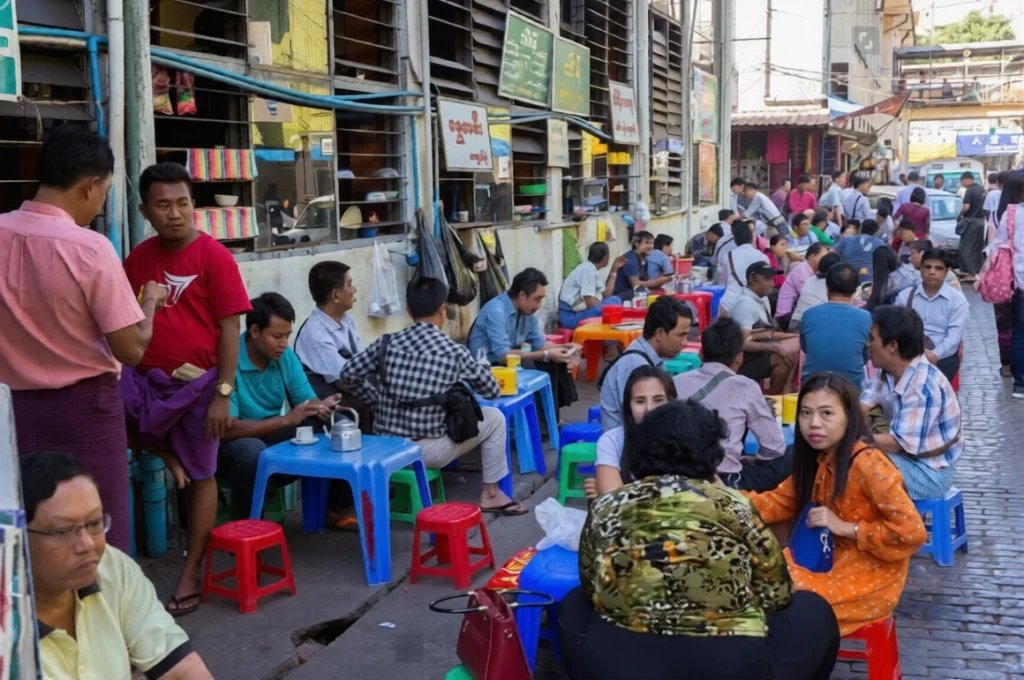
People are drinking tea seizures at Bogyoke Aung San Market formerly Scott's Market in Yangon, Myanmar. Scott's Market was built in 1926
Embrace the Morning Culture
Eating this famous noodle soup gives you a front-row seat to Myanmar’s daily life. As you sit on the sidewalk, you will watch monks walking silently to collect alms, women carrying fresh produce on their heads, and neighborhood dogs sleeping lazily in the morning sun. The dish intertwines deeply with the rhythm of the city.
- Wake up at dawn.
- Follow the scent of lemongrass.
- Find the busiest street corner.
- Order with a smile.
- Customize your toppings.
- Slurp the noodles happily.
- Pay with small change.
Remember one very important thing – Culinary travel requires an open mind and a willingness to step outside your comfort zone. The initial sight of a bubbling pot of catfish soup might surprise a western palate, but taking that first warm, savory bite changes everything. Do not leave Yangon without participating in this beautiful morning ritual.
Therefore, grab your camera, put on some comfortable walking shoes, and head out early. The chaotic, colorful, and wildly delicious streets of Yangon wait for you. Let your taste buds lead the way.
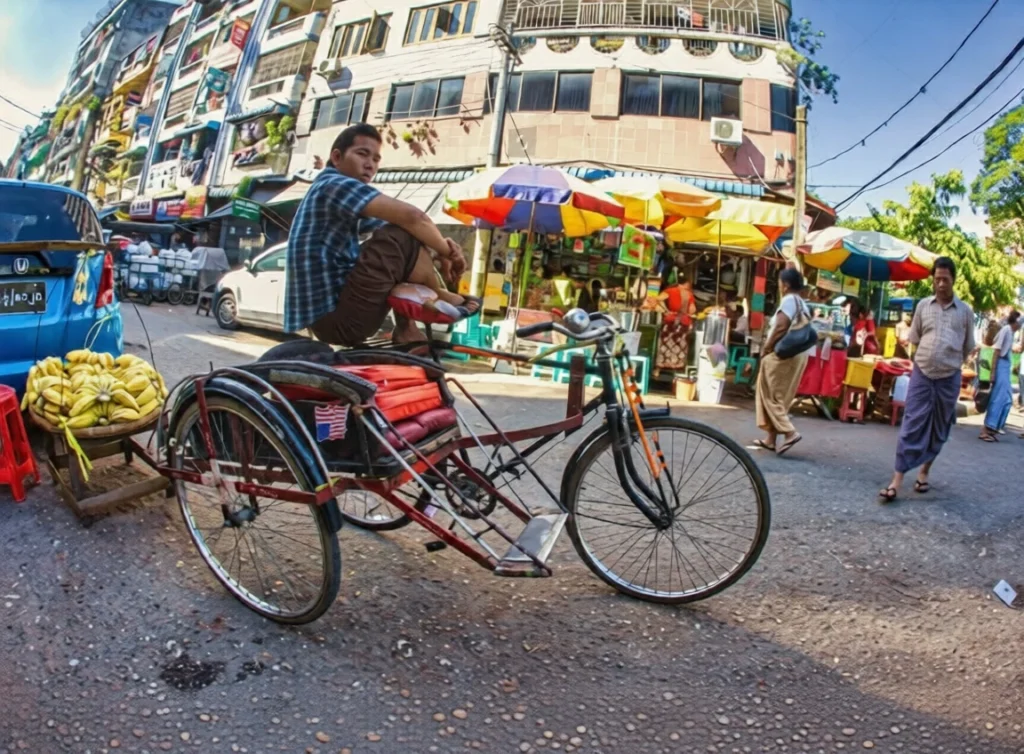
In the bustling market of Yangon a cyclist takes a break on his rickshaw while vibrant stalls sell fresh produce nearby
Conclusion
Ultimately, finding the greatest street food in Yangon comes down to curiosity and a sense of adventure. Mohinga stands as a brilliant testament to the country’s rich agricultural heritage and deep culinary traditions. From the elegant tea houses in the downtown colonial district to the humble neighborhood street carts, every bowl tells a story of local pride and generations of cooking expertise.
By understanding the fresh ingredients, knowing how to confidently order your favorite crispy toppings, and following basic street food safety rules, you elevate your travel experience from typical sightseeing to authentic cultural immersion. Step out into the cool Yangon morning, find a small plastic stool, and savor the unforgettable flavors of Myanmar’s most cherished dish.