The Dilmun Civilization stands as one of the most fascinating ancient trading empires in human history. Flourishing in the region of modern-day Bahrain from 3000 to 1600 BCE, this incredible society created one of the earliest urban centers in the world. To truly understand the global impact of these ancient people, you need to explore their physical remains. By visiting these historical landmarks, you will see exactly how ancient merchants connected the grand empires of Mesopotamia and the Indus Valley. You will also discover the unique culture, advanced urban planning, and fascinating daily life of a society that shaped early global commerce.
Thank you for reading this post, don't forget to subscribe!Ancient builders constructed massive temples, sprawling cities, and the largest prehistoric cemetery on Earth right on the island of Bahrain. Today, archaeologists continue to unearth incredible artifacts that tell the story of a peaceful, prosperous people. By studying the Dilmun Civilization, you learn how early humans mastered maritime navigation, established international customs systems, and built a society based on trade rather than conquest. This deep dive into their world will guide you through the most important archaeological sites you can explore today.
The Myth and Reality of Ancient Dilmun
Before modern archaeologists started digging in the sands of Bahrain, the world only knew Dilmun through ancient myths. Sumerian clay tablets describe this land as a holy paradise of purity and immortality. The famous Epic of Gilgamesh features the hero traveling to this exact location to find the secret of eternal life. When you look at the lush palm groves and natural freshwater springs of Bahrain, you quickly understand why ancient poets viewed this island as the legendary Garden of Eden. However, the reality of the Dilmun Civilization is even more impressive than the myths.
- Historians recognize the island as the central marketplace of the ancient Middle East, controlling the flow of precious metals and luxury goods.
- The society developed an incredibly precise system of weights and measures, which allowed fair trade between completely different cultures.
- Local leaders built monumental architecture without the use of slave labor, relying instead on the wealth generated by their strategic location.
- Artisans created beautiful, unique stamp seals that acted as early corporate logos for wealthy merchants.
- The culture maintained peace for centuries, as their economic value made them an essential partner to larger, more aggressive neighboring empires.
- Engineers created complex irrigation systems to harness the island’s natural springs, supporting a booming population in a desert region.
In short, the people of this era turned a small island into an economic powerhouse. They proved that diplomacy, trade, and cultural exchange could build a lasting legacy. Exploring their ruins gives you a front-row seat to the birth of international business.
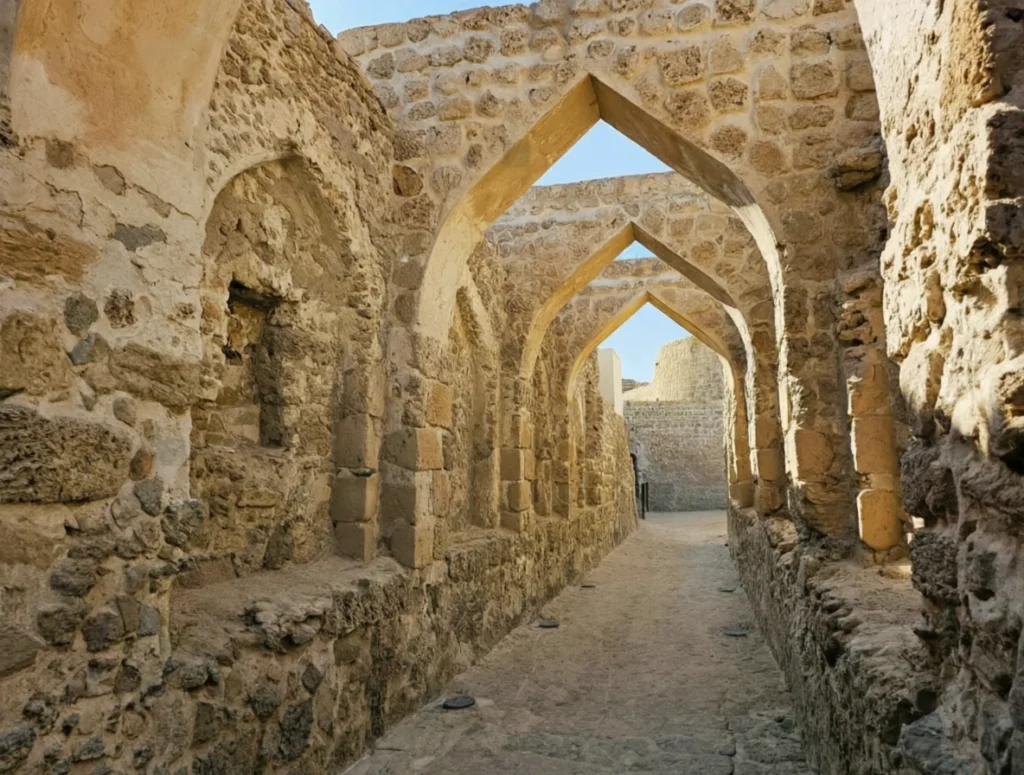
– Al Qalah, Bahrain _ Ancient arches on a narrow path at Qal’at al-Bahrain Portuguese Fort, the ancient capital of Dilmun civilization, in Bahrain –
Explore Qal’at al-Bahrain – The Ancient Harbor
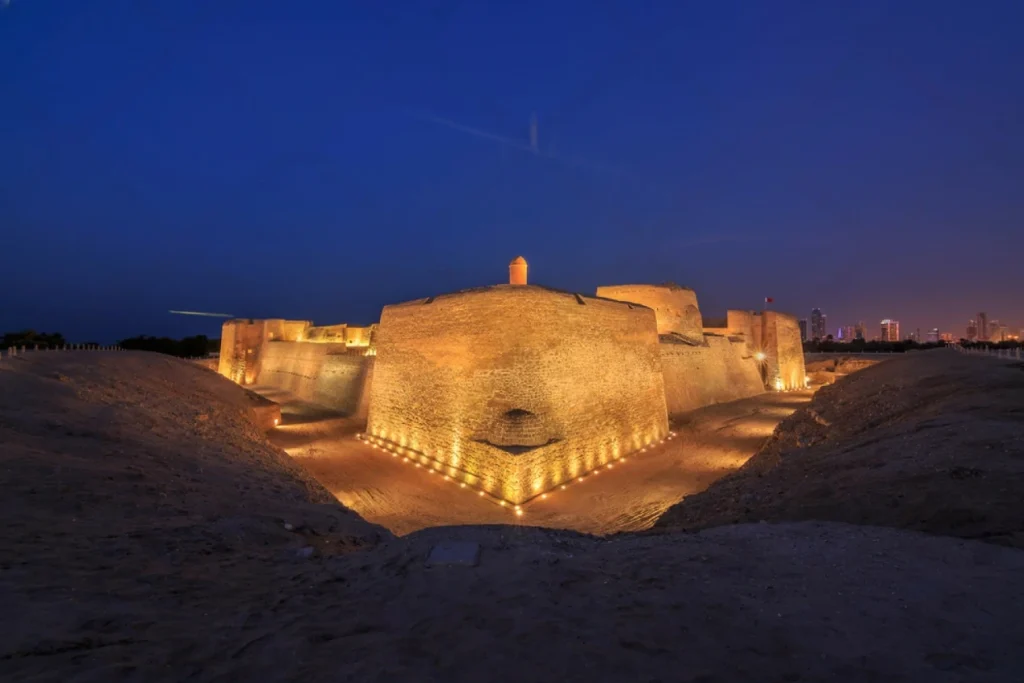
Qal’at al-Bahrain represents the beating heart of the ancient island. As a recognized UNESCO World Heritage site, this massive artificial mound contains over 4,000 years of continuous human occupation. Here are the key features that make this site an absolute must-visit for history lovers.
- The Deep Trenches 📌 Archaeologists cut deep into the earth to reveal multiple city layers. You can clearly see the different eras of occupation stacked right on top of each other.
- The Sea Tower 📌 Ancient harbor masters used a massive stone tower to monitor incoming ships and manage the bustling port traffic.
- The Customs House 📌 Researchers discovered an ancient commercial building where merchants weighed goods and stamped their official Dilmun seals on cargo shipments.
- Residential Streets 📌 Visitors can walk through the actual stone foundations of ancient homes, complete with private bathrooms and advanced drainage systems.
- The Portuguese Fort📌 While exploring the ancient ruins, you will also see a massive 16th-century fort built directly on top of the Dilmun city, showcasing the site’s ongoing strategic importance.
- The Site Museum 📌 A beautifully designed modern museum sits beside the ruins, displaying the finest artifacts recovered from the excavations, including pottery, weapons, and jewelry.
- Madimat al-Tujjar 📌 This translates to the “City of Merchants,” which perfectly describes the vibrant commercial district you can explore at the base of the mound.
- The Ancient Seawall 📌 Builders constructed a massive stone wall to protect their valuable port from the unpredictable tides of the Arabian Gulf.
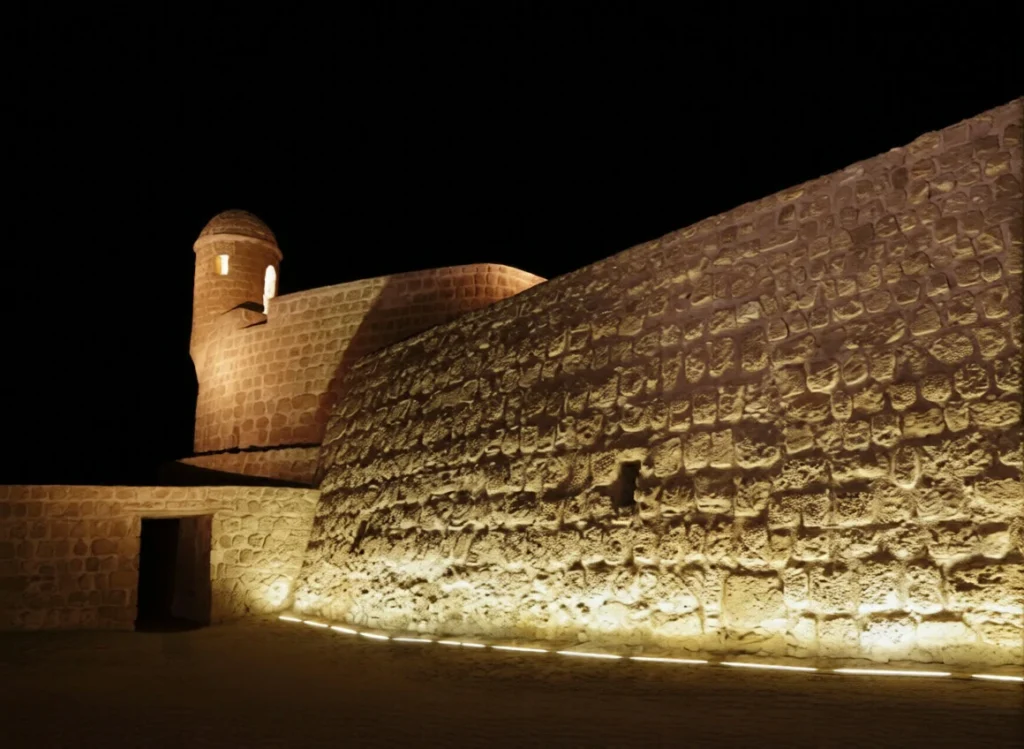
– Watch tower and wall of Bahrain Fort –
The Massive Dilmun Burial Mounds
One of the most striking visual features of Bahrain is the landscape covered by tens of thousands of ancient burial mounds. These fascinating structures provide incredible insight into how these ancient people viewed death and the afterlife.
- Scale and Volume At their peak, builders constructed over 170,000 individual burial mounds across the island, making it the highest concentration of prehistoric cemeteries in the world.
- The Royal Mounds of A’ali Local kings and elites received massive, two-story stone tombs in the village of A’ali. Some of these structures reach up to 15 meters in height.
- Unique Construction Builders created a central stone chamber for the deceased, placed burial gifts inside, and then covered the entire structure with earth and gravel.
- Burial Goods Archaeologists frequently find copper weapons, ostrich eggshell cups, and painted pottery inside the tombs, showing the wealth the deceased wanted to take to the afterlife.
- Ring Walls Many of the larger mounds feature perfectly circular stone walls surrounding the base, indicating highly organized architectural planning.
- Evidence of Health By studying the remains within the mounds, scientists discovered that the ancient people lived relatively long, healthy lives, thanks to their wealthy economy and excellent diet.
- Global Significance UNESCO recently added the Burial Mounds to the World Heritage list, recognizing their unmatched historical value and protecting them for future generations.
Exploring these quiet, mysterious fields offers a profound connection to the past. Travelers looking to witness this spectacle can easily find rental cars and local transport to navigate the mound fields. By studying their burial practices, you gain a deeper respect for the spiritual beliefs of the Dilmun Civilization.
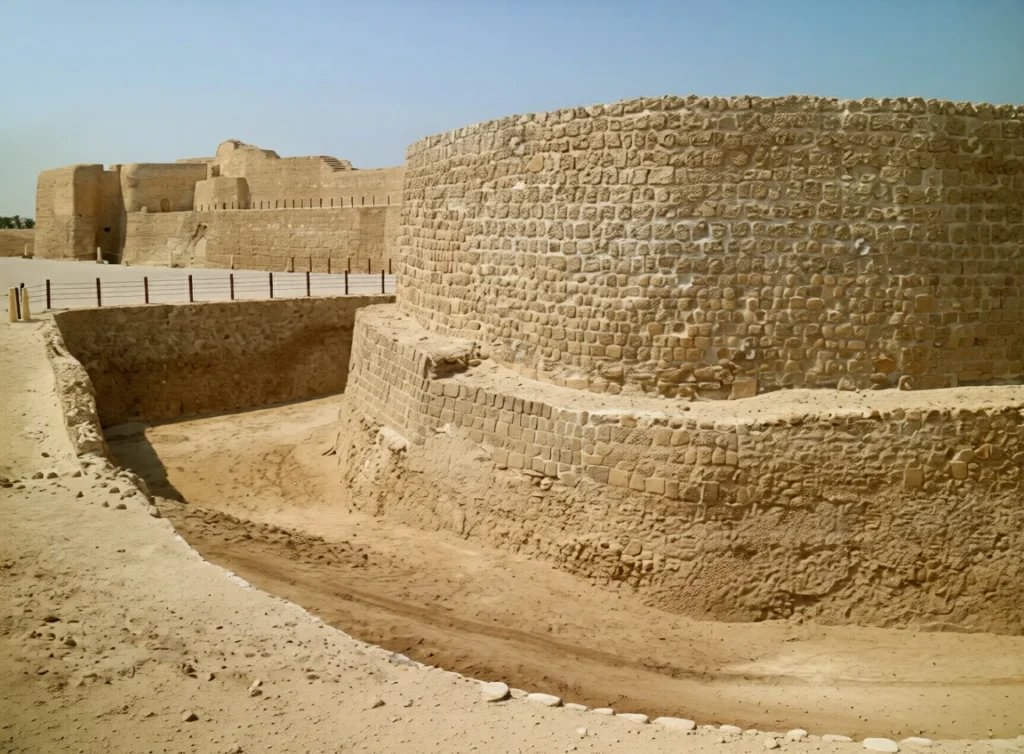
– Qal'at al-Bahrain or Bahrain Fort, the Ancient Harbour and Capital of Dilmun Civilization in Manama, Archaeological Site in Bahrain –
Uncover the Barbar Temple – The Sacred Springs
Religion played a massive role in ancient life, and the Barbar Temple complex serves as the greatest religious monument of the era. Discovered in the 1950s by a Danish archaeological team, this site reveals the deep spiritual connection the ancient people had with fresh water. The builders constructed three successive temples on top of one another over several centuries. They dedicated this massive limestone structure to Enki, the Sumerian god of wisdom and freshwater.
When you visit the Barbar Temple, you immediately notice the central sunken chamber. This chamber housed a sacred natural spring that flowed directly into the temple grounds. Priests used this pure water for spiritual cleansing and complex religious rituals. The architecture features highly refined limestone blocks cut with astonishing precision, imported from neighboring islands just for this holy site.
Excavators found a treasure trove of religious artifacts buried near the altar. The most famous discovery is a stunning copper bull’s head, which once decorated a sacred lyre used in temple music. They also uncovered dozens of unique stamp seals, gold jewelry, and offering jars. These finds prove that the temple acted as both a spiritual center and an economic hub, receiving rich donations from wealthy merchants seeking blessings for their long sea voyages.
Important Travel Note – The Barbar Temple complex remains open to the public year-round. Visitors should try to arrive early in the morning to enjoy the site in the cool weather and experience the tranquil atmosphere that ancient worshipers once felt.
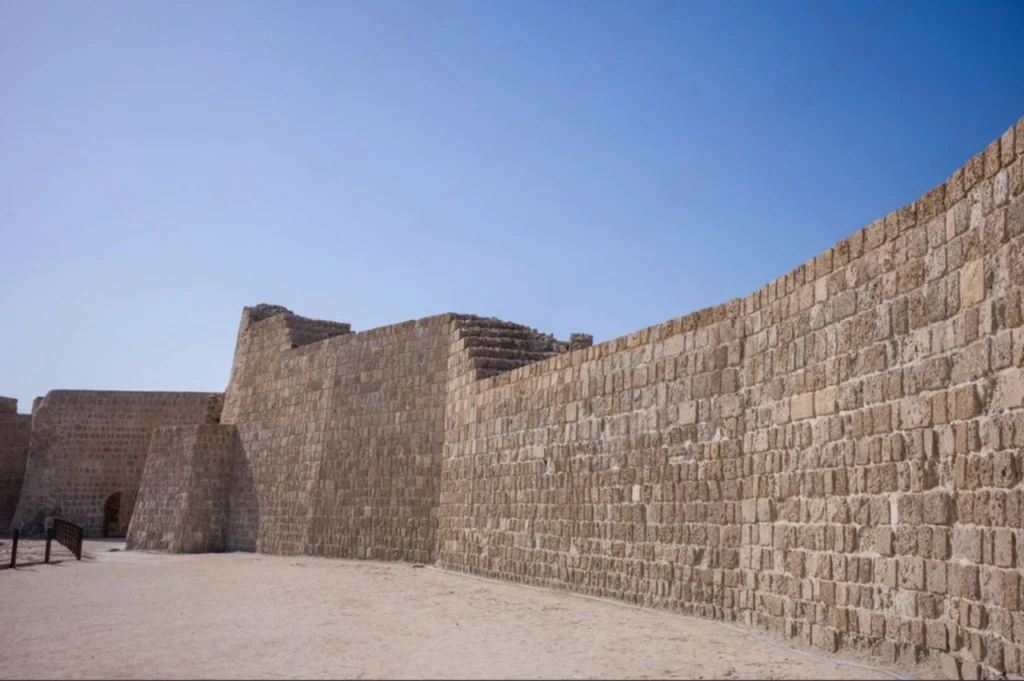
– Qal'at al-Bahrain or Bahrain Fort, the Ancient Harbour and Capital of Dilmun Civilization in Manama, Archaeological Site in Bahrain –
Daily Life at the Saar Settlement
While temples and royal tombs show how the elite lived, the Saar Settlement provides a perfect window into the daily life of ordinary citizens during the Dilmun Civilization. Located on a limestone ridge, this well-preserved town features a highly organized grid layout that proves these ancient people practiced advanced urban planning. By walking through the ruins of Saar, you can easily picture the vibrant community that thrived here 4,000 years ago.
- Standardized Homes 👈 Most families lived in L-shaped houses featuring an inner courtyard, a central living area, and dedicated cooking spaces.
- The Local Temple 👈 The town featured its own small, neighborhood temple situated at the highest point of the settlement, designed with a unique crescent-shaped altar.
- Advanced Cooking 👈 Archaeologists found traditional clay ovens, called tandoors, in almost every home, showing that families baked fresh bread daily.
- Date Pressing 👈 Residents built specialized, plastered channels in their homes to press dates and collect the sweet, valuable syrup, known as dibs.
- Tool Making 👈 Excavators uncovered numerous copper fishhooks, stone weights, and flint tools, proving that the residents actively fished and crafted their own equipment.
- Community Organization 👈 The main street runs perfectly straight through the town center, showing that a central authority managed the construction of the neighborhood.
Visitors interested in deep history will love the Saar Settlement because it feels so relatable. You can stand in the kitchen of an ancient home and understand exactly how a family prepared their meals. This connection makes the ancient society feel incredibly human and real.
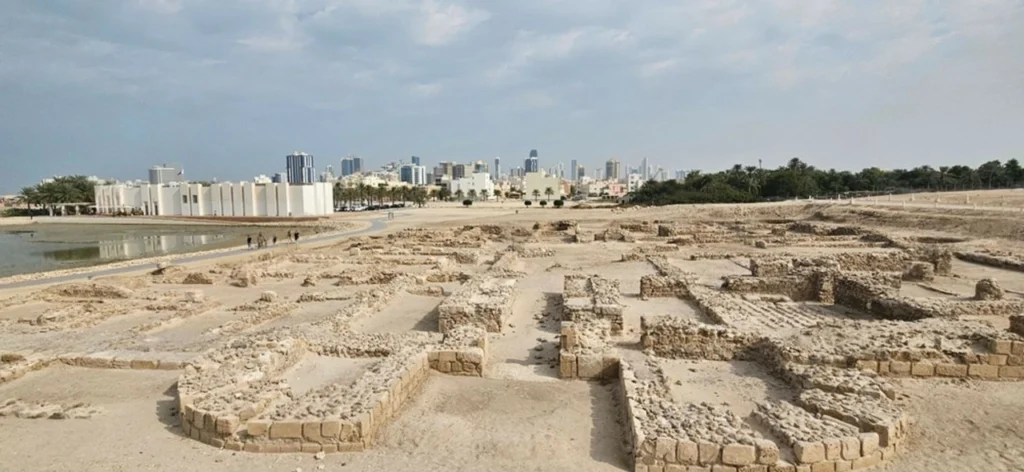
– Manama, Bahrain – Archaeological settlement of Qal'at al-Bahrain, also called Bahrain Fort or Portuguese Fort, in Manama, Bahrain –
The Epicenter of Global Trade
The primary reason this island civilization grew so wealthy was its perfect geographical location. Sitting right in the middle of the Arabian Gulf, the island served as the mandatory halfway point between the great cities of Mesopotamia (modern-day Iraq) and the booming Indus Valley Civilization (modern-day Pakistan and India). Their merchants mastered the seas and acted as the ultimate middlemen of the ancient world.
Origin Region | Goods Brought to Dilmun | Goods Taken Back |
Mesopotamia | Silver, Textiles, Grain, Olive Oil | Copper, Pearls, Ivory, Carnelian |
Indus Valley | Ivory, Lapis Lazuli, Carnelian Beads | Silver, Woolen Garments, Dates |
Magan (Oman) | Raw Copper Ingots, Diorite Stone | Textiles, Grain, Luxury Crafts |
As you can see from the trade network, they controlled the distribution of copper, which was the most valuable resource of the Bronze Age. Without their ships and merchants, the empires of Mesopotamia could not craft their bronze weapons or tools.
- The Pearl Industry The local divers harvested the finest natural pearls in the world, which became an exclusive luxury item highly demanded by foreign kings.
- The Date Trade The island’s rich freshwater springs allowed farmers to grow massive palm groves, producing delicious dates that merchants exported by the ton.
- Shipbuilding Mastery Local craftsmen learned to build large, sturdy wooden ships coated in natural bitumen to make them waterproof for long ocean journeys.
- The Standardized Weights They invented a specific system of stone weights that merchants across the entire Gulf adopted, proving their ultimate economic dominance.
- Safe Harbor The island offered a safe, politically neutral space where foreign merchants could meet, trade, and restock their ships without fear of war.
- The Custom Stamp Seals Every wealthy merchant carried a personal stone stamp, carved with unique animals and symbols, to mark their cargo and guarantee its quality.
- Cultural Exchange Along with goods, these traders shared language, religious ideas, and artistic styles across thousands of miles of ocean.
- Lasting Economic Impact Their successful business model proved that nations could grow powerful and rich purely through commerce, setting a standard for future trading empires.
In summary, the trade networks established by this society formed the foundation of early globalization. Travelers visiting the region today can still feel the island’s merchant spirit in the bustling traditional souqs of Manama. You can book specialized tours of the old trading ports and easily find flights to Bahrain to start your historical journey. Enjoy exploring a culture that built its power on communication and commerce rather than warfare.
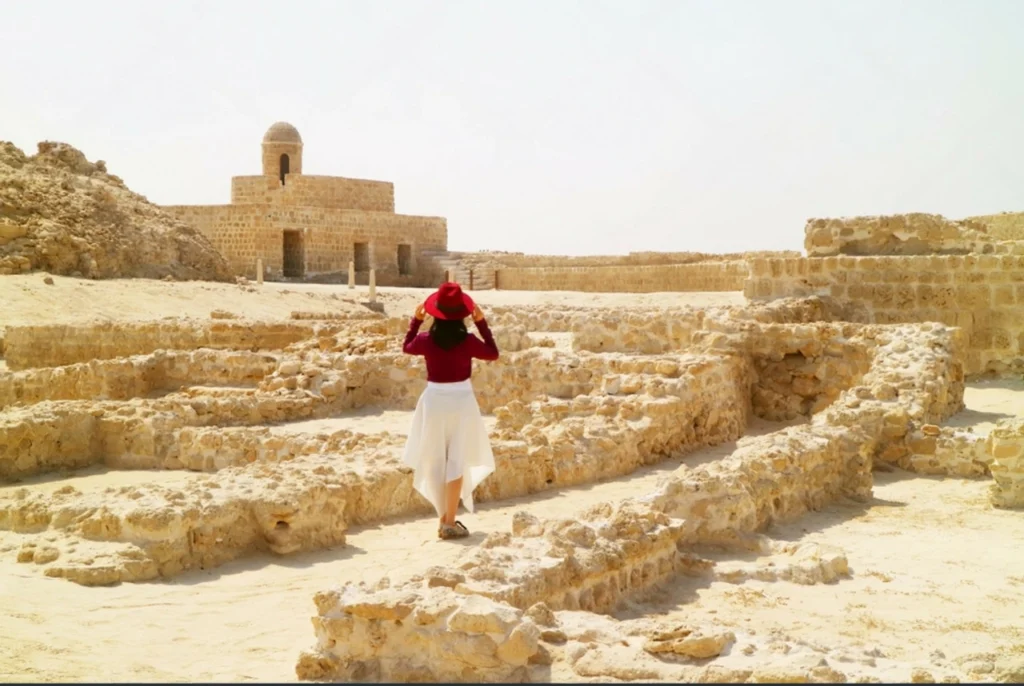
– Female Visiting the Remains of the Bahrain Fort, the Ancient Harbour and Capital of Dilmun Civilization in Manama, Bahrain –
The Art of the Stamp Seals
You cannot fully appreciate the Dilmun Civilization without examining their famous stamp seals. These small, circular stone carvings serve as the most distinctive artistic creations of the culture. Because merchants needed a way to identify their goods and sign official trade agreements, they hired skilled artisans to carve beautiful, personalized designs into pieces of soft steatite stone.
When you visit the Bahrain National Museum, you can view hundreds of these intricate seals on display. The artists carved complex scenes featuring powerful bulls, dancing men, palm trees, and mythological creatures. No two seals look exactly alike, as each one functioned just like a modern signature. Merchants would press the carved stone into wet clay to seal jars, secure storeroom doors, and validate clay tablet contracts.
Finding these specific seals in ancient cities located in Iraq, India, and Kuwait proved to modern historians just how far the merchants traveled. The seals act as an ancient passport stamp, tracking the movement of people across the ancient world. The high level of artistic detail found on these small stones highlights the creativity, wealth, and sophisticated taste of the island’s elite class.
Travelers who appreciate ancient art should prioritize a visit to the Bahrain National Museum. The museum features dedicated exhibition halls showcasing the finest seals recovered from the archaeological sites, complete with interactive displays that explain their historical meaning and artistic value.
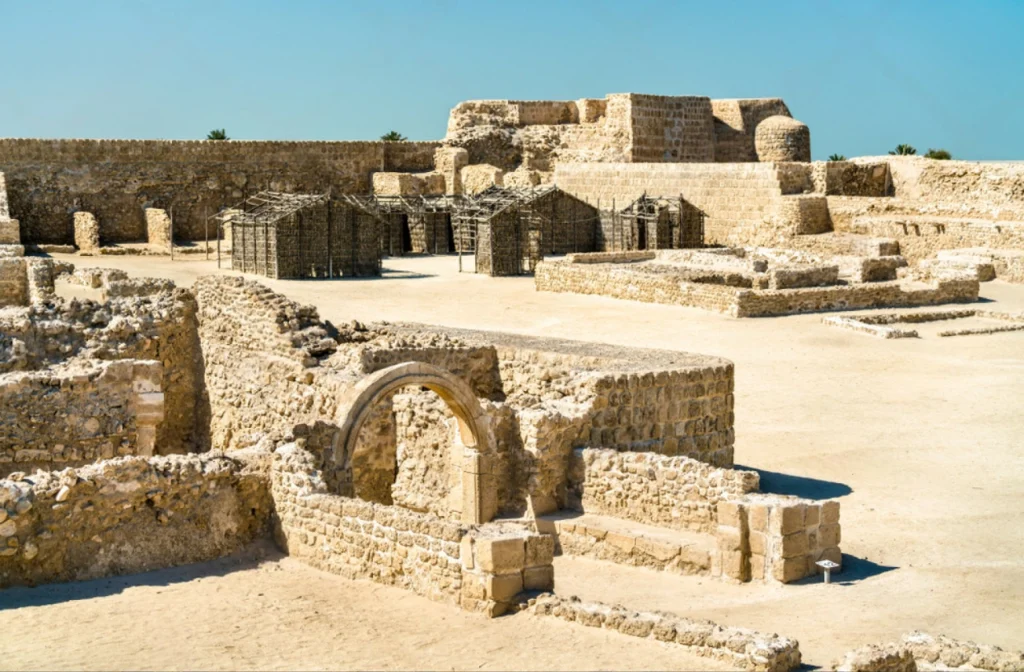
– Bahrain Fort or Qal'at al-Bahrain. A UNESCO World Heritage Site in the Middle East –
Plan Your Historic Adventure
Planning a trip to explore the remnants of the Dilmun Civilization offers an unforgettable experience for any history enthusiast. Because the Kingdom of Bahrain remains compact and modern, visitors can easily navigate between the ancient sites and modern comforts. Creating a solid travel plan ensures you maximize your time exploring these world-class archaeological wonders.
- Book a guided archaeological tour.
- Visit Qal’at al-Bahrain at sunset.
- Explore the Barbar Temple springs.
- Walk through the Saar Settlement.
- View the Royal Mounds in A’ali.
- Spend a full day at the National Museum.
- Rent a car for easy site access.
Remember a very important detail – the intense summer heat in the Arabian Gulf can make outdoor exploration difficult. The best time to visit these sites is between November and March. Travelers looking for comfort can find excellent hotel accommodations in the capital city, providing air-conditioned luxury after a long day of historical exploration. Booking flights to Bahrain during the winter months guarantees beautiful weather for your archaeological adventure.
Therefore, do not hesitate to immerse yourself in the rich history of the region. By carefully planning your itinerary and utilizing local expert guides, you will unlock the incredible secrets of an empire that history almost forgot. The ruins await to tell you their ancient stories.
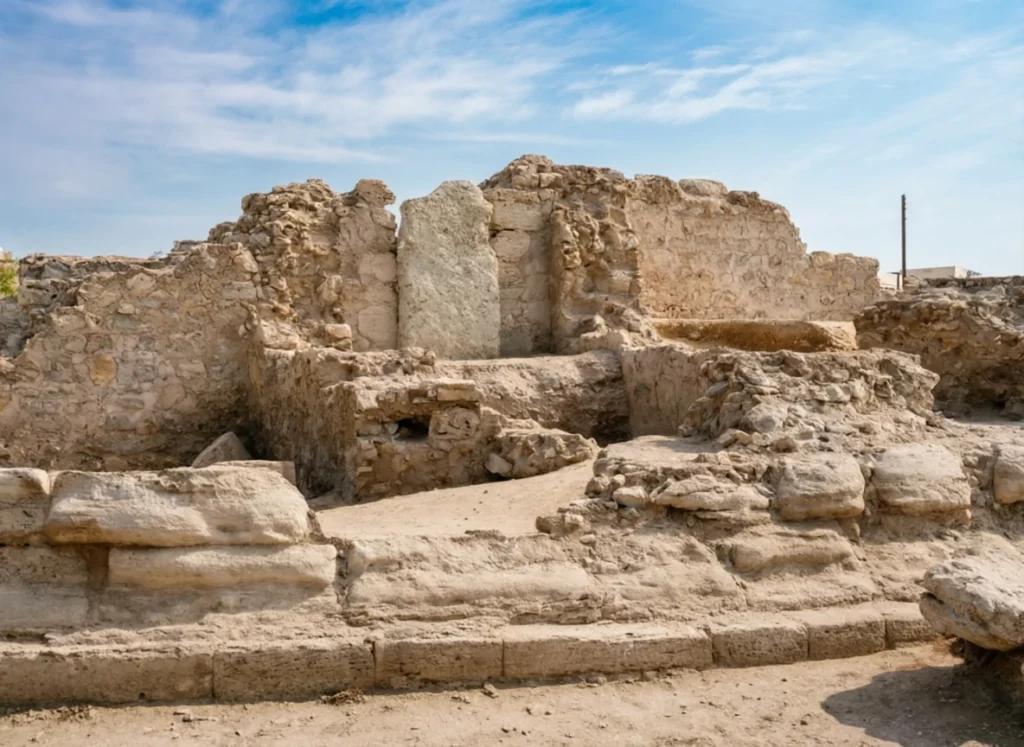
– Bahrain - A'ali - Dilmun Burial Mounds Ruins –
Conclusion
Ultimately, the archaeological sites of the Dilmun Civilization provide a crucial missing puzzle piece in our understanding of human history. By linking the great empires of the East and West, this peaceful trading society accelerated human progress, shared vital technologies, and created unprecedented wealth.
Today, ongoing excavations and the dedicated work of the Bahrain Authority for Culture and Antiquities ensure that these sites remain protected and accessible. As researchers discover more layers of history hidden beneath the sands, the legacy of this island empire continues to grow. Whether you stand at the towering walls of Qal’at al-Bahrain or wander through the endless fields of the Burial Mounds, you connect directly with the ancient merchants who first built the bridge between different worlds.