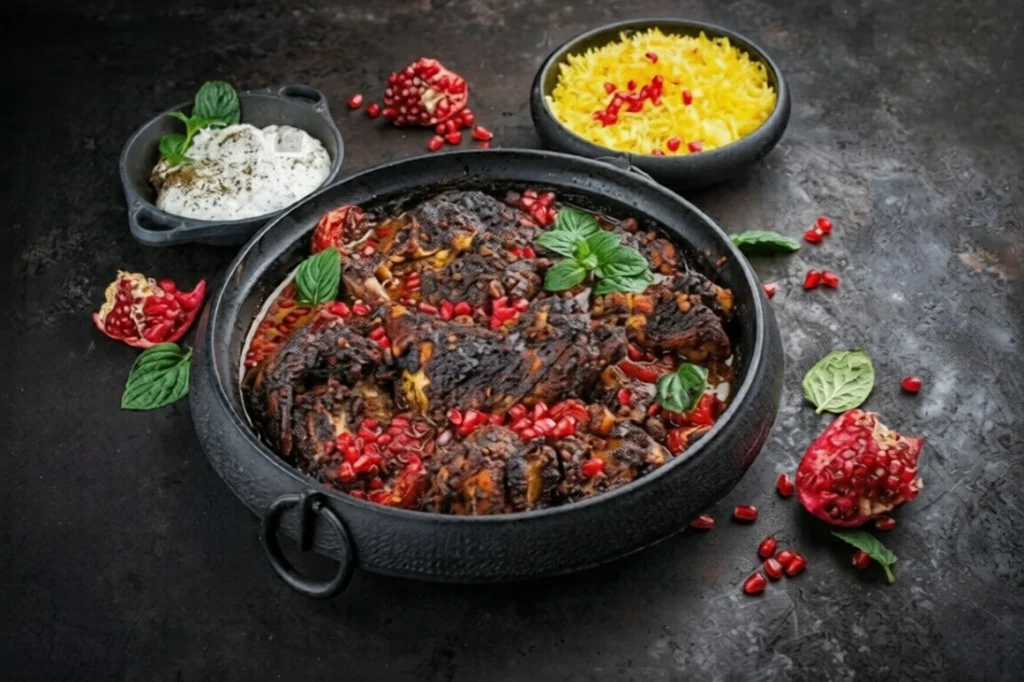
Exploring Iranian cuisine is one of the most exciting parts of traveling through the Middle East. While many tourists immediately think of grilled kebabs and flatbreads, true culinary discovery begins when you dive into the world of traditional Persian stews. To achieve a complete travel experience in Iran, you must understand and taste the local dishes that define the culture. This guide helps you discover the crown jewel of Persian cooking, ensuring you know exactly what to order and how to enjoy it like a local. By stepping out of your food comfort zone, you will gain a deeper appreciation for the rich heritage and warm hospitality of the Iranian people.
Thank you for reading this post, don't forget to subscribe!When you plan your culinary journey, you want to seek out meals that offer a genuine taste of history. A high-quality food tour introduces you to flavors that locals have perfected over centuries. You need meals that provide both visual beauty and complex flavors. By learning about these iconic dishes before you travel, you improve your overall experience. This approach helps you connect with restaurant owners, market vendors, and local families who might invite you into their homes to share a traditional meal.
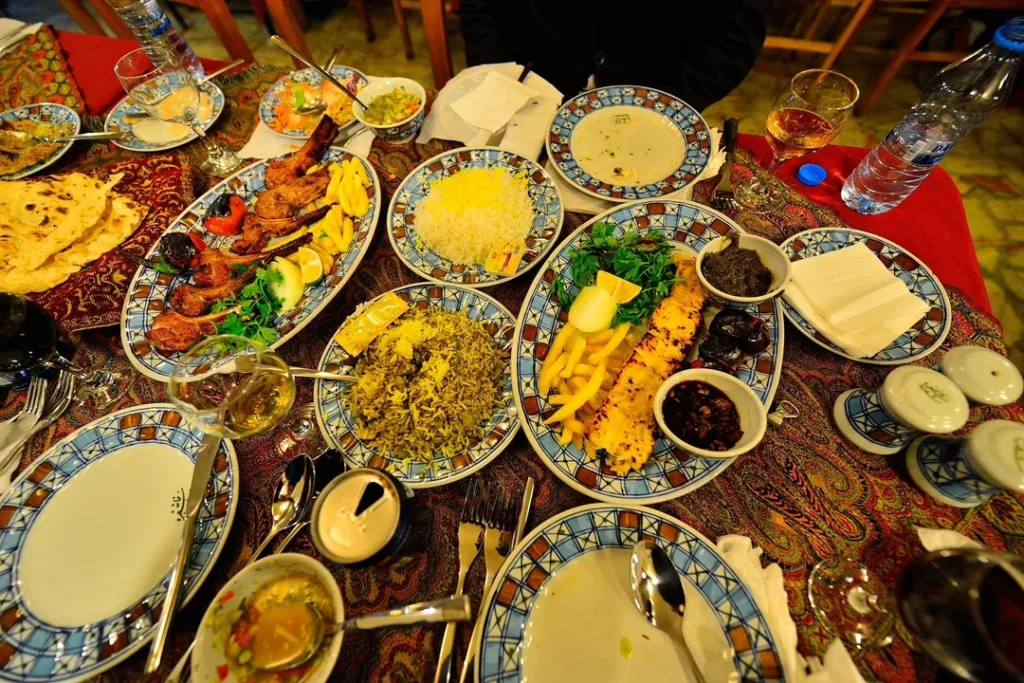
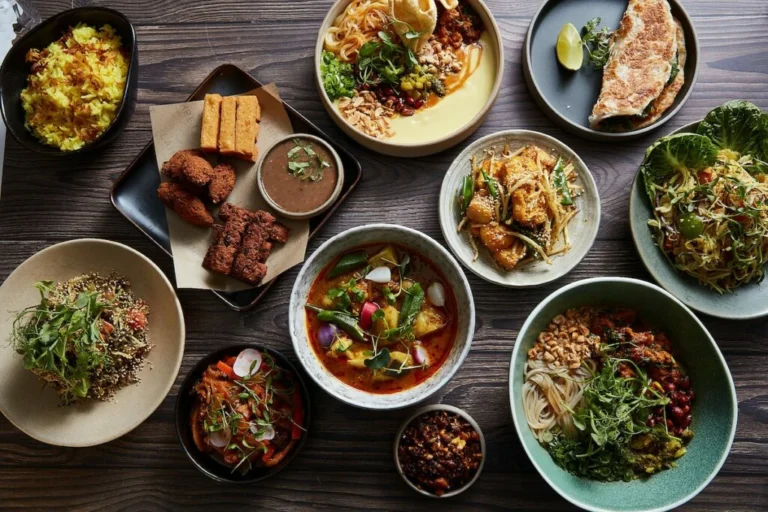
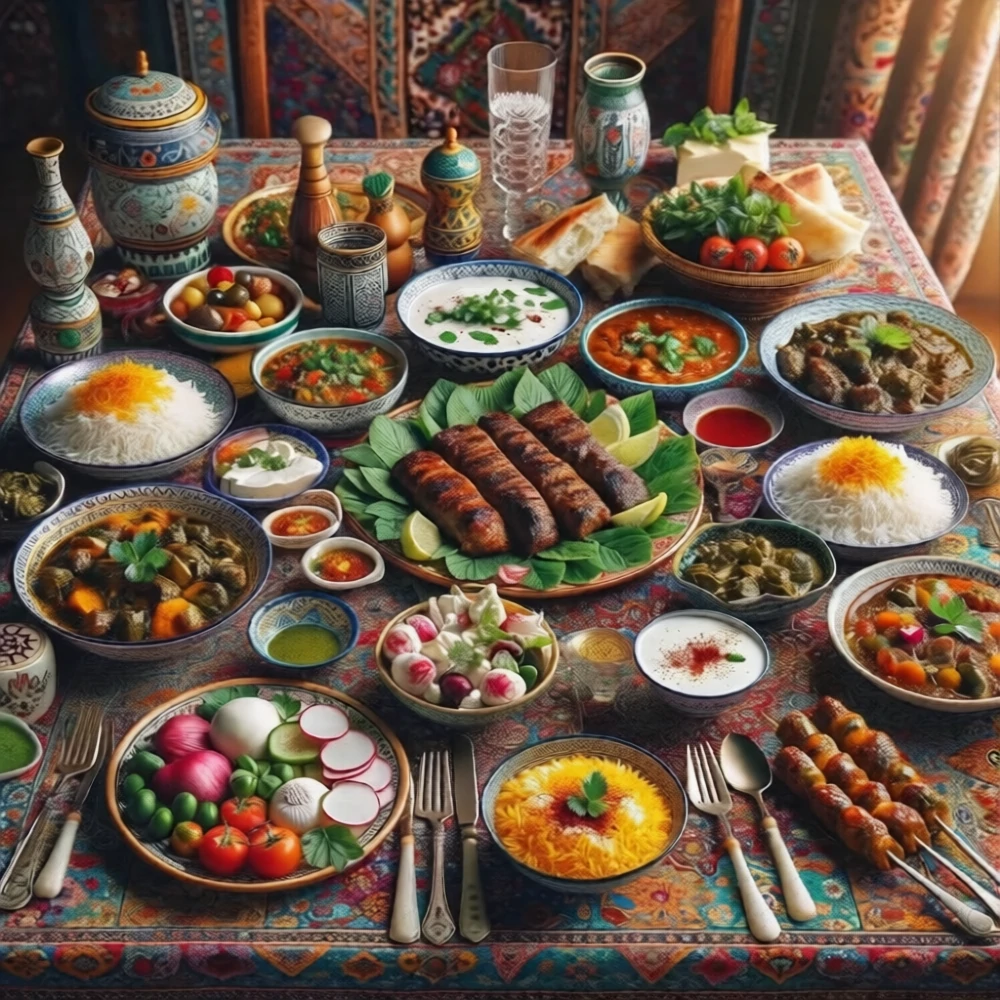
Traditional Persian food spread
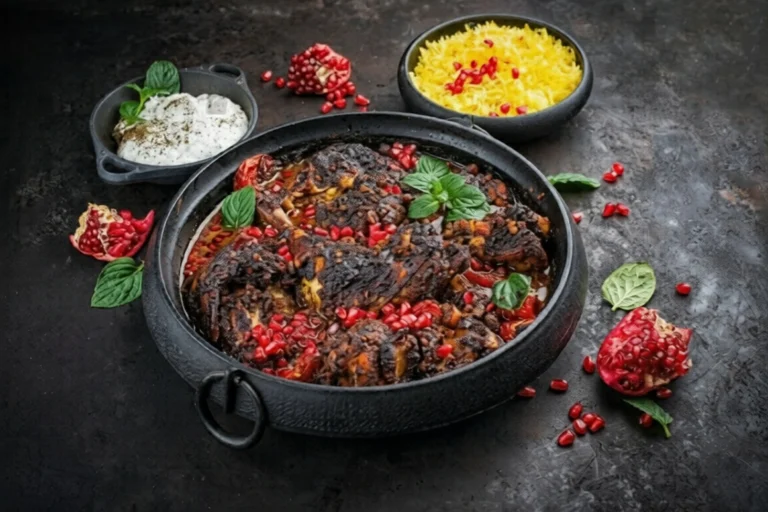
What Exactly is Fesenjan?
- The Base Ingredients 📌 Chefs create this remarkable stew primarily from tart pomegranate molasses and finely ground, toasted walnuts.
- The Protein Choice 📌 Cooks typically slow-cook the stew with tender chicken breast, chicken thighs, or traditionally, wild duck.
- The Flavor Profile 📌 The combination of these ingredients produces a deeply flavorful, earthy dish with a unique sweet-and-sour taste.
- The Visual Appeal 📌 Due to the dark pomegranate paste and roasted walnuts, the stew develops a beautiful, rich dark brown or almost black color.
- The Slow Process 📌 Restaurants simmer this meal for many hours to allow the natural oils from the walnuts to release and form a glossy layer on top.
- The Perfect Pairing 📌 Waiters traditionally serve the hot stew alongside a massive mound of fragrant, steaming saffron rice.
In short, you must explore every opportunity to try authentic local foods. By seeking out Fesenjan, you guarantee a memorable culinary experience. Your willingness to learn and taste new things will help you build a rich and rewarding travel itinerary.
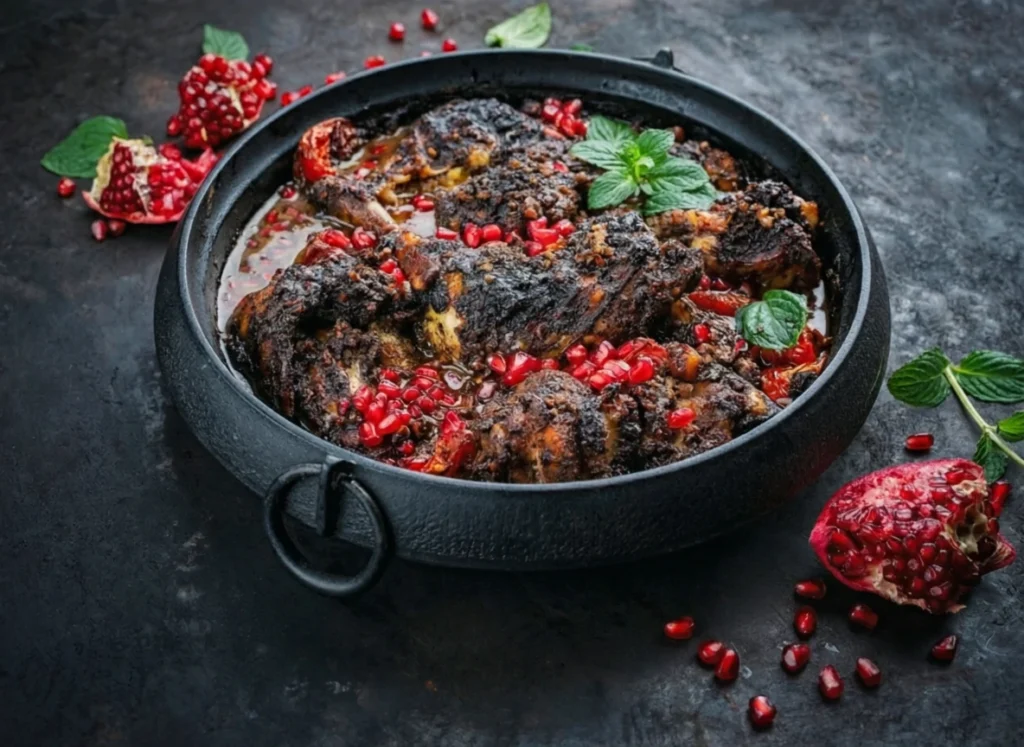
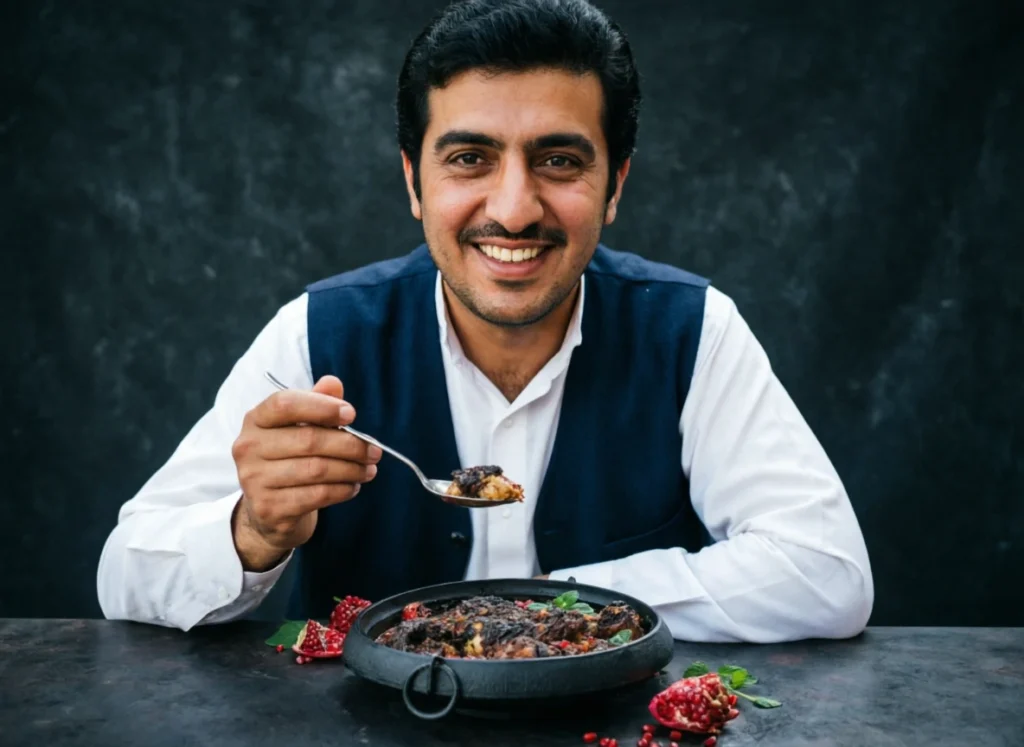
Dark Persian stew Fesenjan
The Rich History and Cultural Significance
- Ancient Royal Roots Archaeologists found stone tablets in the ancient ruins of Persepolis detailing the royal pantry. These tablets listed walnuts and pomegranates as staple ingredients for the ancient Persian kings.
- A Symbol of Luxury Because walnuts and pomegranate molasses were historically expensive, people considered this meal a luxury item reserved only for the wealthy.
- The Wedding Feast Families often serve this rich stew at traditional Iranian weddings to celebrate joy, abundance, and a sweet future for the couple.
- Nowruz Celebrations During the Persian New Year (Nowruz) in early spring, families gather around the table to share this dish as a symbol of new beginnings.
- The Art of Ta’arof When an Iranian host serves you this expensive and time-consuming meal, they show the highest level of respect through the cultural etiquette of Ta’arof (deep hospitality).
- A Labor of Love The lengthy preparation time means the cook spends hours watching and stirring the pot. They pour their heart and soul into the food.
- Seasonal Ingredients Historically, cooks prepared this dish during the autumn pomegranate harvest, bringing communities together to press the fruit and shell the nuts.
By considering these cultural details, you can appreciate the effort and history behind every spoonful. You build a strong connection with your hosts, which increases the joy of your meal and contributes to the success of your culinary travels.
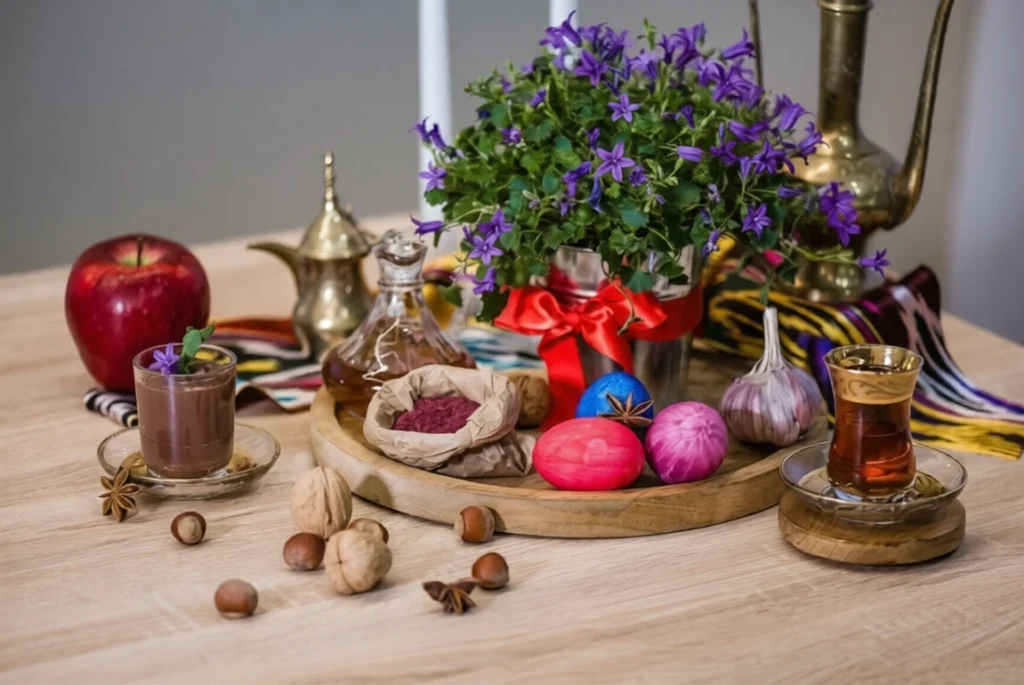
Haft Seen also spelled as Haft Sin is a tabletop arrangement of symbolic items traditionally displayed at Nowruz, the Iranian new year
A Tale of Two Flavors – Sweet vs. Sour
| Feature | Northern Iran (Gilan & Mazandaran) | Central Iran (Tehran & Isfahan) |
|---|---|---|
| Flavor Profile | Highly sour and tangy | Sweet and mildly tart |
| Pomegranate Paste | Wild, sour local pomegranates | Sweeter varieties, often mixed with sugar |
| Traditional Meat | Wild duck, goose, or local game birds | Chicken breast or chicken thighs |
| Stew Texture | Very thick, dark, and oily | Slightly lighter, smooth, and velvety |
| Local Name | Torsh Fesenjan (Sour Fesenjan) | Shirin Fesenjan (Sweet Fesenjan) |
In short, no food guide to Iran is complete without mentioning the sweet and sour debate. If you want to experience the authentic roots of the dish, travel north to Gilan. If you prefer a comforting, sweeter meal, the restaurants in Tehran will delight your taste buds.
How to Eat Fesenjan Like a Local
Interacting with your food correctly is a crucial factor in enjoying your travel experience. When you sit down at a traditional Iranian restaurant, the waiter brings several plates to your table. Knowing how to combine these elements allows you to experience the full harmony of flavors. Here are the effective strategies you should follow to eat this dish like a local.
- Serve the Rice First 👈 Begin by placing a generous portion of Chelo (fluffy Persian rice) on your personal plate. Iranians prepare their rice with great care to ensure every grain remains separate.
- Add the Saffron Rice 👈 Scoop the bright yellow saffron-infused rice from the top of the serving dish and place it over your white rice. This adds a delicate floral aroma.
- Position the Tahdig 👈 Take a piece of Tahdig (the prized crispy rice from the bottom of the pot) and place it on the side of your plate. You want to keep it crispy.
- Pour the Stew 👈 Use a serving spoon to scoop the dark, rich Fesenjan and pour it directly over a section of your white rice. Do not mix the entire plate at once.
- Mix Bite by Bite 👈 Gently mix a small amount of the stew with the rice for each bite. This method allows you to control the ratio of sweet-and-sour sauce to neutral rice.
- Enjoy the Side Dishes 👈 Take occasional bites of Sabzi Khidan (a plate of fresh mint, basil, and radishes) to cleanse your palate. The fresh herbs cut through the richness of the walnuts.
By adopting these traditional dining habits and interacting actively with the food culture, you build a deeper appreciation for the meal and achieve a truly authentic travel experience.
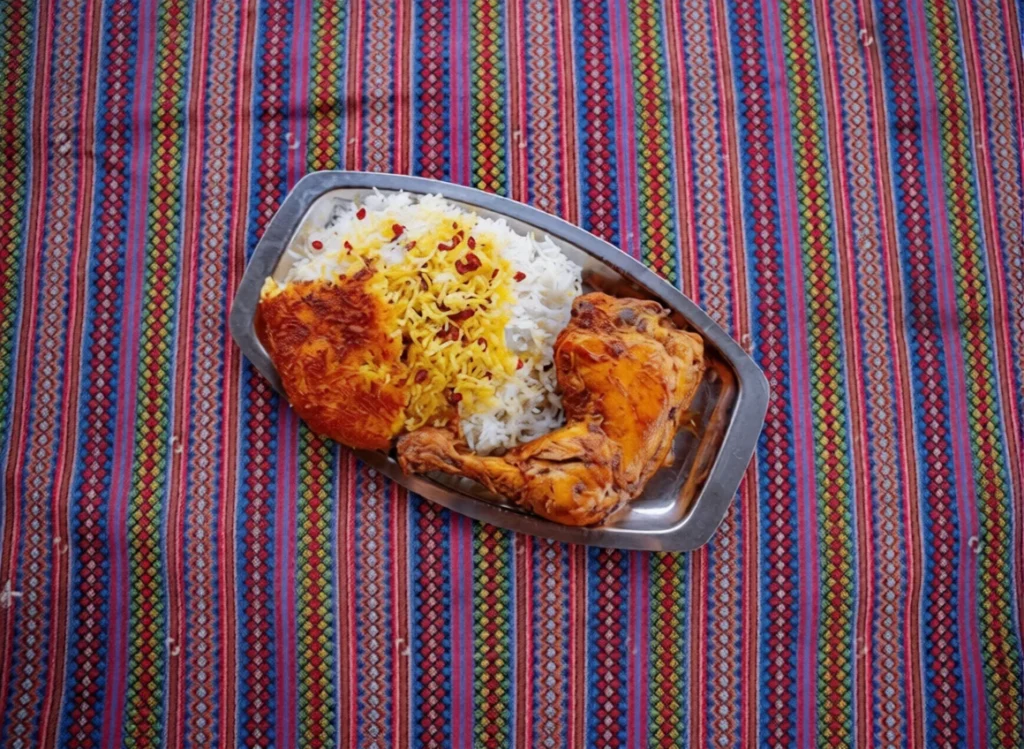
A traditional Persian meal featuring saffron rice with a crispy tahdig crust, tender spiced chicken, and garnished with vibrant barberries, served in a metal tray
Where to Find the Best Fesenjan in Iran
In the world of culinary tourism, connecting with the right restaurants serves as a critical strategy to ensure an unforgettable trip. Finding the best local food requires some research, as the most authentic versions often hide in family-run establishments rather than massive tourist hotels. Establishing a plan to visit the right culinary hubs makes a huge difference. Here is where you should focus your attention.
- Rasht (Gilan Province) Start your journey in Rasht, recognized as a UNESCO Creative City of Gastronomy. The chefs here create the most traditional, sour versions of the stew using wild local herbs and ducks from the Caspian region.
- Tehran’s Grand Bazaar Explore the bustling alleys of the Grand Bazaar in the capital. Tucked away in the ancient corridors, historic traditional dining halls serve thousands of merchants daily. They offer fantastic, balanced versions of the dish.
- Isfahan’s Historic Eateries As you marvel at the stunning blue mosques, seek out traditional restaurants situated around Naqsh-e Jahan Square. These venues often serve a slightly sweeter, highly refined version suited for the ancient capital.
- Shiraz Traditional Houses Look for restored historical mansions that now operate as boutique restaurants. Eating this royal dish in a courtyard filled with orange trees and fountains elevates the sensory experience.
- Home-Cooked Meals If a local family invites you to their home for dinner, accept immediately. Home cooks prepare the absolute best versions of Persian stews, as they let the pots simmer slowly from early morning until dinner time.
- Authentic Global Restaurants If you cannot travel to Iran right now, search your home city for authentic Persian restaurants. Look for places where the Iranian diaspora gathers, as they demand the highest quality and most traditional flavors.
- Culinary Food Tours Book a specialized food tour when you arrive in major Iranian cities. Local guides know the hidden gems and can translate menus, ensuring you get the highest quality meals available.
In short, finding the best Fesenjan requires a sense of adventure. By seeking out local recommendations and exploring different cities, you expose yourself to the diverse culinary landscape of Iran. You unlock new flavors, engage with friendly locals, and create memories that last a lifetime. Embrace the journey and enjoy the incredible tastes along the way.
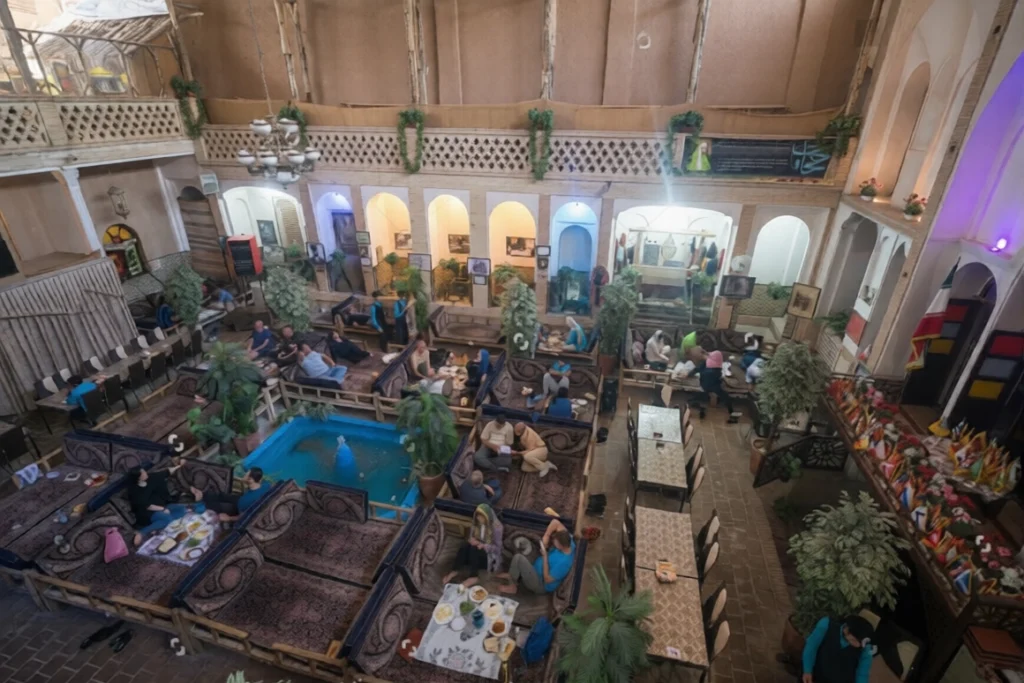
Abbasi Traditional Persian Restaurant with traditional sitting on carpets when eating in Kashan, Isfahan Province, Iran
Step Out of Your Culinary Comfort Zone
Continuing to explore and try new foods forms the core of successful culinary travel. Tourists easily fall into the habit of ordering familiar items. In Iran, the famous Chelo Kebab (grilled meat with rice) tastes phenomenal, and tourists often eat it every single day. However, true Persian culinary magic happens inside the slow-cooking pots of traditional stews (known as Khoresht). By pushing yourself to try something visually different, you expand your understanding of global flavors.
Invest time in reading menus, asking waiters for their recommendations, and observing what the local families eat at the tables next to you. Many travelers initially feel hesitant about mixing fruit (pomegranate) with meat and nuts in a savory dish. Yet, almost every traveler who tastes Fesenjan declares it their absolute favorite meal of the trip. The complex layers of earthy walnuts and tangy fruit create a flavor profile completely unique to this region.
Furthermore, branching out into traditional stews supports local farmers and smaller regional markets. The walnuts come from the mountainous regions, the saffron from the eastern deserts, and the pomegranates from central gardens. Eating this dish connects you directly to the geography of the country. Consequently, your culinary choices contribute to a more sustainable and culturally respectful form of tourism.
Ultimately, your willingness to explore unfamiliar dishes reflects your true spirit of travel. Choosing Fesenjan over a standard kebab shows locals that you respect and value their deeper cultural traditions. It opens doors to warm conversations and guarantees a much more rewarding travel experience.
Essential Tips for the Food Traveler
- Embrace the slow dining pace.
- Drink Doogh (minty yogurt drink) to balance rich foods.
- Accept hospitality gracefully.
- Share large portions with your travel partners.
- Ask about the sweetness level before ordering.
- Finish your meal with black tea and dates.
- Appreciate the artistry of the food presentation.
Therefore, do not hesitate to embrace every aspect of Persian dining. The people of Iran hold immense pride in their food, and they love nothing more than sharing it with enthusiastic visitors. Keep your mind and your palate open.
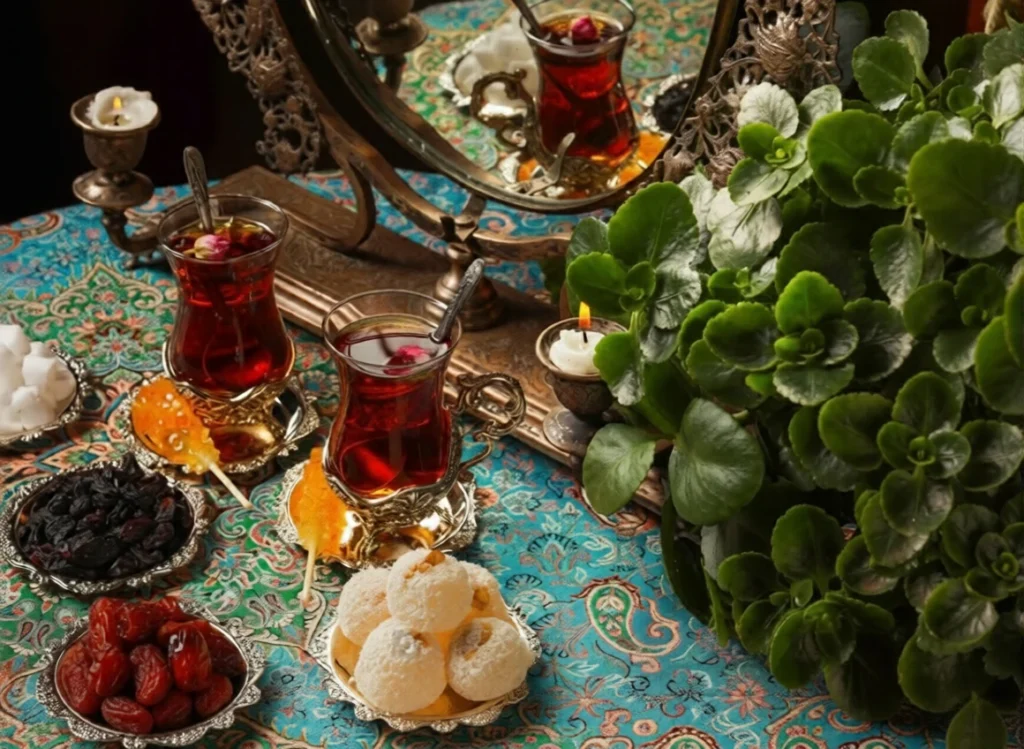
Close Up Of Sugar Loaf And Sweets And Date Fruit And Saffron Rock Candy Sugar Crystal Near Two Black Tea Cups Which Often Used To Be Dissolved In Tea In Iranian Persian Cuisine